




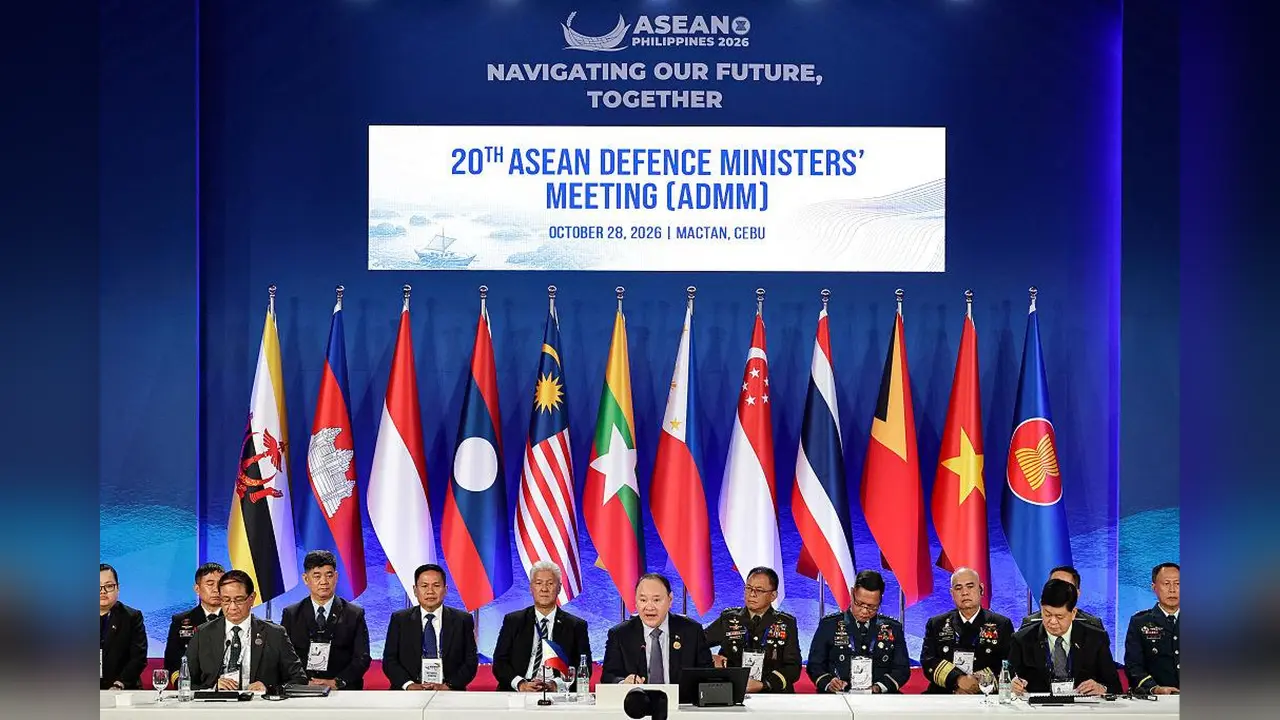
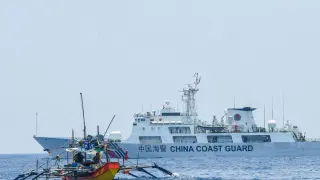
On October 27, the Philippine military reported spotting 54 Chinese naval and coast guard ships in the West Philippine Sea (WPS), up from 31 the previous week. The 74% surge came as ASEAN defense ministers prepared to meet in Cebu, where governments would discuss how to prevent conflict in waters increasingly crowded with military vessels.
The October 28-29 summit brought together ASEAN's 11 members and eight partners, including China and the United States. The gathering exposed two different responses to the tensions: ASEAN as a whole sought common rules with Beijing, while Manila looked to Washington, Japan, and Australia to strengthen its defenses.
China's Naval Presence Fuels Manila's Military Partnerships
The Philippine military recorded 22 Chinese Navy ships and 32 Coast Guard vessels between October 20-26. Scarborough Shoal had the largest concentration, with 17 ships, followed by Pag-asa Island with 16, Ayungin Shoal with 14, and Escoda Shoal with seven.
The figures underscore the scale of China's operations around areas claimed or administered by the Philippines.
Beijing has attempted to claim much of the WPS, including waters within the Philippines' exclusive economic zone. However, a 2016 international tribunal rejected the legal basis for China's historic rights claims within its nine-dash line.
ASEAN Calls for Restraint as Military Cooperation Accelerates
During the latest meeting, ASEAN approved five cooperation initiatives, including plans for a maritime security conference in 2027, and renewed its call for a South China Sea Code of Conduct with China.
US Defense Secretary Pete Hegseth also proposed a new defense cooperation framework focused on maritime surveillance and coordination among navies. He described Washington's approach as “strong, quiet, and clear,” promising to deter aggression without unnecessary escalation.
Notably, Hegseth's promise is completely contradictory. Southeast Asian governments are already dealing with the economic fallout from US tariffs and the US-Israeli war with Iran. Washington offering reassurance on regional security is at odds with its other policies that are creating uncertainty for the same countries.
The most concrete military discussions took place outside ASEAN's broader negotiations. The United States, Japan, Australia, and the Philippines discussed expanding joint exercises, improving operational coordination, and potentially investing together in Philippine military infrastructure from Luzon to Mindanao.
Japan also moved forward with plans to transfer an Abukuma-class warship to Manila after its retirement from Japanese service.
Ultimately, the latest summit left two approaches moving forward at different speeds. ASEAN as a whole continued negotiating rules with China, while Manila and its Western partners pursued military cooperation aimed at countering Chinese pressure.

Loading comments...