




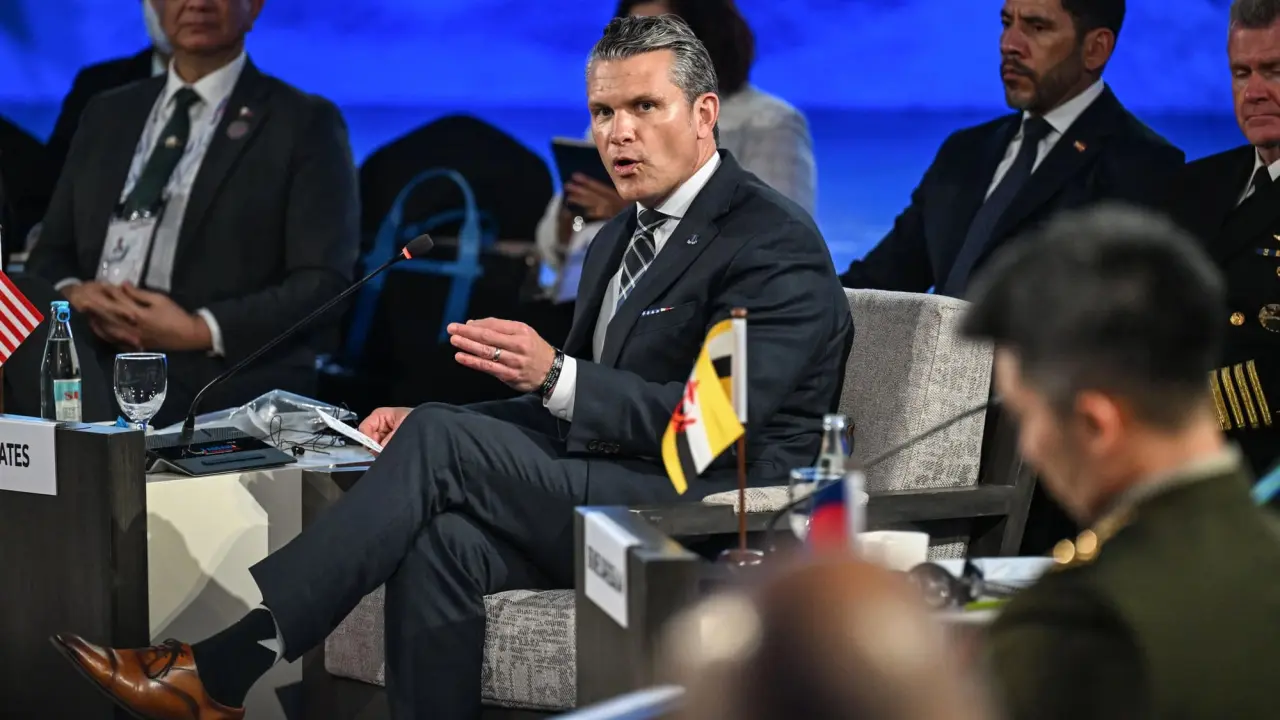
On October 28, 2026, US Defense Secretary Pete Hegseth proposed a new defense cooperation framework between Washington and the Association of Southeast Asian Nations (ASEAN). Announced during the ASEAN Defense Ministers’ Meeting in Cebu, Philippines, the proposal aims to guide military cooperation over the coming years. It comes as tensions in the South China Sea continue to challenge regional security.
The big elephant in the room is Washington's credibility question. While the United States seeks closer military ties with Southeast Asia, its tariff policies have imposed additional duties on imports from several ASEAN economies. This contrast could complicate efforts to build a stronger regional partnership.
Washington Targets Maritime Security and Closer Military Coordination
Hegseth presented the proposed framework as a practical way to expand cooperation with ASEAN's 11 member states. He said the United States wanted to work with regional partners where their interests overlap, even when they disagree on other issues.
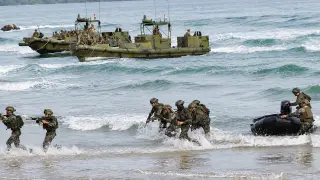
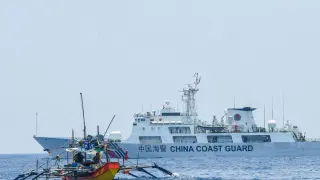
His priorities include stronger maritime domain awareness and advanced cooperation among naval forces, including joint training and planning. These areas are particularly relevant to the South China Sea, where the Philippines has reported increased Chinese military and coast guard activity. Manila said China's military and coast guard presence in contested areas nearly doubled in September.
The Philippines has a central role in these discussions. It is a US treaty ally and currently holds ASEAN's rotating chairmanship. Its repeated confrontations with Chinese vessels make maritime security an immediate concern.
The Cebu meetings also produced concrete defense commitments for Manila. Hegseth announced increased US security cooperation funding to accelerate Philippine military modernization, although the additional amount was not disclosed. Separately, Japan confirmed plans to transfer a decommissioned Abukuma-class destroyer to the Philippine Navy following its expected retirement in the coming years. These developments highlight how the Philippines is strengthening defense ties with multiple partners as maritime tensions persist.
The timing also coincides with China's reduced representation at the Cebu meetings. Beijing sent its military attaché in Manila instead of Defense Minister Dong Jun to the session.
ASEAN’s Strategic Autonomy Complicates Washington’s Defense Ambitions
ASEAN members do not share identical security priorities. The Philippines has strengthened defense cooperation with Washington amid tensions with Beijing, while other members favor maintaining closer economic and diplomatic ties with China.
This makes a unified military approach difficult. ASEAN operates through consultation and consensus, and its members generally seek to preserve their freedom to manage relationships with major powers. Many may therefore prefer practical cooperation on maritime security and military training over a framework that could be seen as opposing China.
Hegseth acknowledged these differences, saying that ASEAN members did not need to agree on everything to cooperate on shared interests. This approach could allow progress without requiring the bloc to adopt a common position on Beijing.
US Tariffs Raise Questions About Washington’s Reliability as a Partner
Perhaps more impactful than ASEAN's character, the proposed defense framework comes amid trade tensions between Washington and Southeast Asia. On July 23, 2026, the Office of the United States Trade Representative announced additional Section 301 tariffs on imports from 60 economies, including several ASEAN members. The measures, which took effect on July 24, impose additional duties of 10% on covered goods from Cambodia, Indonesia and Malaysia, and 12.5% on covered goods from the Philippines, Singapore, Thailand and Vietnam.
Washington says the tariffs address the failure of trading partners to impose and effectively enforce bans on imports produced with forced labor. However, their economic impact adds another source of friction to relationships that the United States is seeking to strengthen on security grounds.
For Southeast Asian governments, this creates a difficult balance. Washington is asking for closer military coordination while maintaining trade measures that affect important regional export economies. Security cooperation and trade policy are separate issues, but both shape how governments assess the reliability of a long-term partner.
If military cooperation expands while trade disputes persist, regional governments may remain cautious about the depth of their commitments. The United States will need to demonstrate that its regional engagement extends beyond defense priorities if it hopes to build lasting trust across Southeast Asia.

Loading comments...