




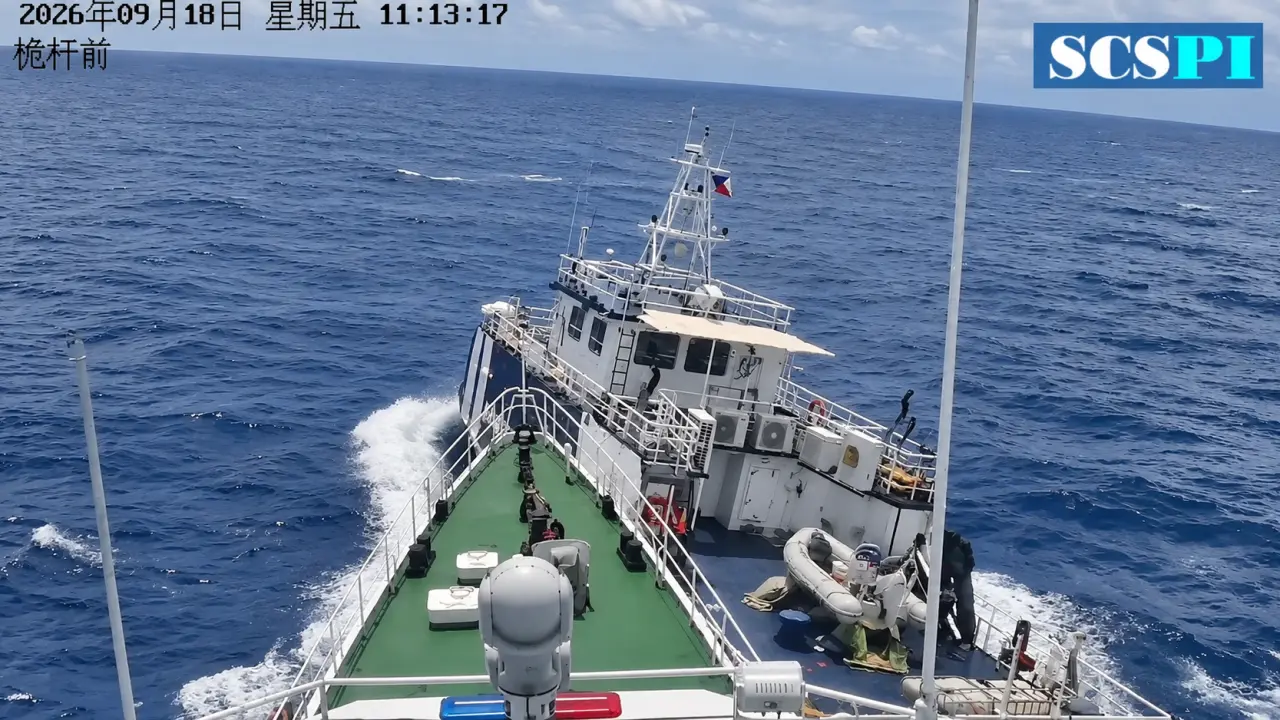
China appears to be upping its antics in the West Philippine Sea.
On September 18, a Chinese coast guard ship deliberately rammed the BRP Datu Magat Salamat as it distributed fuel to Filipino fishermen near Sabina Shoal, about 100 kilometers off Palawan.
Just a week later, on September 25, a Chinese coast guard vessel obstructed the M/V Lapu-Lapu as it carried supplies to Philippine troops aboard the BRP Sierra Madre at Second Thomas Shoal.
The incidents involved different Philippine activities at different locations, but together they show how broadly China is challenging Manila's ability to operate in disputed waters.
Philippine Resupply Missions Under Pressure
The Philippines deliberately grounded the Sierra Madre at Second Thomas in 1999 to maintain a permanent presence. The troops aboard depend on resupply missions that Chinese vessels have repeatedly tried to obstruct.
Manila and Beijing reached a provisional understanding in 2024 to allow those deliveries and reduce confrontations. The arrangement followed violent incidents, including one that injured eight Philippine naval personnel and cost one of them a thumb.
The relative calm that followed did not last long. On July 20, 2026, Manila accused Chinese personnel of striking a Philippine service member with a wooden baton and damaging a boat during another encounter at Second Thomas.
September’s obstruction incident further undermined the arrangement’s purpose of keeping supplies flowing to the troops aboard the grounded ship. The 2024 understanding was designed to keep these encounters from repeatedly escalating, but China's continued obstruction puts pressure on the informal rules that have allowed both sides to manage the dispute without a more serious clash.
In addition to denouncements from the Philippine government, the US Embassy condemned the dangerous blocking maneuvers, saying they had prevented a lawful, routine resupply mission. Beijing responded by accusing Washington of supporting Philippine provocations and urging it to stop “fanning the flames.”
Combat Drills at Scarborough
China attempted to ignite the region again on September 27, two days after blocking the Philippine resupply mission, when it had conducted joint naval and air exercises around Scarborough Shoal.
The People’s Liberation Army Southern Theater Command said the drills were intended to test and improve combat capabilities to defend China’s territorial and maritime claims.
Beijing blamed “certain countries” for undermining regional peace and stability while sending warships and aircraft around Scarborough. It avoided naming the Philippines, but the timing and location pointed to a thinly veiled threat against Manila.
Notably, Chinese patrols have tried to block Filipino access to the region for years, despite the 2016 arbitral ruling recognized Scarborough as a traditional fishing ground for Filipino and other regional fishermen.
Taken together, these incidents show China steadily increasing pressure on the Philippines despite international law. As Beijing pushes the limits of Philippine access and operations, the risk of a more serious and potentially deadly confrontation grows.

Loading comments...