




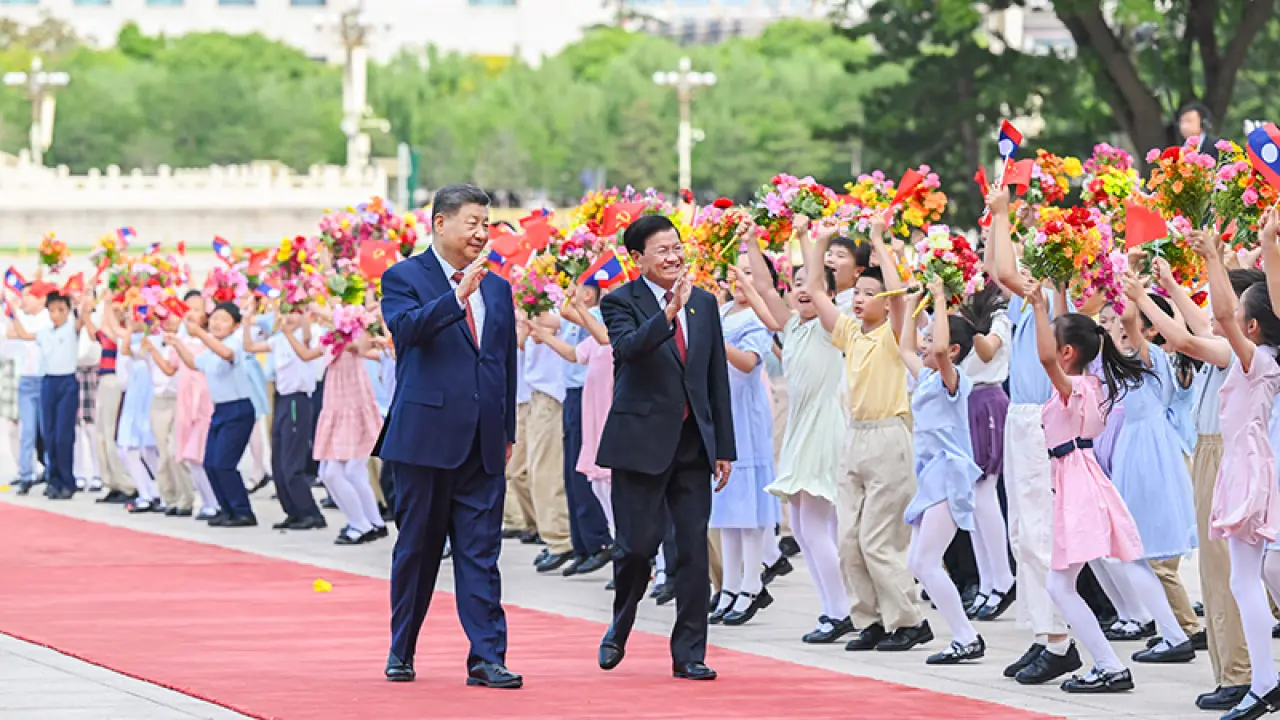
China’s growing influence over Laos could undermine one of the Philippines’ most important diplomatic goals in Southeast Asia: securing a South China Sea Code of Conduct.
As ASEAN approaches its November 16-18 summit in Manila, the Philippines is pushing to conclude the long-delayed agreement with China by the end of 2026. The Philippines has been the most affected ASEAN country, with China pulling aggressive and illegal maneuvers against Manila's forces almost daily. Other countries, however, have also been targeted.
Laos is emerging as a possible obstacle to the negotiations and threatens to derail the Code of Conduct. It has been steadily growing closer to Beijing, raising questions about ASEAN unity and the bloc’s ability to reach a common position on maritime security.
A Code of Conduct Still Divided Over Its Purpose
ASEAN and China began negotiating a Code of Conduct in 2018, building on their non-binding 2002 Declaration on the Conduct of Parties in the South China Sea. The proposed agreement is intended to manage tensions and reduce the risk of conflict, but major disagreements remain over its geographic scope, legal status, and enforcement.
The Philippines wants a legally binding agreement that explicitly refers to the United Nations Convention on the Law of the Sea (UNCLOS). This would reinforce the international legal framework that underpins Manila's 2016 arbitration victory against China's maritime claims.
China, however, has traditionally favored direct negotiations with individual countries rather than a stronger regional framework. A weak or non-binding agreement could therefore leave Beijing with considerable freedom to continue its activities in disputed waters.
Negotiations have accelerated in 2026, with officials meeting regularly and expressing hopes of reaching an agreement by year's end. Still, it remains to be seen if the parties can resolve the underlying disagreement over what the agreement should actually require.
Why Beijing May Look to Laos
ASEAN's consensus-based decision-making gives every member state considerable influence over the bloc's collective position. A government does not need to be directly involved in a maritime dispute to complicate negotiations. If members cannot agree on the wording of an agreement, progress can stall.
This has happened before. In 2012, Cambodia's close relationship with China became a major source of tension when ASEAN foreign ministers failed to issue a joint communiqué because of disagreements over the South China Sea. The episode exposed how Beijing's influence over one member could undermine the entire bloc's ability to speak with one voice.
Laos could become a similar source of pressure. Its relationship with China has expanded beyond economic cooperation into military ties. On September 29, the two countries opened a joint military support and training center at Ban Keun Airport, north of Vientiane. The facility will support Lao Air Force training and be jointly operated and maintained.
The September 2026 Peace Train exercises also involved more than 700 personnel, although their focus was humanitarian medical assistance, disaster response and rescue operations rather than combat training.
These developments do not prove that Laos intends to obstruct the Code of Conduct, but they demonstrate the growing relationship between Vientiane and Beijing. This naturally gives Beijing avenues to assert influence if it decides it needs to.
What To Expect at the ASEAN Summit
The November summit will give Manila an opportunity to build support for a stronger agreement before its ASEAN chairmanship ends. Manila faces the external pressures discussed above, but also internal pressures. In recent weeks, controversy has grown as Philippine Vice President Sara Duterte and her family face accusations about secret connections to Beijing, including reports that some family members received payments from China.
Singapore is scheduled to take over the ASEAN chairmanship in 2027. If Manila cannot secure substantial progress before then, the negotiations will pass to another government, with no guarantee that the political momentum will survive.
Ultimately, Beijing does not need Laos to win the South China Sea dispute. It only needs ASEAN to remain divided enough that the bloc cannot agree on meaningful limits to Chinese behavior. For this, Beijing might find Laos useful.

Loading comments...