




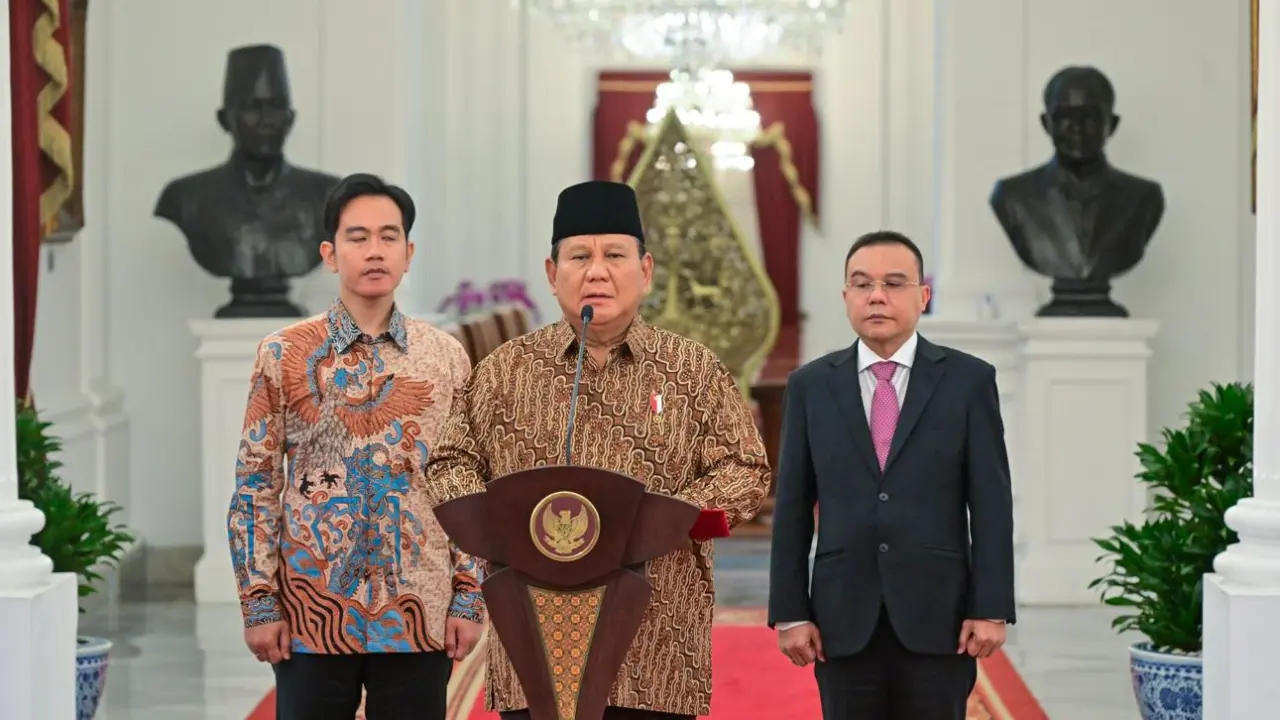
On November 12, Indonesian Vice President Gibran Rakabuming Raka resigned under threat of impeachment. His position had been in jeopardy since October, when the Supreme Court declared his academic certificate invalid. The impeachment initiative was backed by 120 lawmakers from all eight parliamentary factions, including members of President Prabowo Subianto’s own party.
The controversy began in 2023, when the Constitutional Court relaxed the minimum age requirement to allow Gibran to run for vice president. As the son of former President Joko “Jokowi” Widodo, he became part of the political deal that brought Prabowo to power in 2024.
With Gibran's departure, Prabowo must nominate two candidates to replace him, and the People’s Consultative Assembly has 60 days to choose a replacement.
The crisis comes amid an illegal wiretapping scandal involving former senior police officers politically linked to Jokowi, raising questions about political control of Indonesia’s security institutions. At the same time, thousands of Indonesians are protesting rising living costs, corruption, and the government’s failure to respond adequately to devastating wildfires.
Increasingly, Jakarta's myriad governance problems are being seen as a threat to regional stability.
Prabowo’s Grip on Power Comes Under Scrutiny
Gibran’s resignation deepens the political rift between Prabowo and Jokowi, which had been widening since the president began removing figures close to his predecessor from influential government positions. Gibran’s departure further weakens Jokowi’s political network and shifts the balance of power toward Prabowo.
Over the last several months, Prabowo has been steadily consolidating his political power. In February, he even suggested that “perhaps a little bit of authoritarianism is needed” to fight corruption. Yet corruption scandals involving government programs have continued to surface, casting doubt on whether his increasingly centralized rule is delivering the clean government he promised.
In 2025, his government seized 4.1 million hectares of palm oil plantations deemed illegal, transferring part of the land to state-owned Agrinas Palma Nusantara. Prabowo has since raised the prospect of seizing another five million hectares in 2026. Despite the seizures last year, massive fires, linked back to palm oil producers, have raged across the country.
In October, environmental group WALHI identified plantation concessions with fire hotspots and business links to five people close to Prabowo. Those connections raise questions about land allocation and who controls the companies operating in fire-affected areas.
Protests Spread Across Indonesia As Frustration Mounts
Protests against Prabowo have been spreading across Indonesian cities because of stagnant wages, rising food prices, and the government’s poor handling of the wildfires. During the latest demonstrations, police detained more than 150 people following clashes in Yogyakarta.
Yet public anger has produced little visible accountability. Indonesia fell ten places in Transparency International's 2025 Corruption Perceptions Index, ranking 109th out of 182 countries. The decline adds to concerns that political power remains concentrated while the institutions meant to hold officials accountable struggle to deliver results.
Gibran's departure removes a potential source of internal friction and gives Prabowo more room to consolidate power. But greater political control does not resolve the grievances driving people into the streets. If wages remain stagnant, living costs rise and officials continue to escape accountability, Prabowo may find that a stronger grip on government does little to ease public discontent.
Loading comments...