




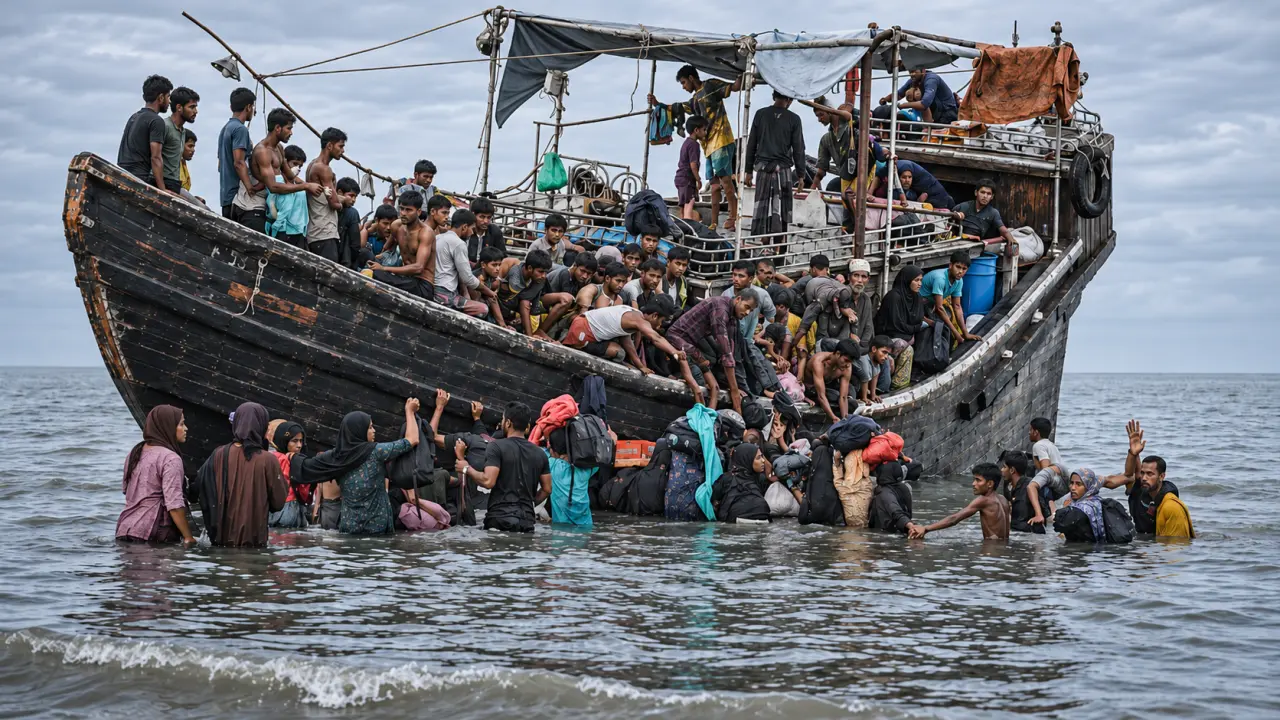
On November 20, Malaysia removed an announcement that Turkey had agreed to accept 10,000 Rohingya refugees, just hours after presenting the plan as a major resettlement initiative. Ankara had not confirmed the agreement, and Malaysian officials offered no explanation for withdrawing the statement.
The reversal came one day after the International Court of Justice (ICJ) ruled that Myanmar's military had committed genocide against the Rohingya Muslim minority.
Deputy Prime Minister Ahmad Zahid Hamidi had announced the agreement on Facebook, describing it as a step toward easing Malaysia's longstanding immigration and security pressures.
According to Hamidi, the plan had been developed with the United Nations High Commissioner for Refugees (UNHCR) and other agencies. It would relocate refugees to different parts of Turkey, offering education and vocational training while considering labor market needs, individual consent, and international protection standards.
Within hours, the statement disappeared. Neither Hamidi nor his office explained why, while Turkish authorities declined to confirm the arrangement.
Turkish President Recep Tayyip Erdogan had met Hamidi in Istanbul on November 6.
Rohingya Remain Displaced After Genocide Ruling
Myanmar's military campaign in Rakhine State in 2017 forced more than one million Rohingya to flee violence, killings, and widespread abuses.
Around 750,000 escaped to Bangladesh, joining communities displaced by earlier persecution. Many remain in overcrowded camps near the Myanmar border, with little prospect of returning safely.
Malaysia has become the second-largest host country for Rohingya refugees, sheltering approximately 130,000 people, according to UNHCR.
The proposed transfer to Turkey would have been one of the largest Rohingya resettlement efforts in recent years, potentially reducing pressure on Malaysia while offering thousands of refugees a new place to rebuild their lives.
The November 19 ICJ ruling brought renewed international attention to Myanmar's treatment of the Rohingya. However, legal accountability alone cannot resolve the displacement crisis or guarantee refugees a safe return.
For Malaysia, the challenge remains finding lasting solutions for a population that cannot safely return home and has few opportunities to settle elsewhere.
Turkey's Rohingya Solidarity Faces a Test
Turkey has repeatedly condemned Myanmar's persecution of the Rohingya and supported international efforts to protect the Muslim minority.
Following the ICJ ruling, Ankara welcomed the decision, urged Myanmar to respect Rohingya rights, and reaffirmed its support for their eventual return to their homeland.
Yet Turkey's assistance has largely remained outside its borders. Turkish humanitarian organizations have helped Rohingya communities in Bangladesh and Malaysia, but Ankara did not undertake a major resettlement program during the exodus that began in 2017.
At the time, Turkey was already hosting approximately four million Syrian refugees, placing considerable pressure on its reception system. Many Syrians have since returned home, although refugee accommodation and integration remain sensitive political issues.
Accepting 10,000 Rohingya would mark a significant change, moving Turkey from humanitarian assistance and diplomatic advocacy toward directly hosting people displaced by Myanmar's military.
The unconfirmed agreement now puts both governments under scrutiny. Malaysia has publicly sought relief from its refugee burden, while Turkey has presented itself as a defender of Rohingya rights without confirming that it will accept the proposed arrivals.
Loading comments...