




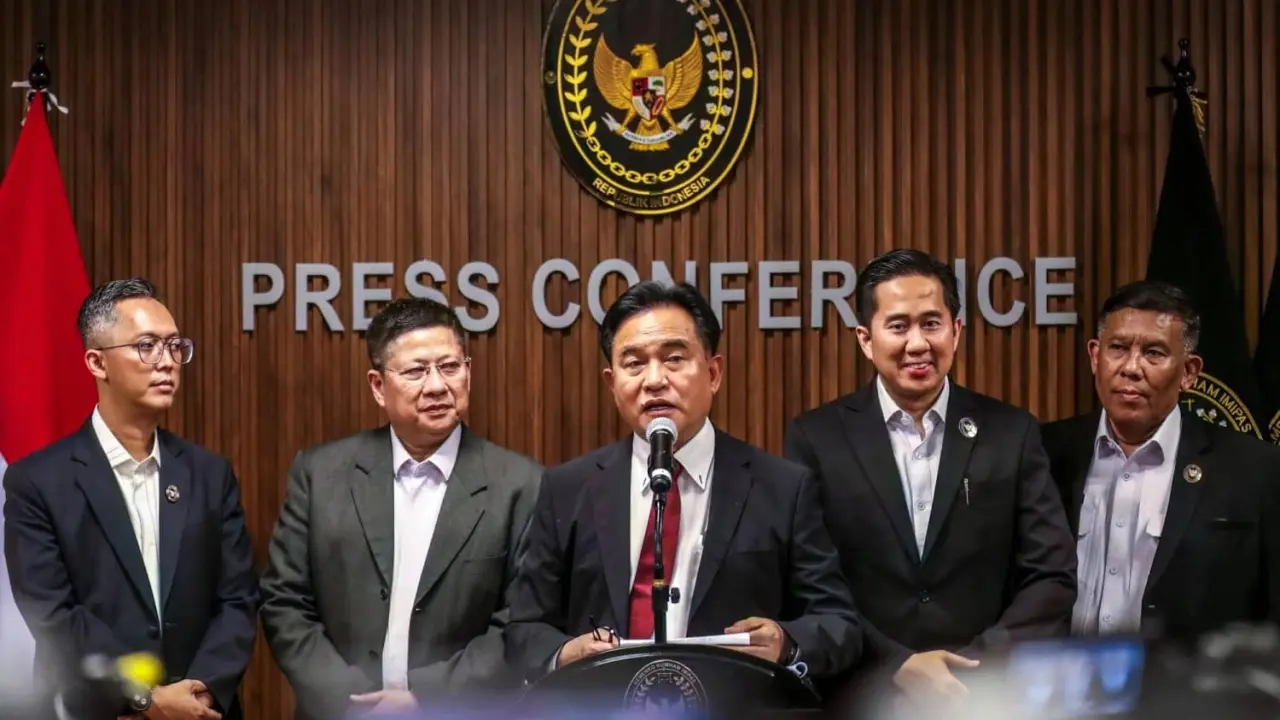
Indonesia is facing an extraordinary surveillance scandal. Senior police generals are accused of using a government wiretapping system to monitor President Prabowo Subianto, politicians, journalists and other influential figures. Investigators also allege that intercepted communications were deleted to conceal evidence.
The allegations have shaken the country's political establishment because one of the officials implicated is former national police chief Listyo Sigit Prabowo, who is considered close to former President Joko Widodo, widely known as Jokowi. The case has emerged as relations between Prabowo and Jokowi's political camp come under increasing strain, raising suspicions that the surveillance operation may be connected to a wider struggle for influence. Investigators have not established its motive or demonstrated that Jokowi was involved.
Police Generals Accused of Spying on the President
Indonesian police allege that unauthorized surveillance took place between 2025 and 2026. Several telephone numbers were reportedly entered into the police's Lawful Interception Management System without proper authorization or any connection to criminal investigations. The alleged targets included Prabowo, government officials, politicians, journalists, civil society representatives and business executives.
The investigation has led to the detention of three senior police generals, including Listyo Sigit Prabowo. On November 6, authorities named another senior police official, Slamet Uliandi, as a fourth suspect. He has not been detained because of a health condition. Investigators also allege that intercepted communication files were deleted in October to conceal evidence.
The possibility that senior police officials used state surveillance powers against the country's own leadership makes the case particularly serious. If proven, the allegations would represent a major breach of public trust and raise questions about who controls the country's security institutions.
A Political Alliance Begins to Fracture
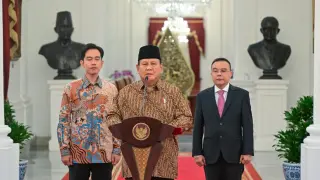
Prabowo and Jokowi were presidential rivals in 2014 and 2019 before becoming political allies. Jokowi appointed Prabowo defense minister in 2019 and later supported his successful 2024 presidential campaign. Jokowi's son, Gibran Rakabuming Raka, became Prabowo's running mate and is now vice president.
That alliance has increasingly shown signs of strain. Disagreements over government appointments, policy decisions and Gibran's political future have weakened the relationship between the two camps. The wiretapping investigation now threatens to deepen those divisions, particularly if further evidence connects the suspects to political networks close to either side.
Gibran is facing a separate political challenge. Recent court rulings have raised questions about the educational qualifications used for his 2024 candidacy. The Supreme Court invalidated the certificate recognizing his overseas education as equivalent to an Indonesian high school diploma, prompting several parliamentary parties to consider an inquiry. Such proceedings could potentially lead to impeachment, although the ruling does not automatically remove him from office.
The controversy has also coincided with a major military deployment in Jakarta. A total of 20,980 military personnel have been assigned to the operation, including 13,140 held on standby. Military representatives have described it as a routine security measure and have not officially linked it to the wiretapping investigation. Still, the timing has fueled public attention as tensions rise around the country's political leadership.
A Crisis With Wider Consequences
The political turmoil comes as Indonesia faces mounting economic and environmental pressures. The rupiah has remained under pressure, while MSCI's warning that it could downgrade Indonesia to standalone-market status has already raised concerns about market transparency and investor confidence.
Forest and land fires across Sumatra and Borneo have also produced dangerous haze, affecting communities in Indonesia, Malaysia and Singapore. In September, residents in West Kalimantan sued 27 government officials and institutions, including Prabowo and Gibran, alleging negligence in preventing and managing the fires. Hearings began in October.
The most immediate danger is that the investigation becomes another weapon in the struggle between Prabowo's supporters and Jokowi's political network. If police and other security institutions are seen as instruments in that fight, public confidence in their independence could suffer further.
For Prabowo, the scandal presents a test of control over the state institutions now operating under his administration. He must establish who authorized the alleged surveillance, who benefited from it and whether anyone attempted to destroy evidence.
If the investigation stops short of answering those questions, Indonesians may be left to face the troubling reality that the country's security apparatus can be turned against the very people it is supposed to protect.
Loading comments...