




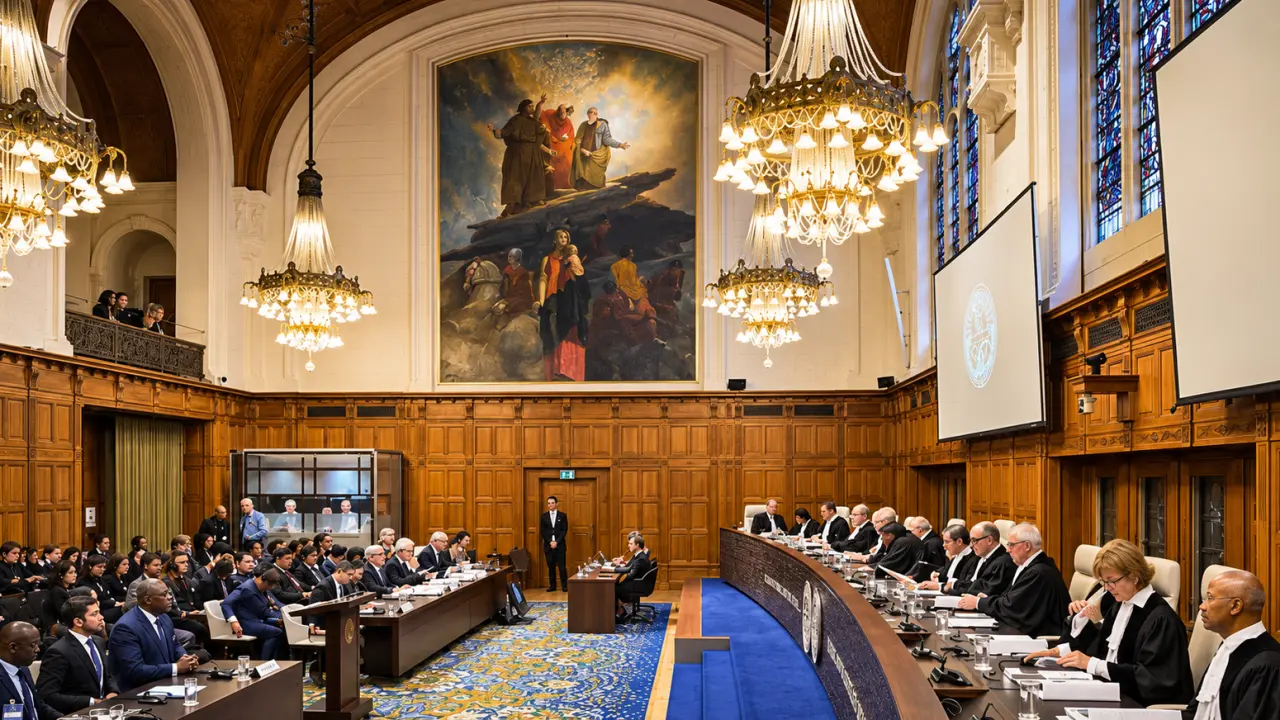
On November 19, the International Court of Justice (ICJ) ruled that Myanmar committed genocide against the Rohingya Muslim minority during military operations in 2017. It marks the first time the United Nations' highest court has held a state responsible for committing genocide.
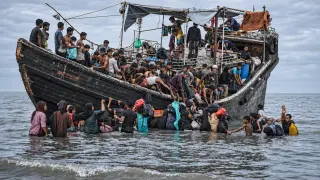
In a 9-6 decision, the judges found that Myanmar's security forces killed thousands of civilians, committed widespread sexual violence, and destroyed entire villages. Approximately 750,000 Rohingya fled to Bangladesh, where many remain in refugee camps.
The ruling places renewed scrutiny on President Min Aung Hlaing, who commanded the armed forces during the massacres, led the 2021 military coup, and became president in April 2026 following widely disputed elections.
The Court Rejects Myanmar's Counterinsurgency Defense
The case was brought in 2019 by The Gambia, a West African nation, with the backing of the Organization of Islamic Cooperation.
Myanmar argued that its military operations responded to attacks by insurgent groups, but the judges concluded that the systematic nature of the violence demonstrated an intent to destroy the Rohingya community, in whole or in part.
The Court also examined discriminatory restrictions on marriage and reproduction imposed on the minority, reinforcing its findings about the persecution of the Rohingya.
The ruling requires Myanmar to investigate and punish those responsible, ensure conditions for the safe return of displaced people, restore property, and provide reparations. Myanmar must submit a report on restitution measures and compensation within two years.
Although the ICJ establishes the international responsibility of states, it does not prosecute individuals. The ruling therefore does not constitute a personal criminal conviction of Min Aung Hlaing.
China and ASEAN Face a Diplomatic Contradiction
China maintains strategic interests in Myanmar, particularly in the trade and energy corridors connecting its territory to the Indian Ocean. Beijing has also limited international efforts to pressure Myanmar's authorities.
In the Court's vote, Chinese judge Xue Hanqin rejected the finding of genocide. Although ICJ judges do not represent their governments, the divided ruling underscores the difficulties of securing a coordinated international response.
At its November 15 summit in Manila, ASEAN maintained restrictions on Myanmar's political representation at leaders' and foreign ministers' meetings, while leaving any gradual restoration conditional on sustained progress in its peace plan.
That position contrasts with the growing diplomatic engagement of several ASEAN members. During 2026, Min Aung Hlaing visited Malaysia, Thailand, Vietnam, Laos, and Cambodia. On November 18, he accused ASEAN of treating Myanmar unfairly and announced a review of the country's relations with the bloc.
The verdict now raises the political cost of maintaining ties with a government led by the military commander responsible for the 2017 operations. However, the Court has no enforcement mechanism of its own, and any intervention by the UN Security Council could face opposition from the United States, China, or Russia.
The next test is whether ASEAN makes Myanmar's political reintegration conditional on verifiable steps to comply with the ruling, or whether diplomatic and economic interests ultimately prevail over international legal obligations.
Loading comments...