




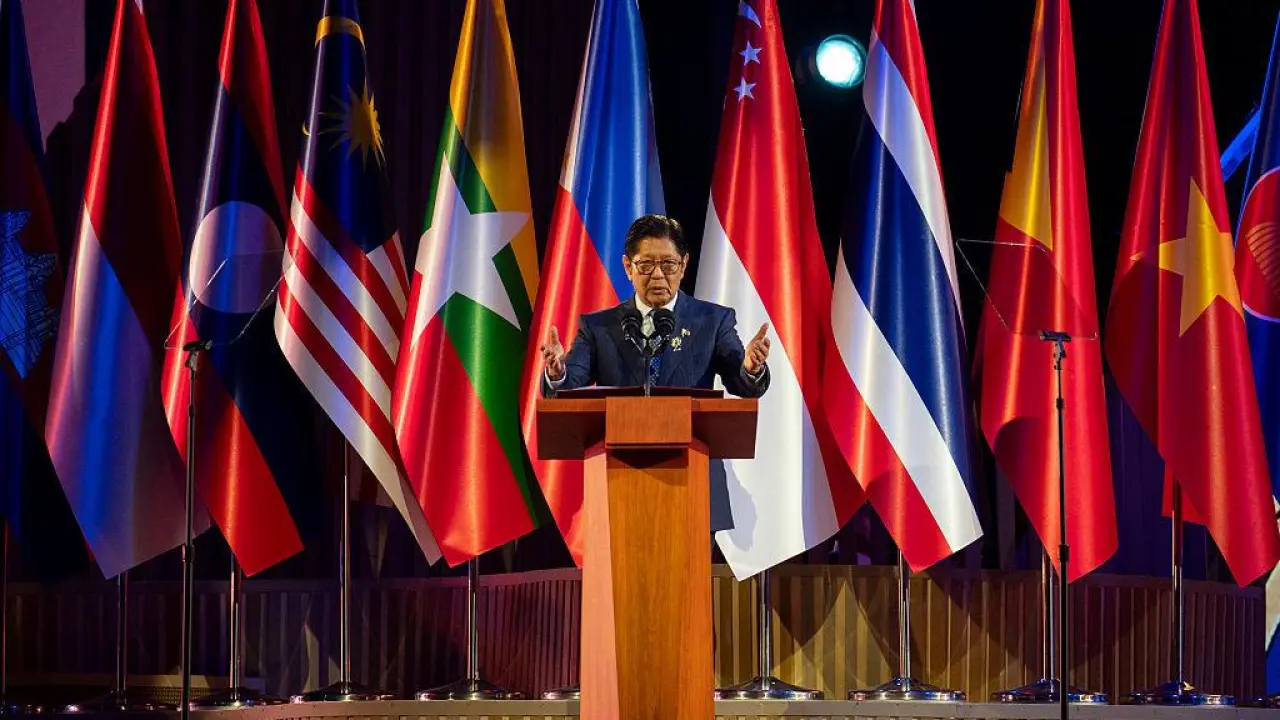
On November 17, Ferdinand Marcos Jr. handed the ASEAN gavel to Singapore after three days of speeches, ceremonies, and more than 100 documents adopted by the bloc.
The Philippine government presented its year of leadership as a success, yet Singapore inherits a number of problems Manila had promised to solve, chief among them the unfinished South China Sea Code of Conduct (CoC), one of the main goals of the Philippine chairmanship.
The summit showed that ASEAN can produce agreements when political costs are low, but still struggles to act when national interests collide.
117 Documents Could Not Hide the South China Sea Failure
Manila leaned heavily on the 117 documents as evidence that the summit had delivered. On paper, the output looked impressive. In practice, many were declarations, frameworks, and commitments whose value still depends on implementation. The sheer volume of paperwork made it easy for Manila to present activity as achievement, even when its political impact was far harder to show.
More damning, Manila’s biggest political promise remained unresolved. In July, Foreign Affairs Secretary Theresa Lazaro said ASEAN and China wanted to finish the CoC before the end of 2026, and negotiators met every month in an effort to meet that target.
During the summit, Lazaro said around 80% of the text had been provisionally agreed. Marcos, meanwhile, offered a more reassuring number, saying negotiations were 85% to 90% complete. The higher percentage did little to change the substance because the issues still unsettled are precisely the ones that will determine whether the code has any teeth. Those two main issues are whether the CoC will be legally binding and exactly which parts of the South China Sea it will cover.
The failure was particularly damaging because the CoC was not a side project, but instead one of Marcos’ major foreign policy goals.
Manila Could Not Break ASEAN’s Other Deadlocks
War-torn Myanmar exposed just how little ASEAN’s diplomacy had changed on the ground. Lazaro traveled there as ASEAN special envoy, yet the summit ended by reaffirming the Five-Point Consensus adopted five years ago, the same framework ASEAN has repeatedly failed to turn into a political settlement.
Myanmar will remain excluded from full political representation until ASEAN determines that meaningful progress has been made. That matters because giving Min Aung Hlaing the country’s political seat would allow one side in a fragmented civil war to speak for a state where its authority remains fiercely contested.
ASEAN itself is split over how far to engage him. Since Min Aung Hlaing became Myanmar’s military-backed president in April, half of ASEAN’s other members have received him on official visits, while the other half have not.
The divide reveals where ASEAN draws the line. Its members are willing to engage Min Aung Hlaing over trade, borders, security, and refugees, but the bloc still refuses to grant him the legitimacy to speak for Myanmar as a whole.
The Haze Crisis Put Manila’s Leadership to the Test
Indonesia's haze crisis further undercut Manila's narrative about its leadership success. For nearly four months, fires in Indonesia sent toxic smoke across Southeast Asia, yet Manila showed little regional political urgency while the crisis was unfolding. By October, with the haze already affecting several countries, the Philippine chair was still saying the issue would be taken up at the November summit.
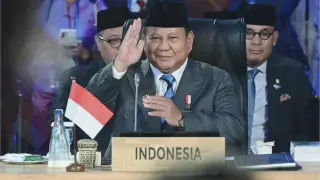
When leaders finally met in Manila, Prabowo appeared to apologize but then, refusing to accept responsibility, added that the disaster was “not our fault.” Rather than calling him out, Marcos responded by praising Indonesia’s efforts and calling for stronger enforcement to prevent the next crisis.
That contradiction exposed the limits of the Philippine chairmanship. ASEAN could talk about integration and prosperity, but it could not stop a cross-border crisis from disrupting daily life and economic activity for months. Worse, the bloc still lacks the enforcement mechanisms needed to force action before the next disaster spreads across national borders.
Singapore now inherits all the problems Manila could not finish. Even before taking the chair, its government has laid out priorities on regional integration, energy, haze enforcement, and the unfinished South China Sea Code of Conduct.
After a Philippine chairmanship heavy on declarations and unfinished promises, Singapore will have an immediate chance to show whether ASEAN can turn plans into action rather than simply pass them to the next chair.

Loading comments...