




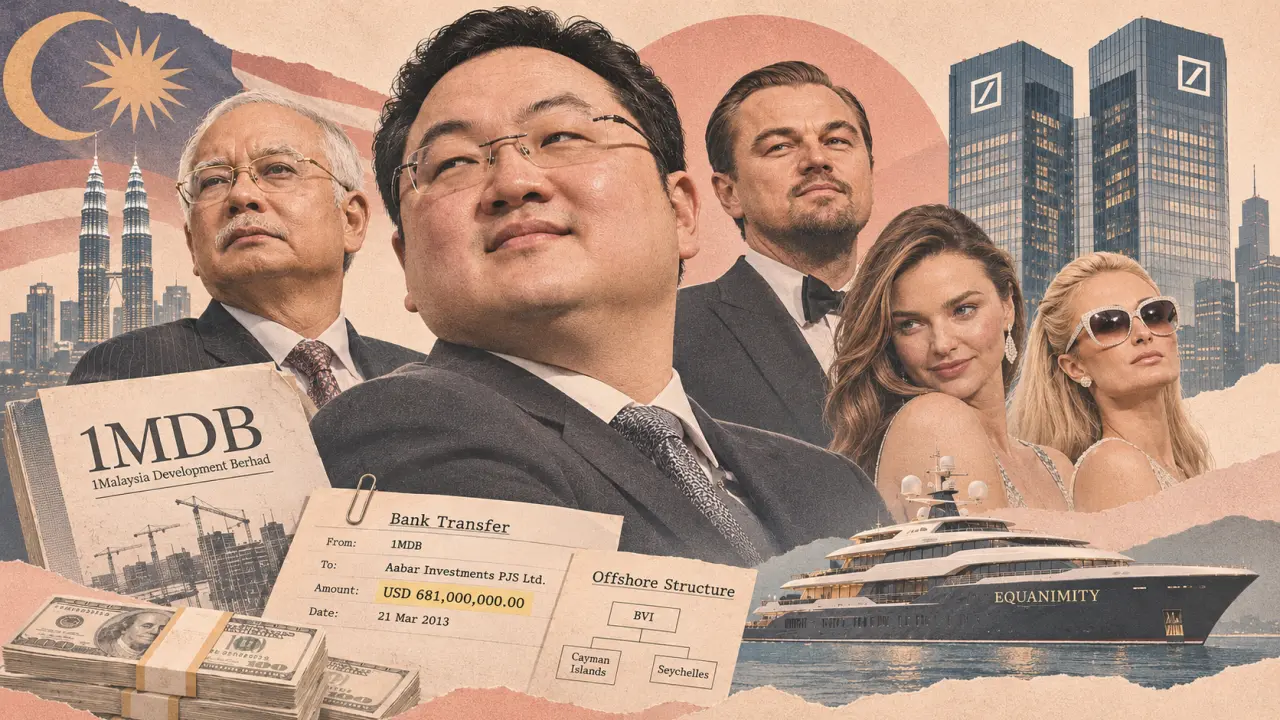
Malaysia is examining new revelations about Deutsche Bank's role in the 1MDB scandal, raising fresh questions about the international banking system that allowed money linked to fugitive financier Jho Low to move despite repeated warning signs.
A bombshell investigation published on November 17 found that the German banking giant processed approximately $190 million in transactions linked to Low between 2013 and 2015. The findings are based on more than 15 million internal documents obtained by two investigative journalists and shared with over 230 reporters worldwide, including GeoPulse.
The revelations come as Malaysia pursues a separate $1.11 billion lawsuit against Deutsche Bank. On November 18, Johari Abdul Ghani, chairman of Malaysia's 1MDB asset recovery task force, confirmed that officials and lawyers were examining the leaked files even as those settlement negotiations continue.
The new disclosures could intensify scrutiny of the bank's conduct. They also expose a problem that goes beyond Malaysia's efforts to recover stolen public money: getting the money back does not necessarily fix the international financial system that enabled the crimes in the first place.
Deutsche Bank Continued Processing Transactions Despite Warnings
Leaked internal communications revealed that Deutsche Bank processed 24 transactions linked to Low between May 2013 and December 2015 through its correspondent banking services.
Twelve transactions continued during the second half of 2015, months after the 1MDB scandal became public and Low came under intense scrutiny. Separate internal investigations, including one known as Project Timber and a 2015 regional audit, had also identified deficiencies in transaction reporting, customer verification and anti-money-laundering procedures at the bank's Malaysian subsidiary. Those findings concerned earlier transactions from 2009 and 2011.
The bank had also received warnings from Malaysia's central bank, while its financial crime compliance division had flagged Low. Its Malaysian subsidiary filed suspicious transaction reports. In September 2015, Singaporean police ordered the bank to preserve information related to Low's accounts.
Despite these warning signs, Deutsche Bank's Frankfurt operations continued processing transfers linked to the fugitive. One transaction involved approximately $6.5 million transferred from a Swiss bank to Cyprus, where Low was seeking European citizenship through property investments.
The bank only conducted a broader review of these transactions in 2020, following media scrutiny. The disclosures raise questions about why information gathered by different parts of the bank did not result in monitoring and intervention across its international operations.
Recovering 1MDB Money Will Not Reform Global Banking
For Malaysia, the immediate concern is financial recovery. Taxpayers continue to shoulder billions of dollars in liabilities left by the 1MDB scandal, making settlements and asset recoveries important to reducing the public cost.
However, financial settlements will address only part of the problem. The 1MDB scandal was made possible not only by individuals like Low who diverted public funds, but also by the international financial networks through which money could be transferred, concealed, and invested.
Deutsche Bank's operations connected financial institutions across different countries. That network made international transfers possible, but it also created a responsibility to identify suspicious activity and act on available warnings.
Malaysia can pursue compensation and recover assets, but the wider challenge involves how international banks share information, monitor high-risk customers and respond to warnings from regulators and law enforcement agencies in other jurisdictions. It also involves whether banks face meaningful consequences when their compliance systems fail to prevent suspicious transactions.
The 1MDB scandal should therefore be judged not only by how much money Malaysia recovers, but also by whether the international banks that helped move the money face meaningful accountability and whether the weaknesses exposed by the scandal lead to stronger oversight.
Repayment can compensate Malaysia for some of its losses. It cannot, on its own, prevent the next 1MDB.



Loading comments...