




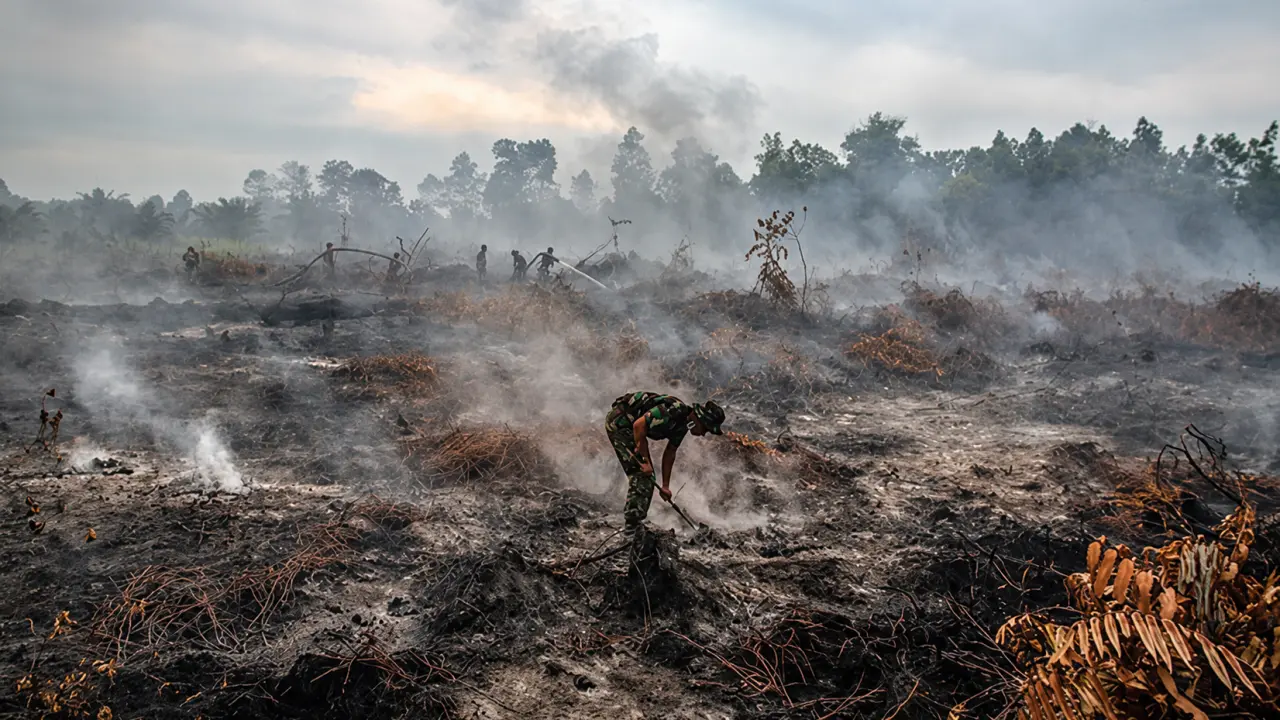
On September 8, Indonesian Parliamentarian Puan Maharani called on authorities to investigate cases of recently burned land in the Indonesian part of Borneo being rapidly converted into new palm oil plantations as soon as the fires are extinguished.
The episode exposes something bigger than the fire crisis that has blanketed much of Southeast Asia in smoke. For decades, Indonesia’s extractive development model has relied on converting forests and peatlands to make way for plantations, mines, and other commercial activities. Fire remains one of the fastest and cheapest ways to accelerate that process.
The question Jakarta should be asking is not simply who starts the fires, or who profits once the forest disappears, but whether this land-use model is pushing Indonesia toward an ecological breaking point.
The Land Behind the Palm Oil Industry
Indonesia is the world’s largest producer of palm oil, and more than 20 million hectares of land and
...


Loading comments...