




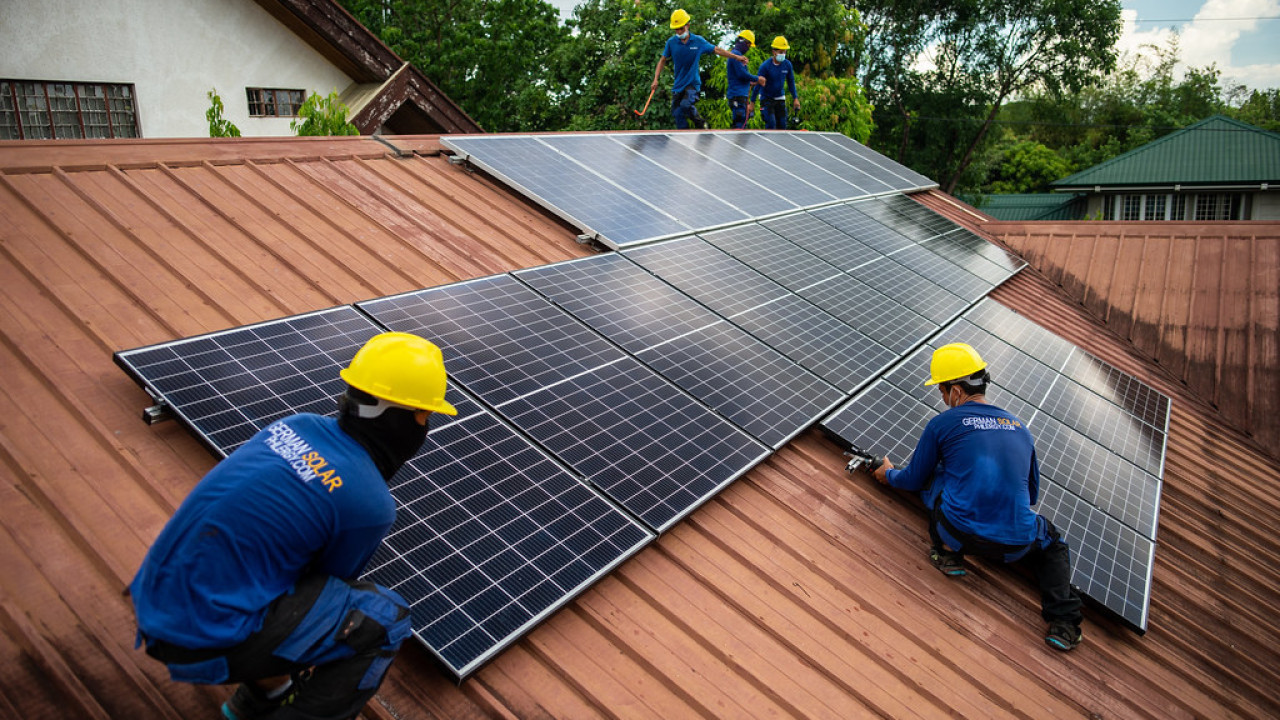
The Philippines is experiencing a record surge in spending on solar energy as the global energy crisis pushes households and businesses away from fossil fuels. Rising electricity costs have accelerated demand for rooftop solar panels, making the country the world's biggest spender on solar panels since the Strait of Hormuz crisis began.
That surge is about more than renewable energy. It highlights how exposed the Philippines remains to external energy shocks because of its reliance on imported fuel. The crisis has reinforced the need to expand domestic energy production while building stronger regional partnerships that can reduce the country's vulnerability to future supply disruptions.
Largest Importer, Lowest Subsidizer
The Philippines has become one of Southeast Asia’s largest importers of solar panels, with supply largely sourced from abroad, including the Netherlands, as households rush to install rooftop systems.
Demand has surged alongside rising electricity costs. Since the Strait of Hormuz crisis began, top distributor Meralco has increased power prices by around 10%. A typical household now spends about 12% of its monthly income on electricity, based on the average for a three-person home.
Despite the growing economic pressure, the Philippines remains one of the least subsidized electricity markets in the region. Residential power prices are among the highest in Southeast Asia, yet state support for consumers and renewable adoption remains minimal. Only Singapore posts comparable electricity costs, but with purchasing power nearly 13 times higher, the burden is far less severe.
This gap has turned the Philippines' solar adoption into a necessity-driven shift rather than a policy-backed transition. A standard rooftop system can cost around 570,000 pesos, but rising tariffs and gradual cost declines are pushing more middle-income households to consider long-term savings over upfront expense.
Regional Energy Suppliers Offer a Path to Energy Security
The Philippines remains heavily exposed to global supply risks, with nearly 95% of its crude oil dependent on the Strait of Hormuz. This leaves the country vulnerable to geopolitical tensions in the Middle East and disruptions in key shipping lanes that can quickly impact domestic energy prices.
This exposure helps explain the rapid shift toward green energy adoption, as households and businesses seek alternatives to volatile fossil fuel imports. However, without sufficient infrastructure and investment, the transition alone may struggle to meet long-term demand.
In this context, regional collaboration across Southeast Asia is gaining traction as a practical solution. Malaysia is emerging as one of the most active energy partners in Asia, expanding cooperation with ASEAN partners like Indonesia and Thailand, as well as international partners like Japan, Turkmenistan, and Russia. These moves point to a broader effort to build a more diversified and flexible energy network across the region.
The Strait of Hormuz crisis has exposed how energy security is not only about diversifying suppliers, but also about where those suppliers are. For the Philippines, the strongest long-term answer may lie closer to home. Deeper energy partnerships within ASEAN could reduce reliance on distant and vulnerable shipping routes while making regional energy markets more resilient. In an era of growing geopolitical uncertainty, the country's most important energy partners may be its nearest neighbors.

Loading comments...