




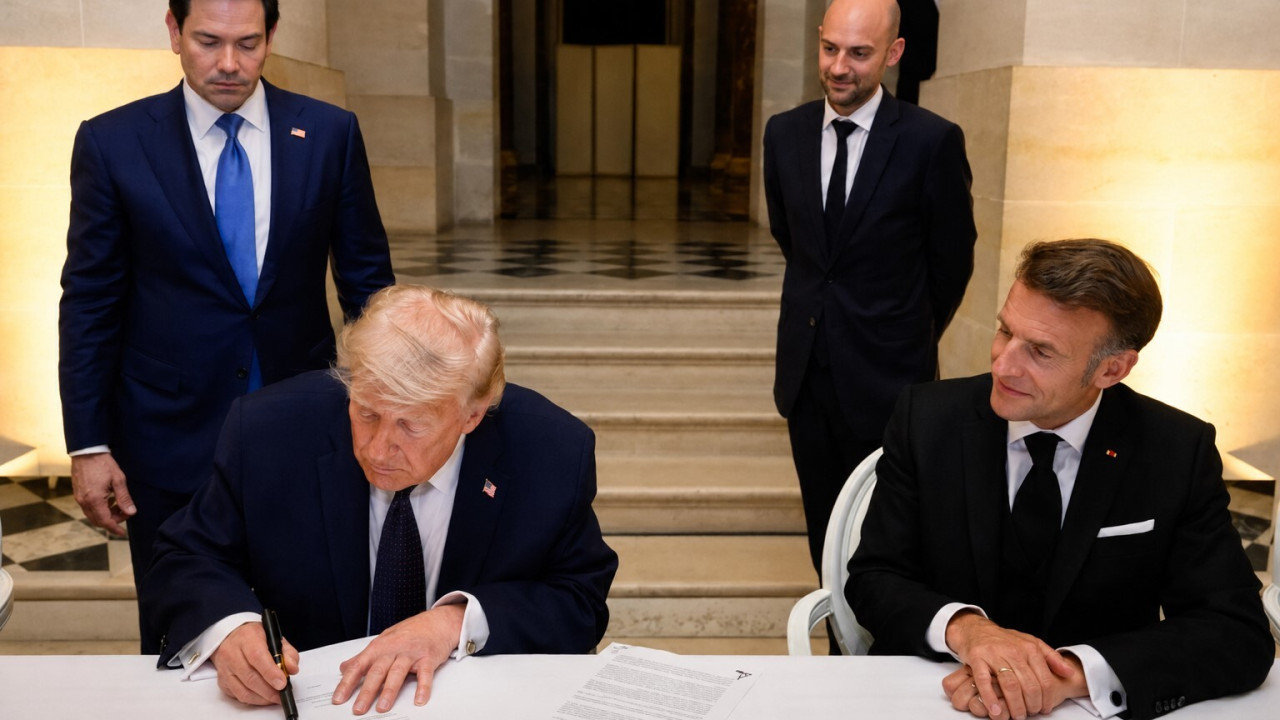
The United States and Iran have signed a memorandum of understanding that the White House is portraying as a diplomatic success. Yet the agreement also grants Tehran substantial economic relief after months of war and could provide the Islamic Republic with an opportunity to rebuild.
The memorandum calls for an immediate ceasefire, the reopening of the Strait of Hormuz, renewed nuclear negotiations, the gradual removal of sanctions, the release of frozen Iranian assets, and a reconstruction initiative worth at least $300 billion.
Washington argues that the agreement secures important concessions from Tehran. Critics, however, note that Iran enters the next phase of negotiations with access to economic lifelines that seemed out of reach only months earlier. Before the conflict, the regime faced mounting sanctions, domestic unrest, and severe economic pressures.
The memorandum now opens a new 60-day negotiating period aimed at converting the preliminary agreement into a more permanent settlement.
Strait of Hormuz Reopens, But New Disputes Loom
One of the agreement's most immediate effects is the reopening of the Strait of Hormuz, one of the world's most important energy corridors.
Iran has 30 days to complete mine-clearing operations and restore safe passage for commercial shipping. For the next 60 days, vessels will transit without fees while Tehran discusses with Oman and other Gulf states how the strait should be administered in the future.
But the arrangement leaves room for future friction. Iranian officials maintain that they retain sovereign rights over the waterway and have suggested that charges for services could eventually be introduced.
Iran Keeps Its Nuclear Infrastructure
The White House has highlighted Tehran's commitment not to pursue nuclear weapons as one of the agreement's principal achievements.
Iran has agreed to dilute its stockpile of highly enriched uranium, estimated at around 440 kilograms enriched to 60% purity. Yet Tehran has made clear that the material will remain inside the country rather than being transferred abroad, despite earlier US proposals.
As a result, the agreement limits Iran's nuclear activities without dismantling the infrastructure that supports them.
Economic Relief Could Revive the Regime
Perhaps the most consequential provisions concern Iran's economy. The memorandum allows Tehran to resume oil exports and commits Washington to pursuing the removal of sanctions. It also opens the door to the release of roughly $100 billion in frozen Iranian assets.
For a government weakened by inflation, sanctions, and years of domestic discontent, the financial impact could be profound.
The agreement also envisions a reconstruction and development initiative worth at least $300 billion, supported by the United States and regional partners. Although details remain unclear, the scale of the proposal suggests that rebuilding Iran's economy will become a major issue in the next phase of negotiations.
Lebanon Could Become the Deal's Weakest Link
The memorandum also demands an “immediate and permanent” end to the war on all fronts, including Lebanon. The provision involves Israel and Hezbollah. This was one of Iran’s main demands and, at the same time, one of the most fragile parts of the agreement.
Until now, the Israeli government has shown little willingness to halt its offensive in southern Lebanon. Iran warned that any new Israeli attack on Lebanon will be considered a violation of the memorandum.
This point could become one of the main threats to the final negotiations. If Israel continues its military operations, Tehran could accuse Washington of breaching the agreement. And if the United States tries to pressure Israel, the domestic political cost for Trump could rise.
The Deal Stops the War, But Not Iran
The White House can point to a reopened Strait of Hormuz and new restrictions on Iran's nuclear program. But Tehran walks away with renewed oil exports, access to frozen funds, the prospect of sanctions relief, and a reconstruction framework worth hundreds of billions of dollars.
Missing from the agreement are many of the goals Trump once hinted at, including regime change, the dismantling of Iran's missile program, and the breakup of Tehran's regional network of allies.
That leaves an uncomfortable possibility. A war launched to weaken the Islamic Republic may instead give it things it desperately needed: time, money, and a path to recovery.
Trump may have stopped the war. But history could remember the deal as the moment Iran got a second chance.
Loading comments...