




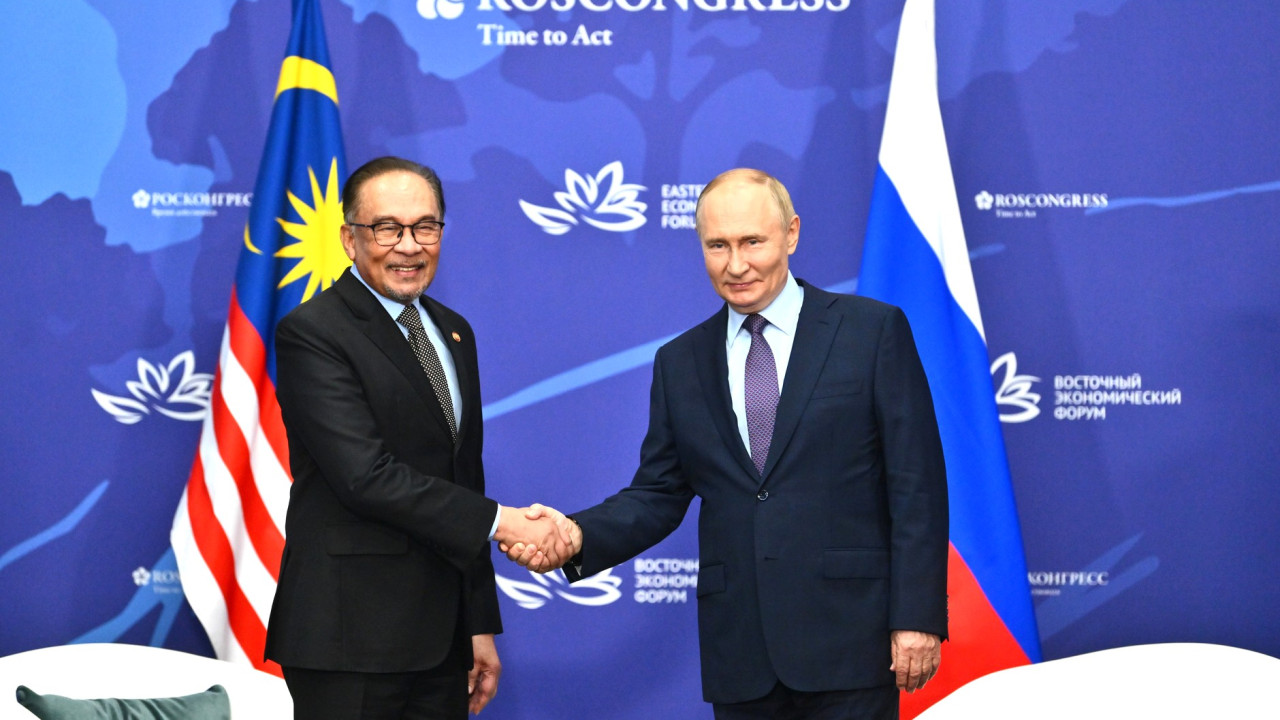
Malaysia and Russia have announced a long-term energy supply agreement to secure a stable flow of oil and natural gas to Malaysia. Malaysian Prime Minister Anwar Ibrahim announced the arrangement at the ASEAN-Russia Commemorative Summit in Kazan, Russia on June 18, 2026.
The agreement marks a shift from short-term annual and seasonal contracts toward multi-year commitments designed to improve supply stability. The move is expected to strengthen Malaysia’s energy security amid regional disruptions and growing concerns over vulnerabilities linked to the Strait of Hormuz.
Under the arrangement, Russia has committed to supplying Malaysia with energy resources for at least 20 years, providing greater certainty in securing critical supplies.
Structure of the Agreement
Implementation of the agreement is already underway, with Russian Energy Minister Sergey Tsivilyov, representatives from Russian and Malaysian state-owned energy companies, and the Joint Commission on Economic, Scientific, Technological, and Cultural Cooperation (JCESTCC) engaged in discussions and preparing a draft agreement. Anwar said the remaining steps involve finalizing the technical details before completing the formal signing process.
“Approval has already been given. Company representatives have already come here. It is now a matter of signing and finalizing the agreement,” he said.
He added that his government would accelerate the process once discussions resumed, noting that the core principles had already been agreed and only further review remained. Anwar also thanked Russian President Vladimir Putin for supporting deeper energy cooperation.
The new agreement reflects Malaysia’s broader strategy to diversify its energy partnerships, strengthen supply security, and reduce dependence on any single supplier amid evolving geopolitical and market conditions. This approach is also evident in recent energy cooperation with Turkmenistan, aimed at expanding supply sources and enhancing control over future energy flows.
Also of note, Malaysia's state-owned company, Petronas, has signed a 20-year LNG supply agreement with Japan’s JERA, the country’s largest power generator, to deliver up to 2 million tons per annum (MTPA) of liquefied natural gas annually beginning in 2028.
Risks of Relying on Russian Energy
While the new agreement may improve supply certainty, reliance on Russian energy can come with political, financial, and logistical risks.
A major concern is exposure to secondary sanctions from Western countries, particularly the United States and G7 nations, which have expanded restrictions on Russian energy trade in response to the war in Ukraine. These measures complicate payments, increase transaction costs, and disrupt access to shipping and insurance services.
The Malaysia-Russia arrangement also relies on long distance maritime routes that remain vulnerable to geopolitical disruption. Unlike pipeline supplies from neighboring countries, Russian oil and liquefied natural gas shipments depend on complex shipping networks, increasing exposure to strategic choke-points.
Supply reliability is another concern. Russia has previously restricted refined petroleum exports during periods of domestic pressure, creating the possibility that internal demand could take priority over international commitments during future shortages.
Beyond the Agreement
The Malaysia-Russia energy deal highlights the balance between immediate energy security and long-term strategic resilience. While longer contracts may reduce exposure to short term market shocks, they do not eliminate deeper vulnerabilities. Dependence on Russian supplies leaves Malaysia exposed to sanctions risks, shipping disruptions, and potential supply prioritization during geopolitical crises.
The central question is whether these partnerships create genuine resilience or simply redistribute existing risks. Malaysia’s long-term energy security will depend on balancing diversified imports, domestic capacity, and investment in cleaner alternatives rather than relying too heavily on any external partner.

Loading comments...