




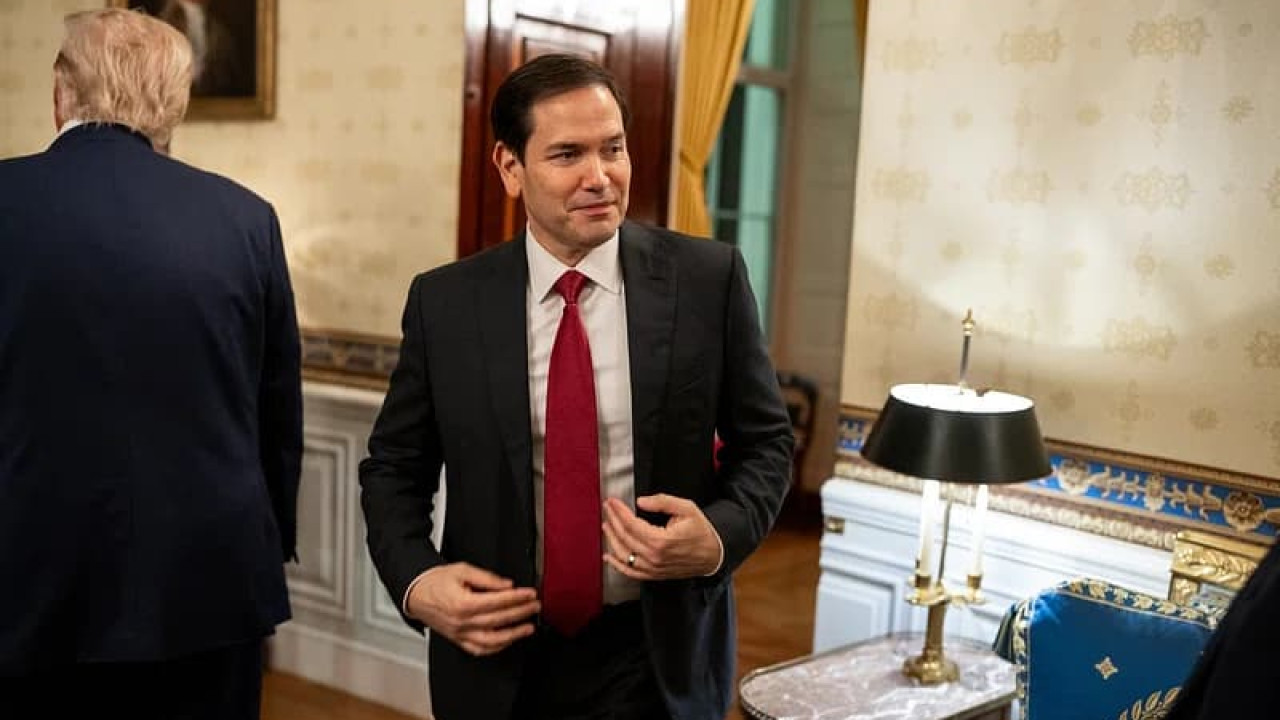
On July 22, 2026, US Secretary of State Marco Rubio met Philippine President Ferdinand "Bongbong" Marcos Jr. at the Malacañang amid escalating South China Sea tensions and increasingly provocative Chinese rhetoric.
The visit followed a series of developments that further strained China-Philippines relations. On July 10, China Daily published a video portraying Filipinos as monkeys to coincide with the tenth anniversary of the 2016 South China Sea Arbitral Award, drawing widespread condemnation. On July 16, China unveiled a 100-meter observation tower in the northern South China Sea, further reinforcing its presence in disputed waters. Four days later, Chinese and Philippine vessels confronted each other, with both sides accusing the other of dangerous actions.
Key Defense and South China Sea Issues Discussed
Secretary Rubio and President Marcos reaffirmed the United States' "ironclad" commitment to the Philippines under the Mutual Defense Treaty while emphasizing freedom of navigation and support for the 2016 South China Sea Arbitral Award.
Beyond security, the meeting highlighted Washington's broader Indo-Pacific strategy through the Luzon Economic Corridor, including more than $100 million in planned US support for infrastructure, energy, and logistics projects, alongside preparations for the inaugural Investment Forum.
The two leaders also discussed the Philippines' participation in the controversial Pax Silica initiative and welcomed the deployment of the US Coast Guard's Expeditionary Cutter Squadron to enhance maritime cooperation.
Collectively, the discussions underscored that the US-Philippines alliance is expanding beyond military deterrence to encompass economic resilience, supply chain security, and long-term strategic competition with China.
Can Washington Deliver on Its Commitments?
The commitments outlined during the meeting build on years of expanding US engagement in the Philippines. Yet, reaffirming the alliance is only one part of deterring Beijing.
As China continues to expand its military capabilities and assertive activities in the South China Sea, Washington's credibility will increasingly depend on whether it can sustain the military and economic investments needed to support its strategic objectives.
Through the Enhanced Defense Cooperation Agreement (EDCA), Washington has secured access to nine strategically located bases and invested heavily in their modernization, allocating $500 million in Foreign Military Financing in 2024, followed by $128 million in 2025 and $144 million in 2026 for infrastructure. The Philippine Enhanced Resilience Act (PERA) further authorizes up to $3.5 billion over five years to strengthen coastal defense, cyber capabilities, and military modernization.
However, Beijing's rapid military modernization and increasingly frequent confrontations in disputed waters suggest that maintaining a favorable balance of power will require a new phase of sustained investment in military infrastructure, advanced capabilities, and defense-industrial cooperation with frontline allies.
If US Investment Slows, Who Fills the Gap?
Should Washington prove unable to sustain this next phase of investment, Manila will likely seek to broaden its network of security partners. Rather than replacing the United States, Japan and Europe are well positioned to reinforce the Philippines' long-term defense posture.
Japan has relaxed defense export restrictions and is expanding security cooperation across Southeast Asia, creating new opportunities for the Philippines to acquire advanced military equipment and strengthen its maritime capabilities. Simultaneously, Europe is increasing its Indo-Pacific engagement through naval deployments, defense-industrial partnerships, and security cooperation, reflecting its growing interest in protecting regional stability and global trade routes.
The United States will remain the cornerstone of Philippine security for the foreseeable future. However, Rubio's visit also underscored the reality that as competition with China intensifies, Manila's long-term resilience will depend not only on sustained US commitments but also on a more diversified network of defense and economic partnerships.


Loading comments...