




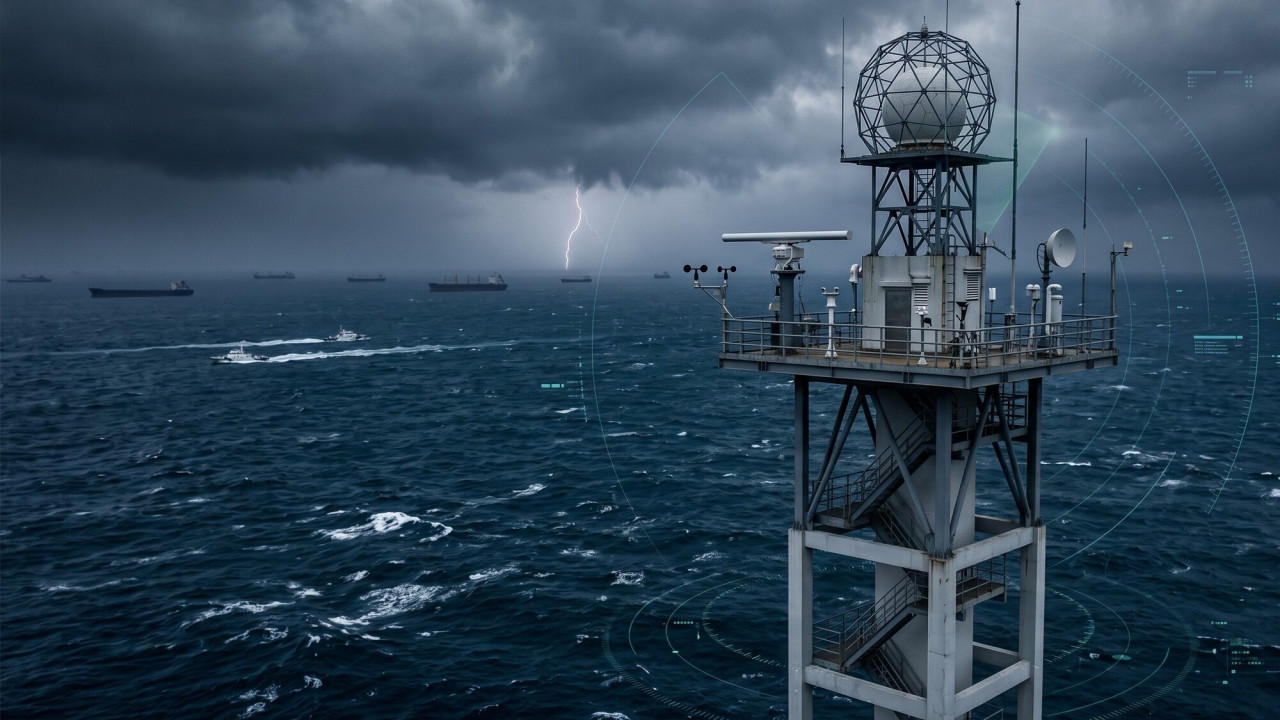
China has built a 100-meter observation megatower in the northern South China Sea, near the country's southern coast. According to Chinese media, the structure is designed to monitor typhoons and collect real-time meteorological data.
Its size and location, however, suggest it could serve a broader strategic purpose. China has increasingly used civilian infrastructure to reinforce its presence in one of East Asia's most sensitive maritime regions, an area that is also important to the New International Land-Sea Trade Corridor, also known as the ILSTC.
The Tower’s Location And Capabilities
The tower is located near China's southern coast, about 80 kilometers from Yangjiang, the Leizhou Peninsula, and Hainan, in waters around 50 meters deep. The structure was designed to withstand super typhoons, extreme waves, and high levels of salinity.
It is reportedly equipped with hi-tech sensors that can measure wind speed, temperature, humidity, and air pressure at different altitudes. These characteristics are important for scientific missions, giving the project a layer of legitimacy.
At the same time, infrastructure of this kind has clear dual-use potential. Continuous monitoring of weather, sea conditions, and maritime activity can also support maritime surveillance and military operations.
Another reason for the tower may be to help Beijing protect trade linked to the ILSTC, a project designed to connect inland China with Southeast Asia in order to reduce China's dependence on exposed coastal shipping routes near Taiwan, Japan, and the wider Western Pacific.
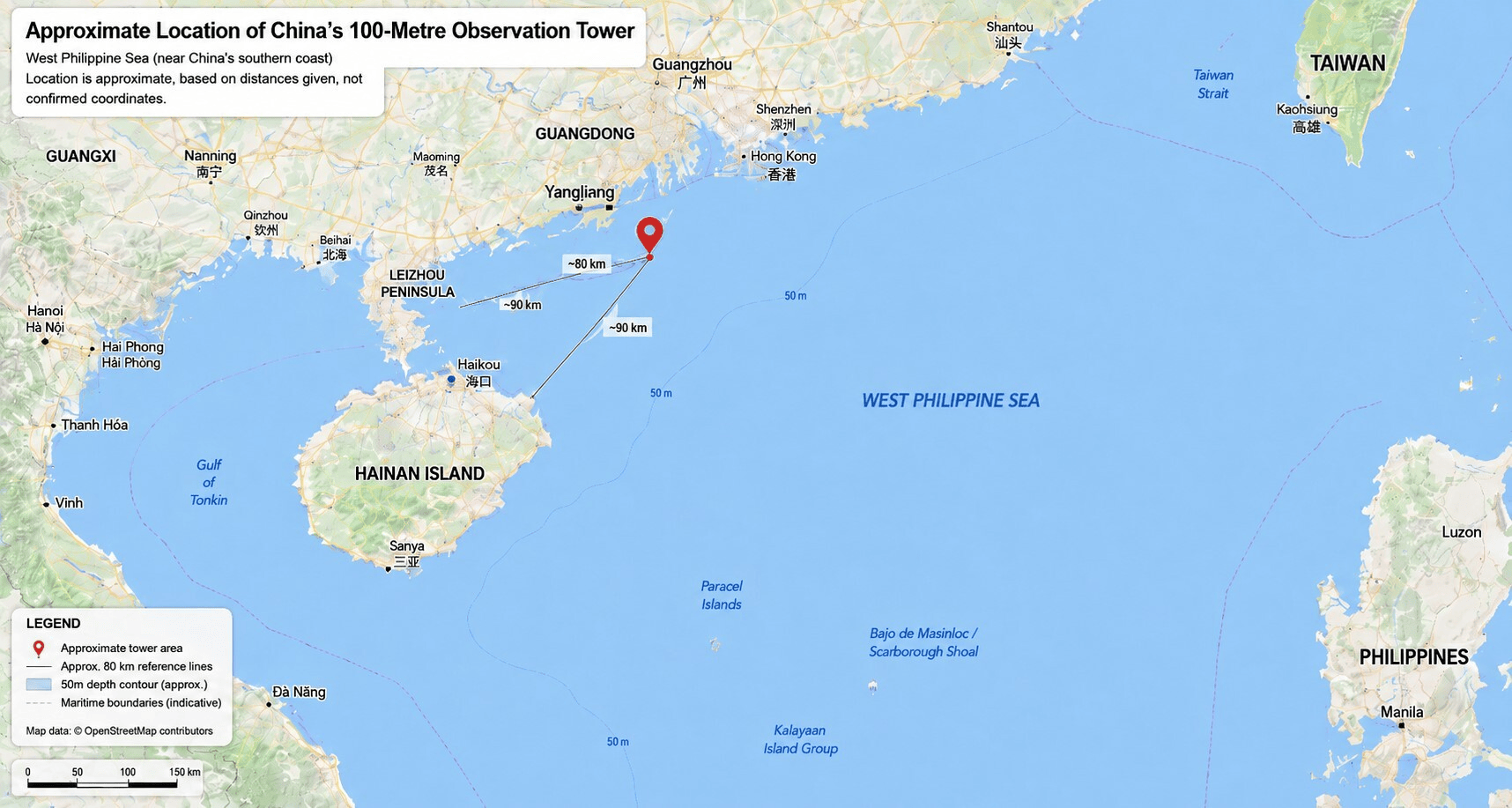
A map showing the location of China's new 100-meter tower
China’s Sneaky Infrastructure Strategy
The new tower fits a broader pattern in China's approach to the South China Sea. Rather than relying solely on military deployments, Beijing tries to expanded its presence through infrastructure that appears civilian but is actually used for political purposes.
The clearest example is the construction of artificial islands in the West Philippine Sea. Beijing has transformed reefs into permanent outposts equipped with ports, airstrips, radar systems, and military facilities, despite a 2016 UNCLOS tribunal ruling that rejected China's expansive maritime claims. The Philippines has been the country most directly affected by these activities.
China has also been accused of using parts of its fishing fleet as a maritime militia, with vessels operating in coordinated formations to monitor maritime activity, reinforce China's illegal claims, and support military operations during periods of heightened tension.
Against that backdrop, the new observation tower is unlikely just another weather station. Instead, it expands China's network of permanent infrastructure in the South China Sea and reinforces Beijing's illegal claims and aggression in one of the world's most strategically contested waterways.


Loading comments...