




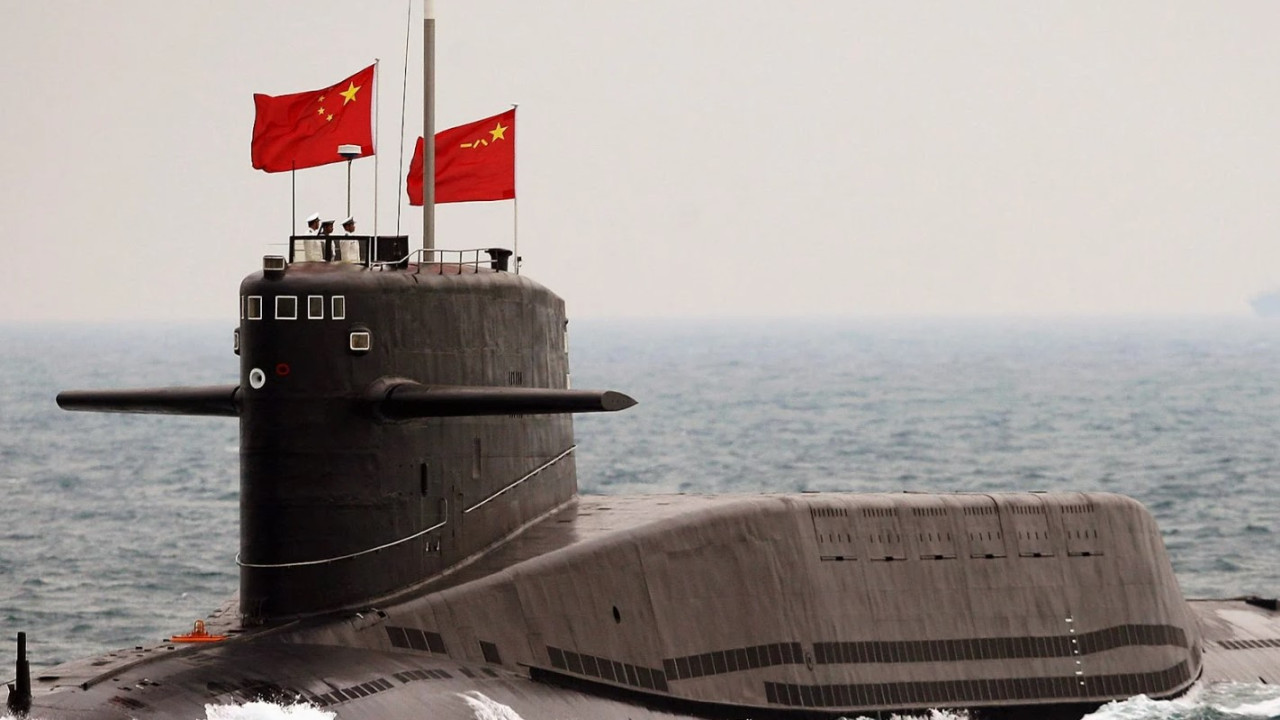
China’s navy launched a long-range ballistic missile on Monday, July 6, from a nuclear-powered submarine into Pacific waters. China’s state news agency Xinhua said the missile carried a simulated nuclear warhead, adding that the Chinese military did not specify where exactly the missile landed.
The launch triggered protests and concern across the region. For Southeast Asia, the most important question is not only where the missile landed, but also what its flight path was. According to Joseph Wu, secretary-general of Taiwan’s National Security Council, the missile’s trajectory went southeast from China, over the Philippines, and then near Micronesia and Palau before landing south of Nauru.
If the trajectory published by Taiwan is correct, the Philippines was placed directly under the missile’s reported path. For a country that already faces Chinese pressure in the West Philippine Sea, the launch adds a new layer of concern.
China’s New Nuclear Reach
The launch comes at a time of deep strategic uncertainty. China is rapidly modernizing its military and nuclear capabilities, but not being transparent about the developments. This leaves neighboring countries trying to understand Beijing’s intentions by watching its military movements.
Several analysts see the test as a signal aimed at the United States. Japan, Australia, and New Zealand received advance notifications, but Washington did not, according to available information.
The message Beijing was likely trying to send to Washington is that its nuclear deterrent no longer depends only on land-based missiles. The ability to launch nuclear-capable missiles from submarines strengthens China’s "second-strike capability," referring to its ability to respond after a nuclear attack. Submarines are harder to detect than missile silos or land-based launchers, and they allow a nuclear power to project threat from the sea. In strategic terms, China is showing that it can move part of its nuclear deterrent away from its own territory and closer to the maritime routes of the Indo-Pacific.
China officially maintains a policy of “no first use” of nuclear weapons. However, it is also expanding its arsenal and modernizing its nuclear platforms. Many analysts estimate that China had around 600 nuclear warheads in 2024 and could have more than 1,000 by 2030.
China Faces Regional Criticism
New Zealand said it was informed only a few hours in advance and expressed concern because the missile was fired toward the South Pacific Nuclear Free Zone. That zone was created by the 1986 Treaty of Rarotonga, which seeks to keep the South Pacific free of nuclear weapons.
China ratified the treaty protocols in 1987, committing not to carry out nuclear tests in the zone or threaten to use nuclear weapons against signatories with territory in the region. Although Beijing says the test carried a simulated warhead and complied with international law, the launch clashes with the treaty’s political purpose of preserving the Pacific as a zone of peace.
Australia also criticized the test. Foreign Minister Penny Wong said the launch was “destabilizing” for the region. The Australian government also said the notification was insufficient and that China’s conduct did not meet the transparency standards linked to the Hague Code of Conduct against Ballistic Missile Proliferation, which promotes advance notice for missile and space launch vehicle tests.
Japan expressed concern about China’s growing military activity and Beijing’s lack of transparency. Chief Cabinet Secretary Minoru Kihara said China’s military activities and rising defense spending have become a serious concern for Japan and for the international community.
For its part, the Philippines described the test as a reckless display of military power that threatens regional stability and the security of smaller countries. For Manila, the launch works as a provocation against countries that reject China’s illegal expansionism and coercive conduct. The Philippine government warned that this kind of action raises tensions and weakens efforts to keep peace in shared waters.
The Philippines also expressed solidarity with its Pacific partners and urged China to act responsibly, instead of turning international waters into spaces of intimidation and imperial ambition.
Beijing rejected the criticism and asked countries in the region to avoid “excessive interpretations.” According to China, the test was part of annual training, was carried out safely, and was not directed at any country.
Why This Matters to Southeast Asia
For Southeast Asia, this missile test touches on three regional concerns: the security of maritime routes, Chinese military pressure, and the difficulty of trusting Beijing when it acts first and explains later.
If China normalizes long-range missile tests over or near sensitive areas of the Indo-Pacific, other Southeast Asian countries will also have to ask how protected they really are by the current systems for notification, consultation, and crisis prevention.
The test also comes at a time of growing security alignment between Australia and the Pacific islands. On the same day as the launch, Australia and Fiji signed a new mutual defense treaty. There is no clear evidence that the two events are directly connected, but the timing strengthens the perception that the Pacific is becoming more and more competitive, increasing the changes of conflict breaking out.

Loading comments...