





For decades, the Indo-Pacific was defined by oceans. Today, it is being increasingly defined by islands.
From Japan and Taiwan to the Philippines and Indonesia, a vast island chain cuts across the western Pacific and some of the world's busiest sea lanes. As strategic competition between China and the United States intensifies, these islands are emerging as critical pieces of a regional security network that could shape the future of Asia.
Why Island Chains Are Reshaping Military Strategy
The First Island Chain, stretching from Japan through Taiwan to the Philippines, has become a key focus of defense planning across the Indo-Pacific. Military leaders increasingly see these islands as natural barriers that can help monitor naval movements, strengthen deterrence, and protect critical sea lanes.
The United States and the Philippines recently agreed to deepen defense cooperation along the First Island Chain. Their latest Balikatan exercises brought together forces from Australia, Japan, Canada, France, and New Zealand, highlighting how regional security is becoming a shared effort. The drills included coastal defense operations, maritime surveillance, missile exercises, and joint responses to potential threats in contested waters, reflecting growing efforts to strengthen deterrence across the region.
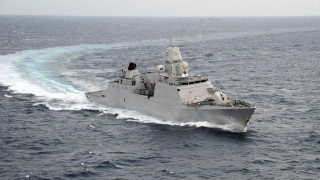
Japan is also taking on a larger role. At the end of May 2026, Tokyo and Manila launched talks on an intelligence-sharing agreement and maritime boundary cooperation. Japan is also discussing the transfer of Abukuma-class destroyers to the Philippines, a move that could significantly strengthen Manila's naval capabilities. The Abukuma-class are coastal defense warships designed for anti-submarine warfare, patrol missions, and protecting nearby sea lanes. The vessels were originally built to patrol Japan's coastal waters and track submarines, making them well-suited for monitoring contested maritime areas in the Indo-Pacific.
The Battle to Protect Critical Shipping Routes
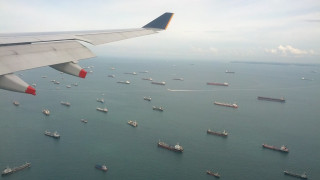
Military power in the Indo-Pacific is closely tied to control of maritime chokepoints. The Strait of Malacca, located between Indonesia, Malaysia, and Singapore, remains one of the world's most important shipping corridors. Nearly 80% of China's imported oil passes through this narrow waterway.
Recent disruptions around the Strait of Hormuz exposed how vulnerable global trade can become when a major maritime route faces instability. If Malacca were disrupted, ships would likely be rerouted through Indonesia's Lombok, Sunda, and Makassar Straits.
That gives Indonesia a unique strategic position. With more than 17,000 islands spread between the Indian and Pacific Oceans, the country controls access to several alternative maritime corridors. As global competition intensifies, Jakarta's geography is becoming a source of influence as well as responsibility. Any major increase in shipping through the Lombok, Sunda, or Makassar Straits would place greater demands on Indonesia's navy, coast guard, and port infrastructure.
Indonesia is already responding. The country has stepped up maritime patrols and expanded cooperation between its navy, coast guard, and other security agencies. It is also developing a national maritime surveillance network that includes coastal monitoring towers, drones, command centers, and AI-supported monitoring systems designed to track activity across its vast waters in real time. These efforts reflect a broader push to strengthen maritime security and strategic autonomy as competition across the Indo-Pacific intensifies.
New Defense Networks Are Taking Shape
Countries across the region are building new partnerships rather than relying solely on traditional alliances. The "Quad" nations — Australia, India, Japan, and the United States — recently announced their first joint port infrastructure project in Fiji while expanding maritime surveillance cooperation across the Indo-Pacific.
The Philippines is also developing what military planners call a "porcupine defense" strategy. Instead of relying only on large warships, Manila is investing in smaller autonomous maritime systems, coastal missile networks, and distributed surveillance platforms across its archipelago. The goal is to make any military operation against Philippine waters far more difficult and costly.
These developments point to a broader shift. Security in the Indo-Pacific is no longer defined by a single naval power. Instead, a growing network of island nations, strategic waterways, and regional partnerships is reshaping how military power is projected across two oceans.
The future balance of power will depend less on who has the largest fleet and more on who can secure the islands and sea lanes that keep the region connected.
Loading comments...