




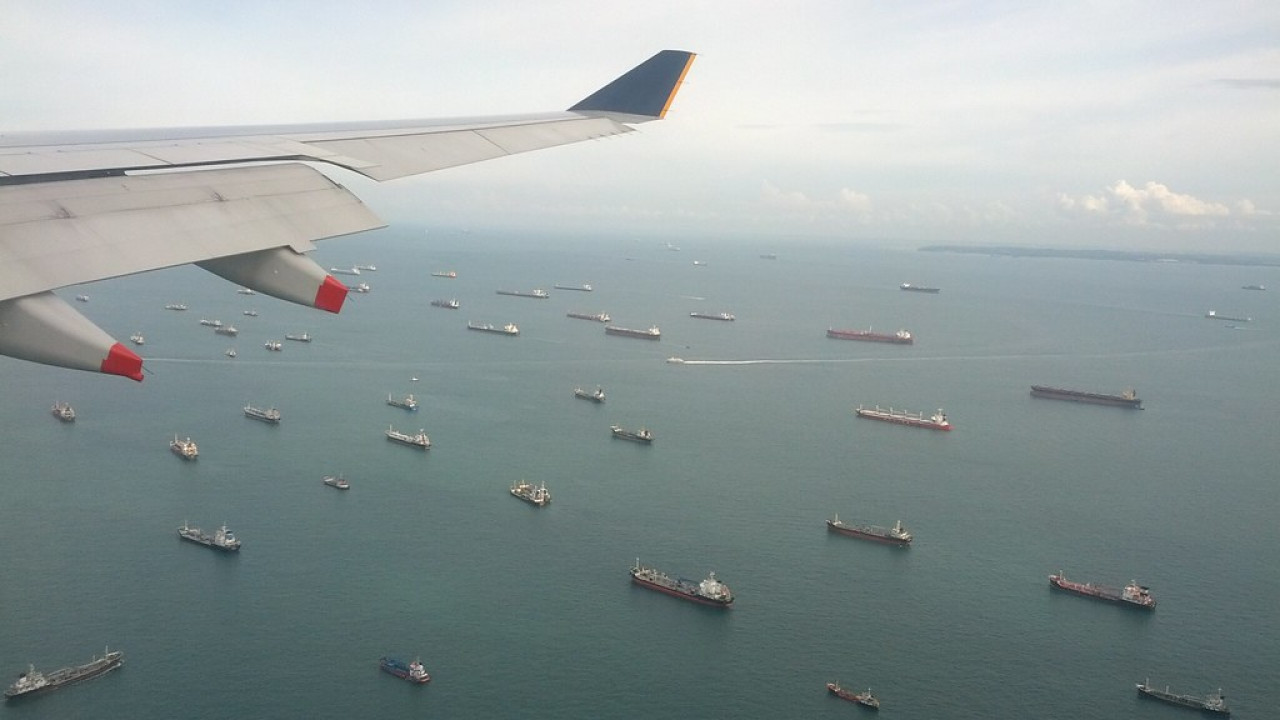
A new defense agreement between the United States and Indonesia has put one of the world's most important shipping routes under a spotlight. The Major Defense Cooperation Partnership aims to strengthen maritime security near the Strait of Malacca, a key waterway that carries about 25% of global seaborne trade. While officials describe the deal as a security measure, analysts are debating its wider impact on regional politics and economic competition.
Why the Malacca Strait Matters
The Strait of Malacca sits between Indonesia, Malaysia, and Singapore. It serves as a major route for ships carrying energy, goods, and raw materials between Asia, the Middle East, Europe, and beyond.
Because so much global trade passes through this narrow corridor, any change in security policy attracts international attention. For the United States, stronger cooperation with Indonesia supports its broader Indo-Pacific strategy. For businesses and governments, keeping trade flowing smoothly remains a top priority amid disruptions linked to the US-Israel-Iran war.
Rising Focus on China and Energy Routes
The agreement has also renewed discussion about China's dependence on the Strait of Malacca. A large share of China's imported energy travels through the route before reaching Chinese ports.
Around 80% of China's imported crude oil, along with most of its liquefied natural gas (LNG) shipments, travels through the Strait of Malacca. This strong dependence on a single and narrow shipping route has long been viewed as a major strategic weakness, often referred to as the "Malacca Dilemma."
Increased US involvement around the strait could strengthen Washington's ability to influence the critical maritime chokepoint during future tensions. With conflict unfolding between the US and Iran at the Strait of Hormuz, it's become clear how control over strategically important maritime routes can affect global trade, energy flows, and military calculations. Ultimately, having legitimate military presence in chokepoints can potentially shift the balance of power during periods of conflict or heightened geopolitical tension.
Furthermore, the US-Indonesia partnership can also be viewed as a security effort designed to combat threats such as piracy, illegal fishing, and maritime crime. This argument has gained additional weight as piracy and armed robbery in the Straits of Malacca and Singapore recently surged to a 19-year high, with 108 incidents recorded in 2025, highlighting ongoing security challenges along one of the world's most important maritime trade routes.
Political Questions Draw Attention
The new US-Indonesia partnership arrives at a time when Jakarta's domestic political trajectory is attracting growing international attention. President Prabowo Subianto's leadership and policy agenda have come under increasing scrutiny from foreign media, investors, and political observers, with some commentators raising concerns about economic performance and the legitimacy of democratic institutions.
Such concerns are fueled by the Indonesian rupiah’s continuous negative trajectory. In May 2026, the currency was trading around 17,400 per one US dollar after pushing past the 17,000 threshold and reaching its weakest level in modern history, even below its position during the Asian Financial Crisis.
This heightened attention has also extended into the US’s largest online betting platform, Polymarket, where political outcomes and future developments are increasingly becoming subjects of speculation gambling. A new group of bets has emerged on the platform focused on the President Subianto's future, allowing the public to place bets on potential scenarios surrounding his leadership. While such markets are not reliable predictors of real-world events, their activity can serve as a social reflection of broader international sentiment and uncertainty.
The growing focus on Indonesia's political direction suggests that the country is being viewed not only as a key regional middle-power, but also as a strategically important state whose domestic stability carries implications for wider geopolitical and economic dynamics across Southeast Asia.
Malacca Strait Power and Regional Stability
The US-Indonesia defense partnership highlights how the Strait of Malacca has become a central point in global trade security and geopolitical competition. As major powers increase their focus on maritime chokepoints, the region is gaining importance far beyond Southeast Asia.
Simultaneously, Indonesia’s domestic political and economic conditions are drawing closer international attention, adding another layer of uncertainty to its strategic role. Together, these developments show how security, economics, and politics are increasingly interconnected in shaping the Indo-Pacific landscape and the future balance of the region.



Loading comments...