




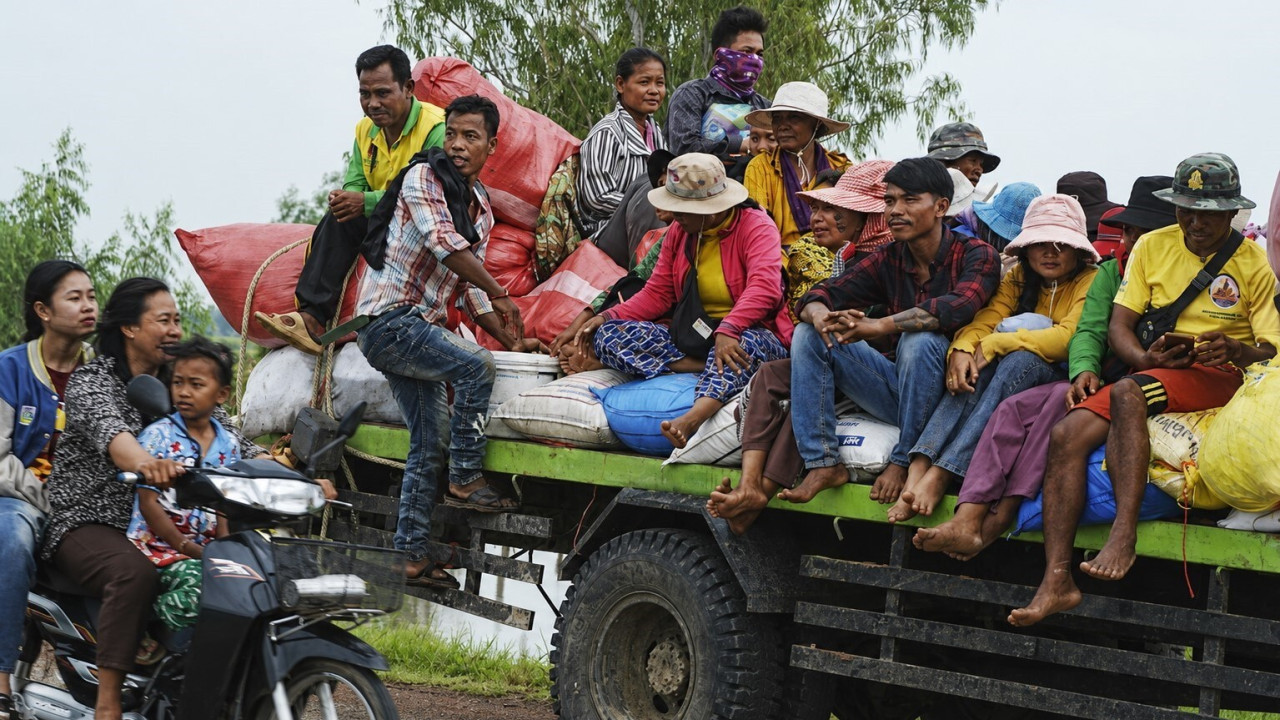
The Association of Southeast Asian Nations (ASEAN) has spent years treating Myanmar as its great credibility test. But the more consequential test now sits on the Cambodia-Thailand border, where two members of the bloc have turned a territorial dispute into armed conflict.
ASEAN was not created to make its members democratic, liberal, or morally consistent. It was created to keep the region stable enough for governments to survive, economies to grow, and neighbors to stop threatening each other.
That is why the fighting between Cambodia and Thailand matters so much. It is exactly the kind of member-on-member crisis ASEAN was supposed to prevent.
When Two ASEAN Members Go To War
The conflict between Cambodia and Thailand has old roots. The neighbors have long clashed over land borders shaped by colonial maps, contested temples, competing national memories, and military pressure along their shared frontier. In 2025, that tension turned into open fighting. The violence killed soldiers and civilians, displaced thousands of people, and pushed both governments into harder political positions.
The dispute has also moved into the Gulf of Thailand, where Cambodia has initiated a UN process over a maritime area claimed by both countries. The contested zone is believed to contain major oil and gas resources, making the fight about money as well as sovereignty.
This in mind, the dispute now combines territorial claims, energy resources, domestic politics, and national prestige. Thailand wants the issue handled mainly through bilateral talks, where it can use its larger economy, stronger military, and deeper diplomatic weight. Cambodia, meanwhile, wants to internationalize the dispute, where outside forums can help offset Thailand’s advantage.
The split leaves ASEAN in a weak position. The bloc depends on quiet diplomacy, consensus, and restraint. But when two members cannot even agree on where the dispute should be settled, ASEAN has little room to lead.
The Conflict Is No Longer Just About Territory
The conflict also helped blow up Thai politics. A leaked phone call between Cambodia’s Hun Sen and Thailand's then-Prime Minister Paetongtarn Shinawatra triggered a political crisis in Bangkok. In the call, Paetongtarn appeared deferential toward Hun Sen and even criticized one of his own military commanders. In a country where the army remains deeply powerful, that was explosive.
The backlash weakened Shinawatra's government, fed nationalist anger, and ultimately led to her removal by Thailand’s Constitutional Court. Cambodia did not single-handedly topple a Thai prime minister, but the leak gave her opponents a weapon at the worst possible moment.
For Thailand, compromise suddenly became politically dangerous. For Cambodia, standing firm became a way to project strength. Each side had domestic reasons to look tough. Each side had less room to step back.
Social media made the situation worse. Images of attacks, claims about mines, nationalist posts, and anger over casualties hardened public opinion. Every incident became proof of betrayal or aggression. Every concession looked like weakness.
ASEAN is not built for that kind of pressure. It works best when disputes can be softened behind closed doors. Cambodia and Thailand dragged the conflict into public, legal, military, and nationalist arenas at the same time.
ASEAN's Real Credibility Test
Cambodia's decision to seek the involvement of US President Donald Trump in ceasefire efforts illustrates what happens when ASEAN is perceived as unable to lead. The organization has long argued that Southeast Asian security should be managed primarily within the region. Yet when member states begin looking outside ASEAN for mediation, that claim becomes increasingly difficult to sustain.
This is why the Cambodia-Thailand dispute matters more than Myanmar in institutional terms. Myanmar exposed ASEAN's difficulty in influencing one member's internal crisis. Cambodia and Thailand raise a different question: whether the organization can prevent conflict between members whose disputes threaten regional stability itself.
If ASEAN cannot help contain armed clashes between two of its own members, its problem is no longer one of image. It is one of purpose.
The credibility of ASEAN has never depended on solving every dispute. But it has always depended on convincing its members that regional problems are best managed regionally. The Cambodia-Thailand crisis suggests that assumption can no longer be taken for granted.

Loading comments...