




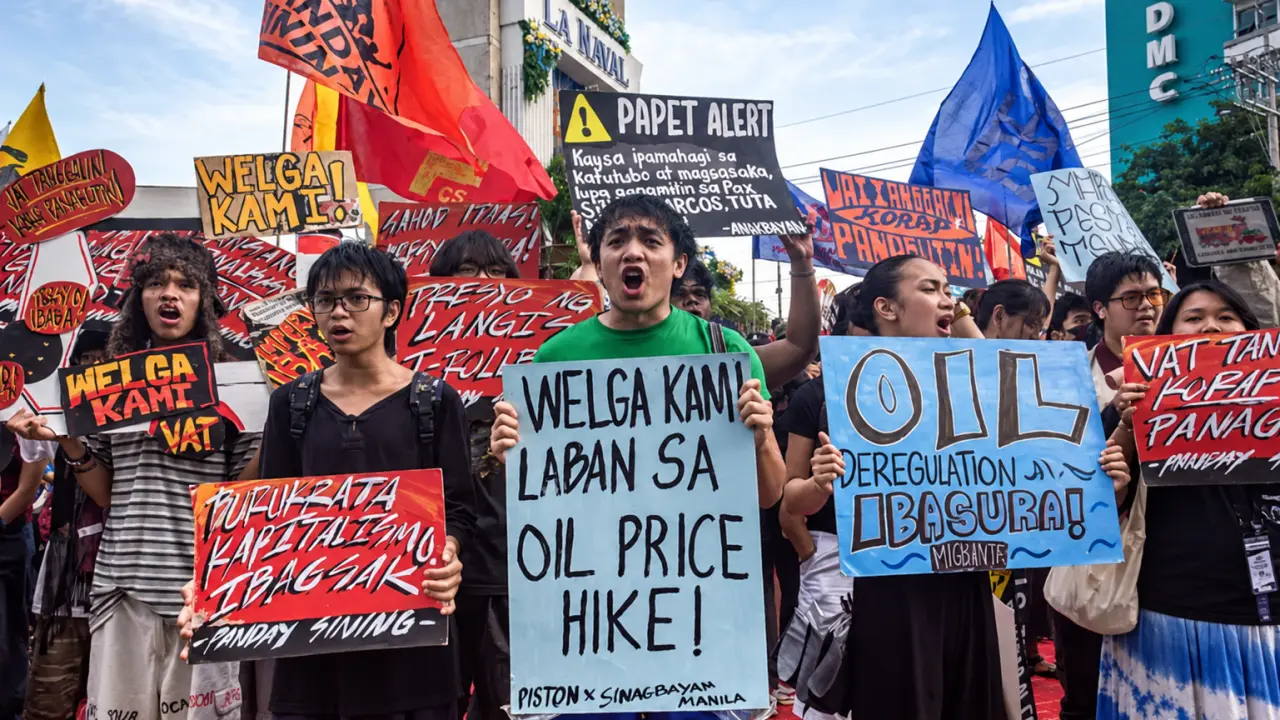
On October 20, diesel prices rose again in the Philippines, as the war in the Middle East puts further pressure on an economy heavily dependent on imported fuel.
Philippine inflation reached 7.2% in September, with rice prices climbing 20.3% year-on-year and transportation costs rising 14.6% year-on-year. For millions of Filipino families, these increases mean shrinking purchasing power.
But a far greater danger lies ahead. Two unresolved wars, increasingly expensive credit, and growing instability in financial markets threaten to turn today's economic difficulties into a much deeper crisis.
Two Wars Threaten Filipino Households
The US war against Iran has kept oil prices above $100 per barrel. Attacks on vessels in the Strait of Hormuz are driving up shipping costs and threatening energy supplies across Asia.
For the Philippines, the consequences are particularly severe. Higher fuel prices raise operating costs for jeepney drivers, inter-island shipping companies, fishing fleets, farmers, and electricity producers. Those costs eventually reach consumers already struggling to make ends meet.
The Russia-Ukraine war adds another layer of uncertainty. Washington has temporarily eased some sanctions on Russian diesel exports to relieve pressure on global fuel markets, while both conflicts remain unresolved.
The International Monetary Fund has already warned that rising oil import costs are weakening the Philippines' economic outlook. In September, it projected growth of just 3.4% for 2026, with further downside risks if the fighting continues.
A Financial Crisis Could Deliver Another Blow
The danger extends far beyond fuel prices. Rising inflation is forcing central banks to maintain restrictive monetary policies, making borrowing more expensive for households and businesses.
The Bangko Sentral ng Pilipinas has already raised its benchmark interest rate to 5% in an attempt to contain inflation.
Another major vulnerability is the Philippines' dependence on overseas remittances. If the war disrupts employment for Filipino workers in the Middle East, thousands of households could lose income just as living costs continue to rise.
Meanwhile, mounting government and corporate debt, combined with massive investments in artificial intelligence, is raising concerns about global financial stability. The IMF has warned that a correction in technology markets and prolonged wars could undermine global growth.
On October 14, Philippine central bank Governor Eli Remolona urged Asian economies to guard against a repeat of the 1997 financial crisis.
The Philippines now faces a double threat: inflation eroding purchasing power and a potential financial shock that could restrict credit, discourage investment, and put jobs at risk.
The Philippines does not need to fight in any of these wars to suffer their consequences. If the conflicts drag on and global financial markets descend into crisis, Filipino families could face more than rising prices. Their jobs, incomes, and financial security could also come under threat.


Loading comments...