




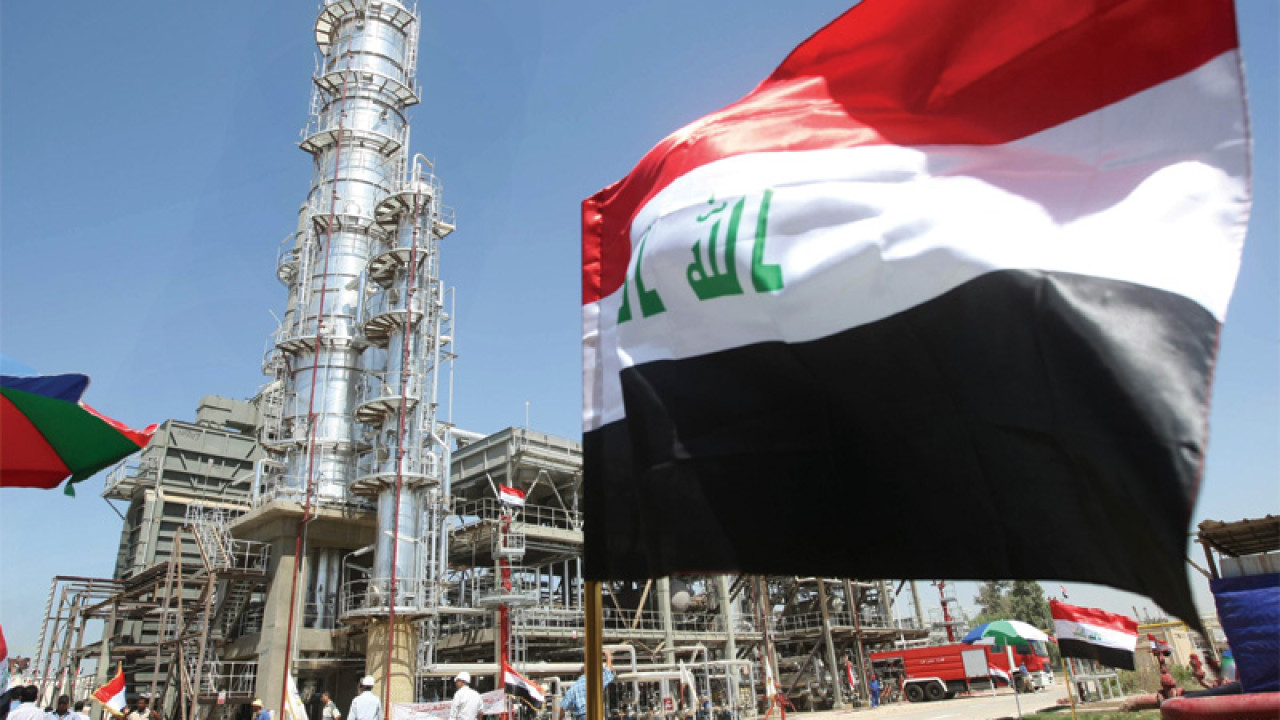
Iraq has weighed leaving OPEC if the group refuses to grant Baghdad a significantly higher oil production quota, deepening the pressure inside a cartel already weakened by recent exits and growing internal disputes.
The dispute would add to OPEC’s internal strains and put fresh pressure on Saudi Arabia’s role as the group’s dominant power. Angola left OPEC in 2024 after a quota dispute, and the United Arab Emirates walked away in May of this year. Iraq’s flirtation with leaving is another sign that unity inside the cartel is becoming harder to maintain.
Baghdad's departure would be significant because Iraq is OPEC’s second-largest producer, behind only Saudi Arabia, and one of the group’s founding members. Its warning also comes at a difficult geopolitical time. Iraq depends heavily on oil income, but its exports have been hit hard since the Iran war disrupted shipping through the Strait of Hormuz.
Why Iraq Wants A Higher OPEC Quota
Iraq’s push for a higher production quota comes at a moment when OPEC+ is reassessing how it defines the oil capacity of its members. The review includes OPEC states, Russia, and other allied producers, and its results will shape the output baselines used for future production quotas, including those set for 2027.
At stake is not Iraq’s current output alone, but its future ceiling. The OPEC quota system determines how much each member is allowed to produce when demand conditions change and when countries regain or expand production capacity. In that sense, the current negotiation is about long-term positioning inside the global oil system.
For Iraq, this matters because it argues that its assigned quota no longer reflects its actual production potential, its population size, or its economic needs. Over the past decade, Baghdad has worked to rebuild and expand its oil sector, relying heavily on international energy companies to restore capacity damaged by conflict and underinvestment.
But Iraq’s production history complicates its position. Before recent disruptions, it was already producing above its assigned quota. After years of war, sanctions, and infrastructure damage, output fell sharply, leaving it operating below potential. As recovery continues, Iraq now wants room to expand again without being constrained by legacy limits.
This creates a structural tension inside OPEC+. The quota system is designed to balance stability and discipline across producers, but it often struggles to keep pace with countries whose capacity is changing quickly.
In many ways, Iraq’s position mirrors that of the United Arab Emirates. Both countries have invested heavily in expanding production capacity and modernizing their energy sectors. Both have grown increasingly frustrated with a system that limits how much of that capacity they can actually bring to market.
The difference now is timing. As OPEC+ recalibrates its baselines, Iraq is trying to ensure that its post-recovery trajectory is locked into the system before new production ceilings are fixed.
The Saudi Arabia Problem
OPEC depends on its members accepting production limits in exchange for broader market stability. That model becomes harder to defend when major producers are under fiscal pressure and believe they are being held back by rules that no longer match their capacity.
For Saudi Arabia, this is the central problem. If Riyadh gives Iraq more room to pump, other producers may demand the same treatment. If it refuses, Iraq’s threat becomes another public sign that Saudi authority inside OPEC is weakening.
Saudi Arabia still holds large spare production capacity, which gives it a powerful lever over the market. But that lever is risky to use. If Riyadh increases output to discipline other producers, it could accelerate the very price decline it wants to avoid. If it holds back while others pump more, it risks losing market share.
Could Oil Fall Below $50 A Barrel?
If countries inside OPEC stop agreeing on how much oil to produce, they may start pumping as much oil as they can to protect their own income. Right now, OPEC tries to keep oil prices stable by setting production limits for each member country. But if that system breaks down, those limits stop mattering.
Brent crude has dropped from over $115 in March to around $75 today, closer to where it was before the US-Israel-Iran war disrupted global energy markets.
If major producers like Iraq, the United Arab Emirates, and others decide to ignore or loosen their production limits, global supply could rise quickly. More supply usually means lower prices, especially if demand does not rise at the same pace.
That is where the possibility of oil falling below $50 comes in. This is not expected right now, but it becomes more realistic if OPEC stops acting like a coordinated group and starts behaving more like individual competitors.
For Saudi Arabia, this creates a difficult choice. If it increases production to pressure other members, it could help push prices down and hurt everyone’s income. But if it keeps production low, it risks losing market share to countries that decide to pump more oil anyway.
A Cartel Losing Its Grip
OPEC’s role as the world’s unquestioned swing producer has already been weakened by the growth of US oil output. The Iran war has accelerated that shift by forcing importers to think harder about Gulf risk, alternative suppliers, and strategic reserves.
That makes Iraq’s threat strategically important even if Baghdad does not leave OPEC. The warning itself shows that OPEC members are becoming more willing to challenge the system openly.
For oil importers, a weaker OPEC could bring lower prices in the short term. But the long-term picture is more complicated. Lower prices could reduce investment in higher-cost production outside the Middle East, including unconventional projects, while also making future supply decisions harder to predict.
OPEC’s fragmentation is therefore a double-edged risk. It may ease prices now, but it could also reshape global oil supply in ways that are harder for any one producer, including Saudi Arabia, to control.
Loading comments...