




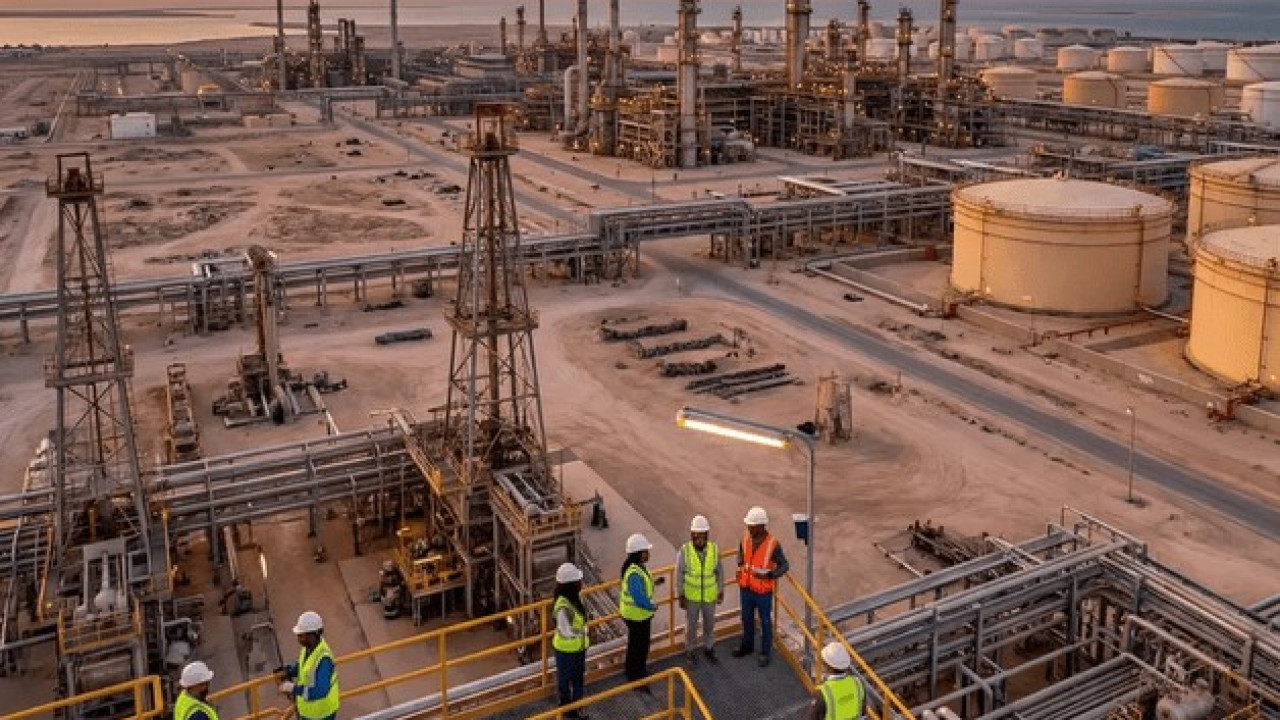
The world is getting hotter, and scientists broadly agree that burning oil, gas, and coal is the main reason why. That leaves oil producing nations in an uncomfortable spot. They are most responsible for climate change but also among the ones with the most to lose if they stop. So what does a country do when the thing that pays its bills is also the thing the rest of the world wants less of?
Oman's government thinks it has found a middle path. Instead of choosing between oil money and climate goals, it is trying to keep producing oil and gas while cutting the pollution that comes from making them.
A New Kind of Balancing Act
Oman's approach centers on using new technology to make oil production cleaner, but without slowing it down.
In one project, engineers are experimenting with pumping carbon dioxide deep underground to help force more oil out of the ground. Afterward, most of the carbon dioxide stays trapped underground instead of being released into the air. Hypothetically, this process can both increase oil production and help reduce carbon dioxide pollution, all at the same time.
Solar power is another part of Oman's proposed solution. A new solar power project is being built to supply electricity for the country's oil and gas operations, cutting down on how much fuel they burn just to keep running. Once finished, the solar project is expected to reduce emissions by more than 220,000 tons per year. Related to this, Oman has said it wants 30% of the energy used to run its oil and gas operations to come from renewable sources by the end of 2026.
Cutting Waste to Meet Climate Targets
Oman has also set a broader national goal of cutting its total greenhouse gas emissions by 33% by 2035. The oil and gas industry is expected to carry most of that burden, with a target of cutting its own emissions by up to 48%.
A big part of that effort involves stopping a wasteful practice called flaring, where extra gas is simply burned off at production sites instead of being captured and used. It is common across the oil industry worldwide, but it produces pollution for no real benefit. Some sites in Oman have already cut this practice roughly in half by installing equipment that captures the gas and sends it elsewhere to be used, rather than burning it away.
What This Means for the Region
Oman is not the only country taking action. Across the Arab Gulf, governments that depend heavily on oil money are facing the same pressure and responding with similar strategies that allow them to keep producing oil but also move closer to meeting their climate pledges.
What sets Oman apart is how gradual its approach is. Rather than making a sharp break from oil, it is trying to fold climate action directly into its existing industry, betting that slow, steady change is more realistic than a sudden shift away from fossil fuels.
Whether this becomes a model that other Arab Gulf states follow, or stays a one-country experiment, may depend on factors beyond Oman's control: how well the technology performs and how quickly the rest of the world actually moves away from oil and gas.
Loading comments...