




The world is heading toward another major El Nino, and governments across Asia are already preparing for its consequences. Droughts could reduce crop yields in some countries, while heavier rains raise the risk of flooding in others. Food production, trade, and inflation are all likely to come under renewed pressure at a time when many economies are still adjusting to higher energy costs, supply chain disruptions, and geopolitical uncertainty.
The US National Oceanic and Atmospheric Administration has issued an official El Nino advisory, with forecasters estimating a 63% chance that the event will become "very strong" between November 2026 and January 2027. If that happens, it would rank among the most powerful El Nino episodes recorded since 1950.
El Nino develops when unusually warm waters spread across the central and eastern Pacific Ocean, disrupting atmospheric circulation and altering rainfall patterns around the world. But its impacts are never uniform. Some countries face prolonged drought, while others experience severe flooding. How damaging the event becomes depends as much on economic resilience and government preparedness as on the weather itself.
Global grain stocks remain relatively healthy, reducing the likelihood of an immediate food crisis. Yet that offers only limited protection. In many countries, lower agricultural output, higher food prices, and disrupted trade can quickly become economic and political challenges, particularly where households are already struggling with the rising cost of living.
Lessons from Latin America
Latin America offers a preview of how El Nino can turn existing weaknesses into national crises. The weather event rarely creates problems on its own. More often, it exposes vulnerabilities that were already there, whether in agriculture, infrastructure, or public finances.
During the exceptionally strong 2015-16 El Nino, Central America experienced one of its worst droughts in decades. Farmers in the hardest-hit areas lost between 50% and 100% of their corn and bean harvests, while the UN Food and Agriculture Organization estimated that 3.5 million people required food assistance. The drought deepened poverty, increased food insecurity, and added to migration pressures in countries already struggling with violence and weak state capacity.
Venezuela illustrated a different type of vulnerability. As drought reduced water levels at the Guri Dam, which generates much of the country's electricity, the government imposed emergency measures that included daily blackouts, a two-day workweek for public employees, school closures, and even a temporary change to the national time zone. But the crisis was not caused by El Nino alone. Years of underinvestment, poor maintenance, and alleged corruption had already weakened the electricity system. The drought simply exposed those structural failures. A decade later, the grid remains fragile and is under even greater pressure following the destruction caused by the June 2026 twin earthquakes.
The most recent El Nino produced similar knock-on effects elsewhere in the region. In 2024, reservoir levels around Bogotá fell below 30% capacity, forcing Colombia to ration water. The government also reduced electricity exports to Ecuador to protect domestic supplies, demonstrating how climate shocks can spill across borders and create regional tensions.
El Nino also demonstrated how local droughts can disrupt the global economy. During the 2023-24 event, water levels in Gatún Lake fell so low that authorities reduced daily Panama Canal transits from the normal 38 to just 24, creating the canal's worst operational disruption in history. The episode showed how a climate shock in one country can ripple through international shipping, delaying cargo, increasing transport costs, and placing additional pressure on already fragile global supply chains.
Together, these cases show how El Nino can cause crises, but does not create them on its own. More often, it exposes the weaknesses that countries already have, whether in agriculture, energy systems, water management, or trade infrastructure.
Where Southeast Asia Is Most Vulnerable
For Southeast Asia, one of the clearest vulnerabilities lies in Vietnam's Mekong Delta, one of Asia's most important rice-producing regions. When El Nino-driven drought reduces the river's freshwater flow, saltwater moves farther inland, damaging farmland and contaminating water supplies used by rural communities. As rice production comes under pressure, concerns over food security grow across a region where the staple remains both an economic necessity and a politically sensitive commodity.
That pressure can be compounded by government responses. When harvests decline or food prices rise, major producers may restrict exports to protect domestic supplies. Previous episodes have shown how quickly these decisions can ripple across regional markets, turning localized crop losses into broader food inflation.
The risks extend well beyond agriculture. Vietnam has also experienced growing strain on its electricity system as extreme heat, drought, and rising demand reduce hydropower generation while increasing power consumption. When electricity shortages reach industrial zones, disruptions can spread through global manufacturing supply chains, affecting everything from electronics to export production.
Water itself can also become a source of political tension. The Mekong flows through multiple countries before reaching Vietnam, making drought years especially sensitive. Lower river levels and decisions over upstream dams can deepen disagreements between governments and downstream communities over how scarce water should be managed.
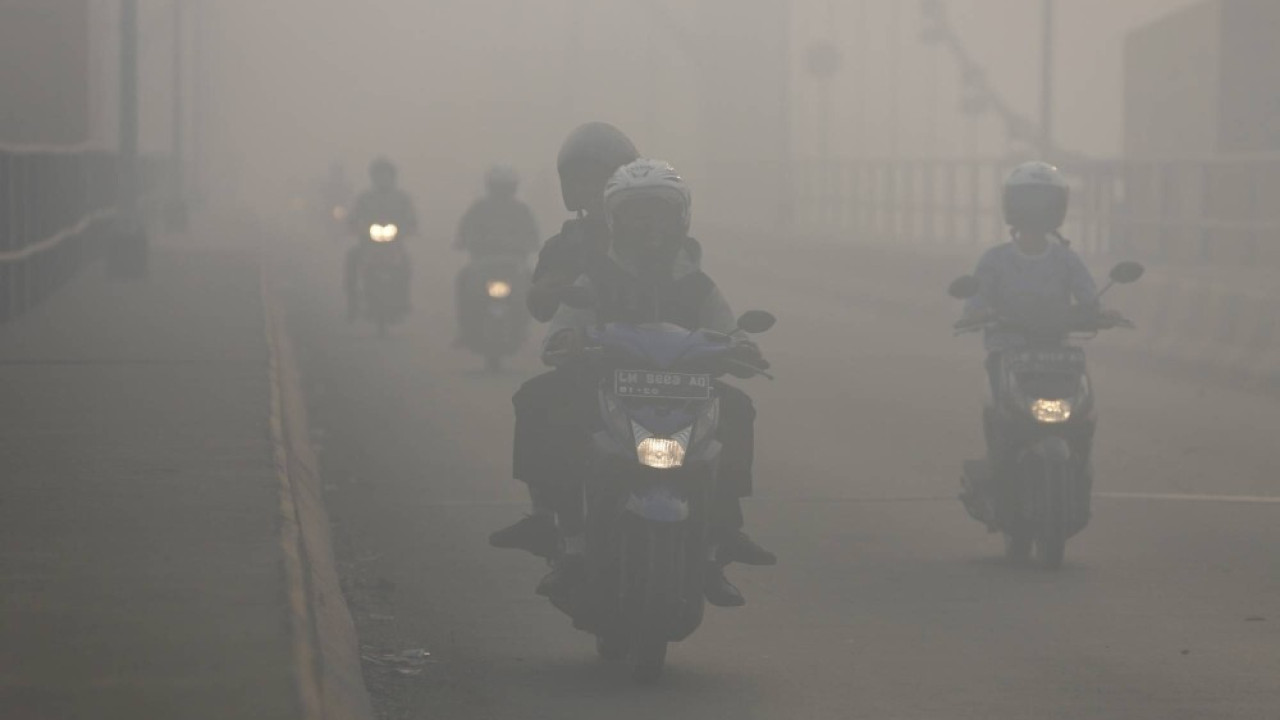
The same pattern appears elsewhere in the region. In Indonesia, prolonged dry conditions increase the likelihood of large forest and peatland fires, particularly when combined with illegal land clearing by burning. The resulting haze regularly spreads across borders into Malaysia, Singapore, and Thailand, disrupting transport, damaging public health, and straining regional relations. Like the examples from Latin America, these crises are not created by El Nino alone. They emerge when an extreme climate event collides with existing weaknesses in governance, infrastructure, and regional cooperation.
The Real Test for Governments
Latin America and Southeast Asia will not experience El Nino in the same way. Their climates, economies, and political systems are different. But the underlying vulnerabilities are strikingly similar: food security, water supplies, energy systems, trade, and public confidence in governments.
El Nino can bring benefits to some regions. Rainfall may improve harvests in parts of Argentina and other agricultural producers, while some areas outside the tropics can experience more favorable growing conditions. But those gains are uneven. The greatest costs usually fall on countries where infrastructure is weak, institutions are under pressure, and governments have little room to respond.
Ultimately, El Nino is as much a climate event as it is a test of state capacity. It exposes weaknesses that already exist, whether in agriculture, energy, water management, or disaster preparedness. The countries that weather it best will not necessarily be those with the mildest conditions, but those with the strongest institutions and the greatest ability to respond before environmental stress turns into an economic or political crisis.
Loading comments...