




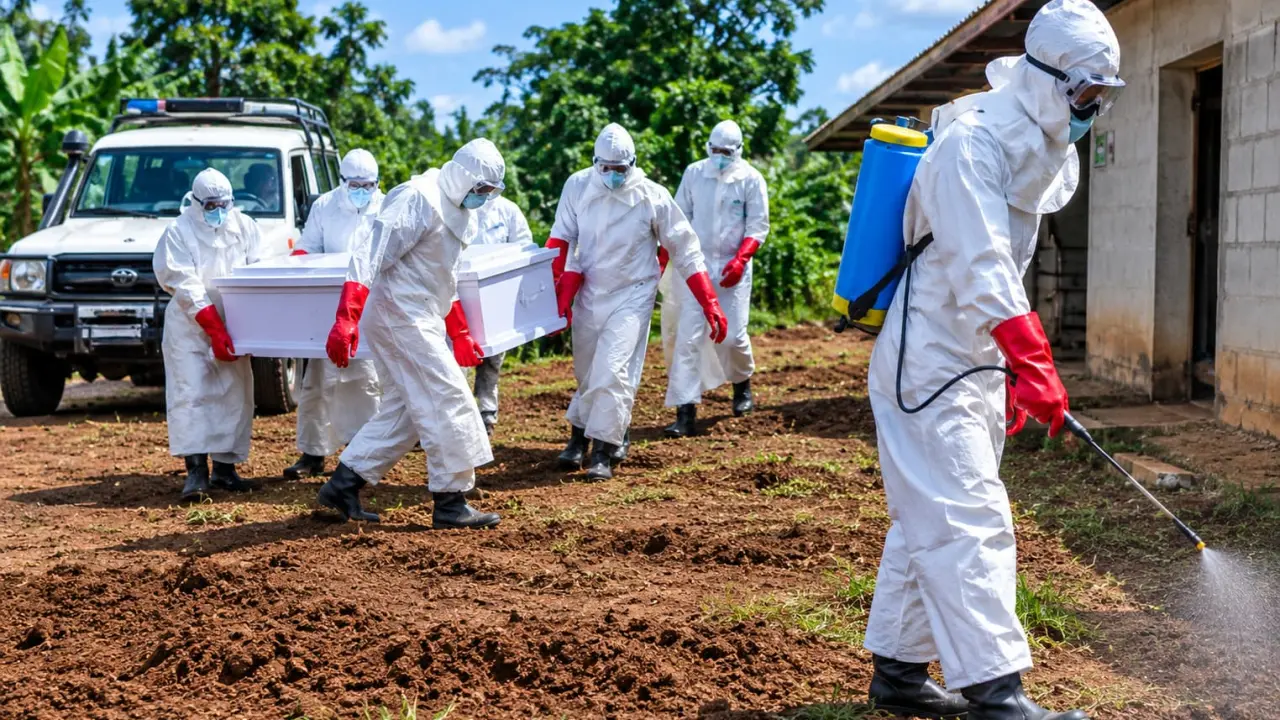
The Bundibugyo Ebola outbreak in the Democratic Republic of the Congo (DRC) remains out of control six months after it was declared in May 2026. With more than 11,000 confirmed cases and over 5,000 deaths, it has become the second-largest Ebola outbreak on record.
Médecins Sans Frontières (MSF) warns that the international response is failing to deliver enough support to the people fighting the disease on the ground. Despite hundreds of millions of dollars in international funding, frontline health workers continue to face unpaid salaries, limited supplies, and transport problems. These gaps are weakening efforts to contain the outbreak and raising concerns about the risk of further regional spread.
Why International Ebola Aid Is Failing to Reach Frontline Workers
In a November 12 statement, MSF highlighted a major gap between the financial resources mobilized for the response and the assistance reaching affected communities. According to the organization, some response workers remain unpaid, untrained, or on strike. Ambulances and other vehicles lack fuel, while surveillance teams are missing from areas where they are needed.
Medical facilities also face shortages of essential supplies, including personal protective equipment (PPE), clean water, and chlorine. Some lack proper sterilization and patient triage systems, increasing the risk of infections inside healthcare facilities. In North Kivu's Beni health zone, MSF reported that nearly three-quarters of Ebola patients were believed to have contracted the disease in healthcare settings.
Surveillance is another major weakness. In Ituri province, only 9% of Ebola patients treated by MSF had previously been identified as contacts by surveillance teams. The organization also reported that nearly two-thirds of Ebola-related deaths during the previous month occurred in communities rather than treatment centers. This suggests that many infections are not being detected early enough.
Insecurity further complicates the response. An attack in Cantine-Aloya, North Kivu, killed 66 people, including three health workers, according to the World Health Organization (WHO). The violence also disrupted contact tracing, leaving more than 1,000 contacts unaccounted for and three confirmed Ebola patients missing. These disruptions make it harder to identify infections, isolate patients, and maintain community trust.
How the Ebola Outbreak Could Affect Regional and International Security
The outbreak presents a risk beyond the DRC. Its expansion into seven provinces, including areas bordering South Sudan and the Central African Republic, increases concerns about cross-border transmission. The WHO has assessed the risk as high for countries sharing land borders with the DRC, while maintaining a lower risk for the wider African region and the rest of the world.
Uganda, which recorded 20 confirmed cases and two deaths during the outbreak, declared the end of its epidemic in August 2026. However, continued population movements, informal border crossings, and regional trade routes make surveillance essential. Neighboring countries, including Rwanda, Burundi, and South Sudan, must remain prepared to detect and respond to imported cases.
The WHO has stressed the importance of stronger cross-border coordination, laboratory testing, and surveillance at official entry points. The Africa Centres for Disease Control and Prevention (Africa CDC) is also working with the WHO and Congolese authorities to strengthen the response.
The consequences are not limited to public health. A prolonged outbreak could disrupt cross-border trade, transport, and local businesses, particularly in communities already affected by insecurity and limited infrastructure.
The crisis also raises questions about the effectiveness of international health cooperation. The WHO acknowledges payment delays and operational difficulties, while MSF calls for better oversight and a fairer distribution of available resources. Although diagnostic capacity and treatment facilities have expanded, financial commitments alone cannot stop an epidemic. Without properly paid and equipped health workers, reliable transport, and effective surveillance, the gap between international aid and local needs will continue to threaten efforts to contain Ebola.

Loading comments...