




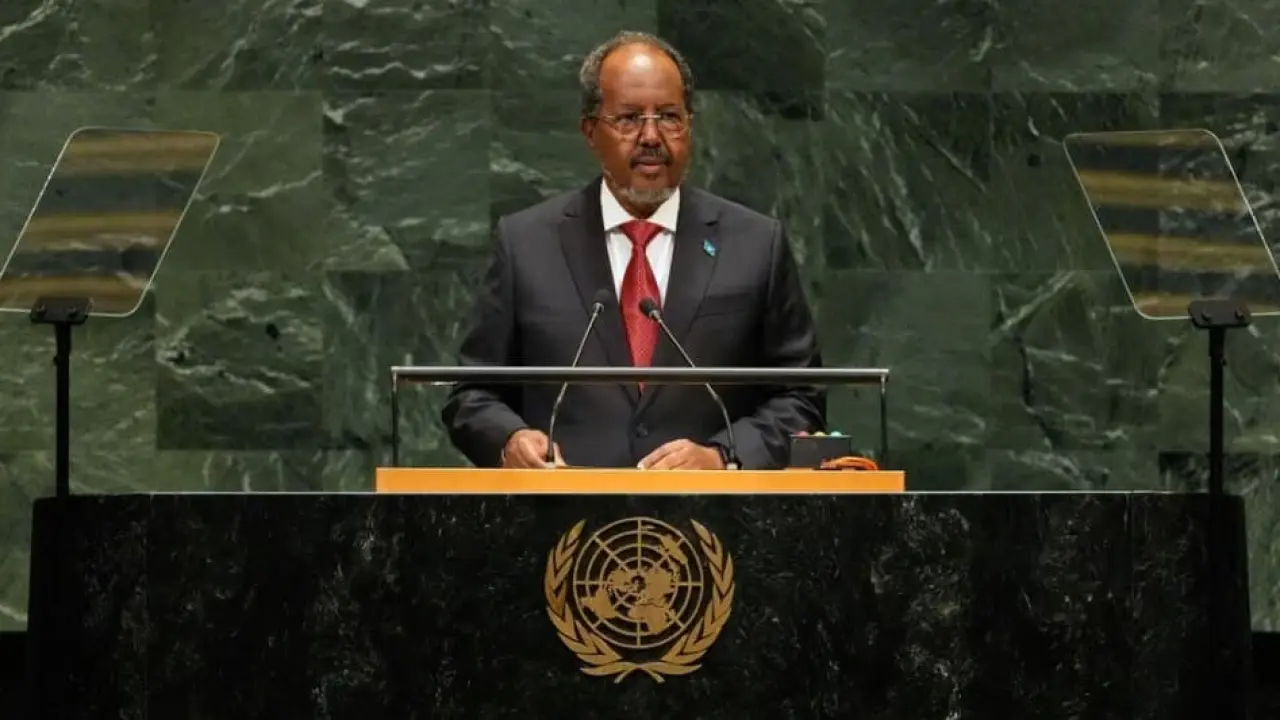
On November 5, 2026, Somalia’s Supreme Court delivered a landmark ruling, declaring that President Hassan Sheikh Mohamud’s mandate had expired and rejecting his government’s attempt to use constitutional amendments to extend his presidency until May 2027.
While uncertainty remains over whether the president will comply with the court's judgment, the decision signals that Somalia is making governance progress concerning judicial independence and enforcing constitutional limits.
How Somalia’s Supreme Court Challenged the Presidential Term Extension
In March 2026, Somalia's parliament approved constitutional amendments extending presidential and parliamentary terms from four to five years. The government argued that the changes allowed the current leadership to remain in office for another year.
However, the Supreme Court found that the amendments did not explicitly apply to officials already serving their mandates. It ruled that parliament's term had expired on April 14, 2026, while President Mohamud's mandate ended on May 15.
In its November 5 decision, the court rejected the extensions for current officeholders and limited the federal cabinet to routine caretaker duties. It also ordered political leaders to agree on an electoral framework within 30 days and hold elections within 90 days.
The judges did not invalidate the constitutional amendments themselves. Instead, they rejected their application to extend the mandates of the sitting leadership.
Authoritarianism Fears and the Importance of Judicial Independence
The court's decision followed a growing confrontation between the presidency and the judiciary. On November 4, Mohamud announced the dismissal of Chief Justice Baashe Yusuf Ahmed and appointed his predecessor, Ibrahim Idle Suleiman, as his replacement.
The Supreme Court rejected the dismissal, arguing that the president could not remove the chief justice unilaterally. It also raised concerns that the move was intended to interfere with the ongoing constitutional case.
The timing intensified concerns about political interference and raised questions about the separation of powers. Opposition leaders have also questioned the government's efforts to extend its mandate without broader political agreement.
The government's response has added to the uncertainty. On November 7, the Attorney General's office rejected the Supreme Court's decision, arguing that it had no legal effect and disputing the court's jurisdiction and procedures.
More importantly, the president's willingness to accept the judgment remains uncertain. As of mid-November 12, there was still no clear confirmation that his administration would implement the ruling. Reports of security forces deploying around the Supreme Court have also raised concerns, although these developments have not been independently verified.
A Test of Somalia’s Institutions and Africa's Democratic Accountability
The ruling carries significance beyond Somalia. It demonstrates how judicial institutions can serve as a constitutional safeguard against the concentration of political power, even in countries facing prolonged instability.
For Africa, the decision offers an important example of a court challenging an incumbent leader's interpretation of presidential authority rather than automatically supporting the executive.
However, a judicial decision alone cannot guarantee democratic accountability. Its implementation will be the real test.
Several challenges remain. President Mohamud's administration must decide whether to respect the court's ruling. Political leaders must also reach an electoral agreement within 30 days, while organizing elections within 90 days. These deadlines come amid political divisions, tensions between federal and regional authorities, and ongoing security threats from Al-Shabaab.
Ultimately, Somalia's institutional credibility will depend on whether its political leadership respects judicial authority and allows a peaceful constitutional transition. If the ruling is enforced, the case could become an important example of judicial accountability in Africa. If it is ignored, the confrontation could deepen the country's political crisis and expose the limits of its democratic institutions.

Loading comments...