




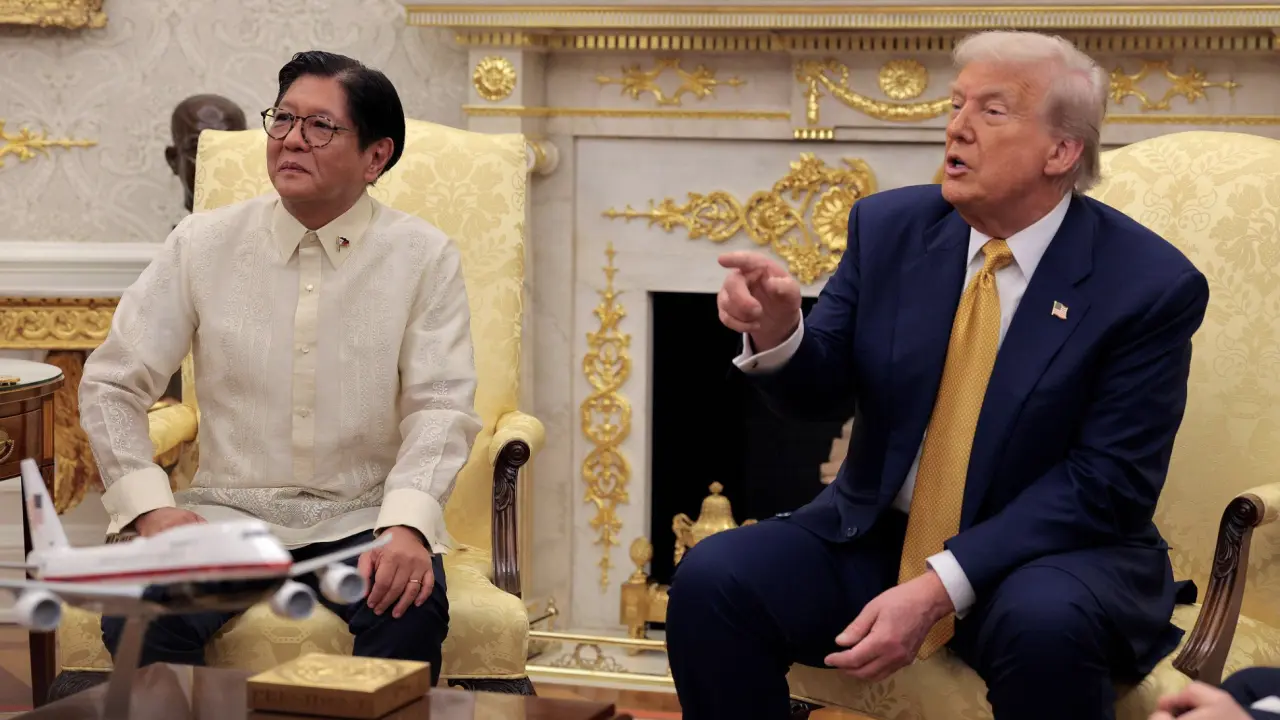
Since last year, the United States has waged a tariff war on allies and rivals alike. Most governments chose to accommodate Donald Trump's demands, even when that meant accepting unfavorable trade terms. In Southeast Asia, several countries made concessions to protect their access to the US market.
Indonesia is one such example. In February, Jakarta accepted a trade agreement that reduced US tariffs from 32% to 19%. In exchange, Indonesia agreed to eliminate barriers on more than 99% of US products and change other trade conditions. The day after the agreement was signed, the US Supreme Court struck down the legal basis used to impose those tariffs. The episode exposed a weakness in negotiating with Donald Trump, where governments could make concessions to secure an agreement, only to find that the policy behind it was legally or politically uncertain.
Now, the Republican defeat in the November 3 midterm elections has added another source of uncertainty. Democrats will control both chambers of Congress from January 2027, leaving Trump with a stronger opposition during his final two years in office.
This does not mean Washington has lost its leverage. The US market remains important to Southeast Asian exporters, while American military and technological partnerships remain central to the region's strategic calculations. However, Trump's weakened political position changes the value of negotiating directly with him. ASEAN governments must now consider whether concessions made to secure his approval will deliver benefits that last beyond his presidency.
The Cost of Negotiating Separately With Washington
Trump's tariff strategy exploited the dependence of individual trading partners on the US market. Each government had to choose between accepting Washington's demands or risking higher tariffs and damage to domestic industries. By negotiating separately, countries hoped to secure better terms than their neighbors, even if that meant accepting conditions they might have resisted collectively.
Japan committed $550 billion in investment in the United States, while South Korea promised another $350 billion. In Southeast Asia, Malaysia also made concessions, while Vietnam sought to accelerate negotiations directly with the US president.
This approach helped governments limit immediate economic damage, but it also allowed Washington to negotiate from a position of strength. Countries competed for favorable treatment rather than using their combined economic importance to challenge the terms being imposed. The result was a series of bilateral arrangements that could create different obligations and expectations across the region.
The consequences extend beyond the tariffs themselves. Trade agreements can influence procurement, market access, investment decisions and industrial policy. Governments may also find it harder to reverse commitments once businesses have adjusted their operations around them.
The problem is that these concessions were negotiated with a particular administration, but their economic consequences may outlast it. A government that opened its market or committed public resources to secure a deal with Trump cannot assume that a future US administration will offer the same political or economic benefits in return.
Republicans' Defeat Creates an Opening, Not a Guarantee
Democratic control of the US Congress will make it harder for Trump to advance his agenda without political resistance. Congressional scrutiny, investigations and disputes over legislation could constrain parts of his domestic and foreign policy. Still, the midterm results do not automatically cancel trade agreements, remove existing tariffs, or reverse Washington's broader economic and security priorities.
For Southeast Asian governments, the United States will remain an important export market, investor, technology partner, and security presence regardless of which party controls Congress. Washington's interest in reducing dependence on China and securing access to critical minerals, energy, and strategic supply chains is also unlikely to disappear with Trump's presidency.
The opportunity lies instead in the uncertainty surrounding his demands and the durability of his promises. ASEAN governments have less reason to assume that making concessions directly to Trump will guarantee favorable treatment over the long term. They can use this uncertainty to review existing commitments, question new demands, and seek more predictable arrangements with Washington.
Looking ahead, ASEAN does not need to confront the United States as a bloc on every issue. It does, however, need to identify where members share interests and coordinate before entering negotiations. A common position on market access, investment conditions or the treatment of strategic industries would give individual governments more room to resist demands that undermine their longer-term interests.
Trump's weakened position will not, by itself, produce a stronger ASEAN. The region can continue competing for Washington's favor, or use the political uncertainty in the United States to reconsider the terms of its relationship with Washington. The real test is whether Southeast Asian governments can turn their shared economic interests into bargaining power before another US administration sets the terms for them.


Loading comments...