




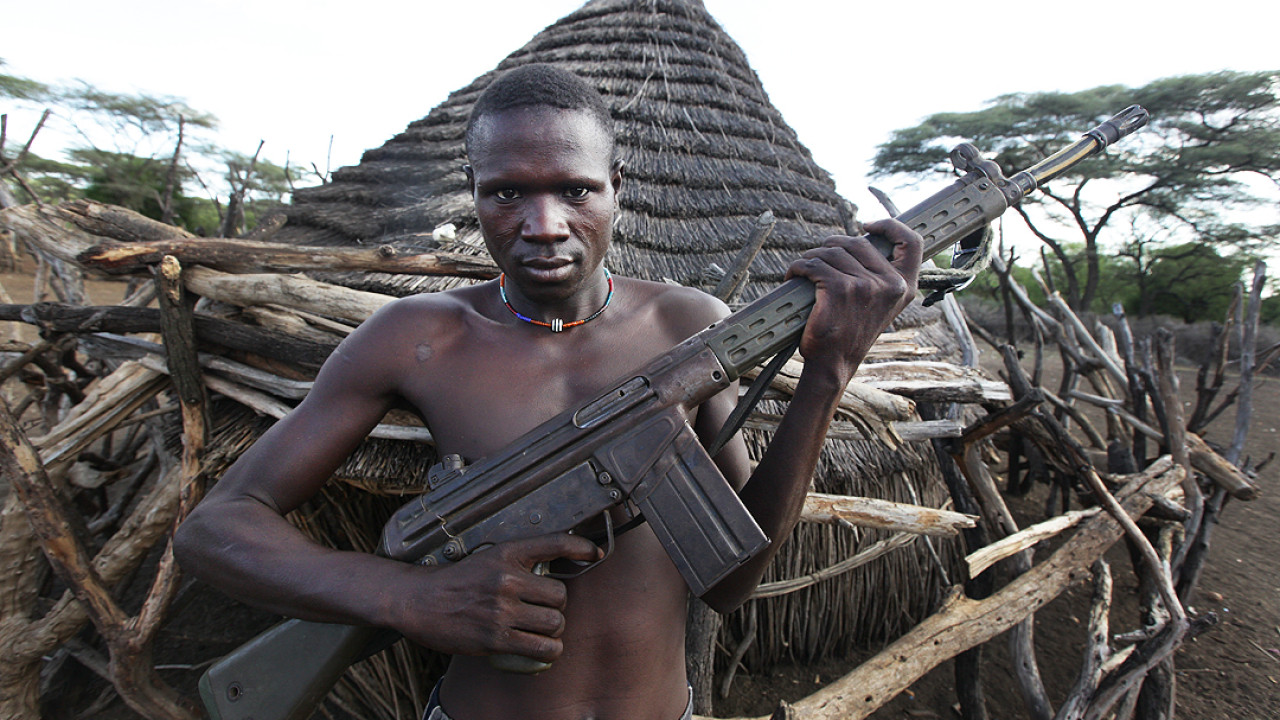
Sudan’s civil war is no longer confined to its own borders. What began as a power struggle in Khartoum is increasingly destabilizing neighboring Chad through refugee flows, cross-border violence, ethnic tensions, and allegations of foreign-backed arms trafficking.
If Chad is pulled deeper into the conflict, the consequences could reverberate across the Sahel and Central Africa.
Sudan’s Cycles of Civil War
To understand why the current conflict is spilling beyond Sudan’s borders, it is important to recognize that the country has endured decades of recurring violence rooted in unresolved disputes over identity, governance, and political power.
Sudan has experienced three major civil wars since its independence. The First Sudanese Civil War, which lasted from 1955 to 1972, pitted the Arab Muslim north against the largely Christian and animist south. It ended with the Addis Ababa Agreement, which granted limited autonomy to southern Sudan.
That settlement ultimately proved fragile. The Second Sudanese Civil War erupted in 1983 after President Gaafar Nimeiri revoked southern autonomy and imposed Sharia law nationwide. The conflict claimed more than two million lives and eventually led to the independence of South Sudan in 2011.
The current war, which began in April 2023, differs significantly from its predecessors. Rather than a conflict between north and south, it is a struggle for power between two military institutions: the Sudanese Armed Forces and the Rapid Support Forces. The fighting has devastated Sudan, displaced millions of people, and created one of the world's worst humanitarian crises.
As the war has intensified, its effects have increasingly spread beyond Sudan itself, with neighboring Chad emerging as one of the countries most directly affected.
Why Chad Is Being Drawn In
The conflict is no longer contained within Sudan's borders. Since 2023, more than one million Sudanese refugees have fled into Chad, placing enormous pressure on local resources, humanitarian services, and security institutions. Violence has also crossed the frontier. Clashes involving Sudanese Armed Forces and Rapid Support Forces units near the border town of Tine have resulted in the deaths of both Chadian soldiers and civilians.
Concerned about the growing instability, Chad closed its 1,300 kilometer border with Sudan in February 2026. Yet, geography and politics make containment extremely difficult. Several ethnic communities, including the Zaghawa, span both countries. Members of these cross border networks have backed rival factions in the war, creating channels through which the conflict can spread.
At the same time, allegations that Chad has been used as a transit route for weapons destined for the Rapid Support Forces have further heightened tensions. These claims have drawn increasing attention to the role of external actors, particularly the United Arab Emirates.
Beyond Sudan's Borders
The United Arab Emirates is widely accused of being the principal external backer of the Rapid Support Forces, allegedly providing weapons, funding, drones, and logistical support through networks operating across Chad and Libya. Analysts argue that this support is motivated by a desire to secure influence over Sudan's gold sector, counter Islamist movements, and expand Emirati regional influence. The United Arab Emirates denies these allegations and maintains that it supports neither side in the conflict.
The controversy intensified in 2025 when Sudan brought a case against the United Arab Emirates before the International Court of Justice, accusing it of complicity in genocide through its alleged support for the Rapid Support Forces. The court dismissed the case on jurisdictional grounds, emphasizing that it was not ruling on the substance of the allegations.
Regardless of whether these claims are ultimately proven, they underscore the larger reality that Sudan's war is no longer solely a Sudanese crisis. The conflict now involves regional actors, cross border networks, and neighboring states struggling to contain its effects. For Chad, the influx of refugees, rising border insecurity, and allegations of involvement in arms trafficking have created mounting pressures that threaten to destabilize an already fragile country.
If the war continues to expand beyond Sudan's borders, the consequences could extend far beyond Chad, reshaping security dynamics across the Sahel and Central Africa.


Loading comments...