




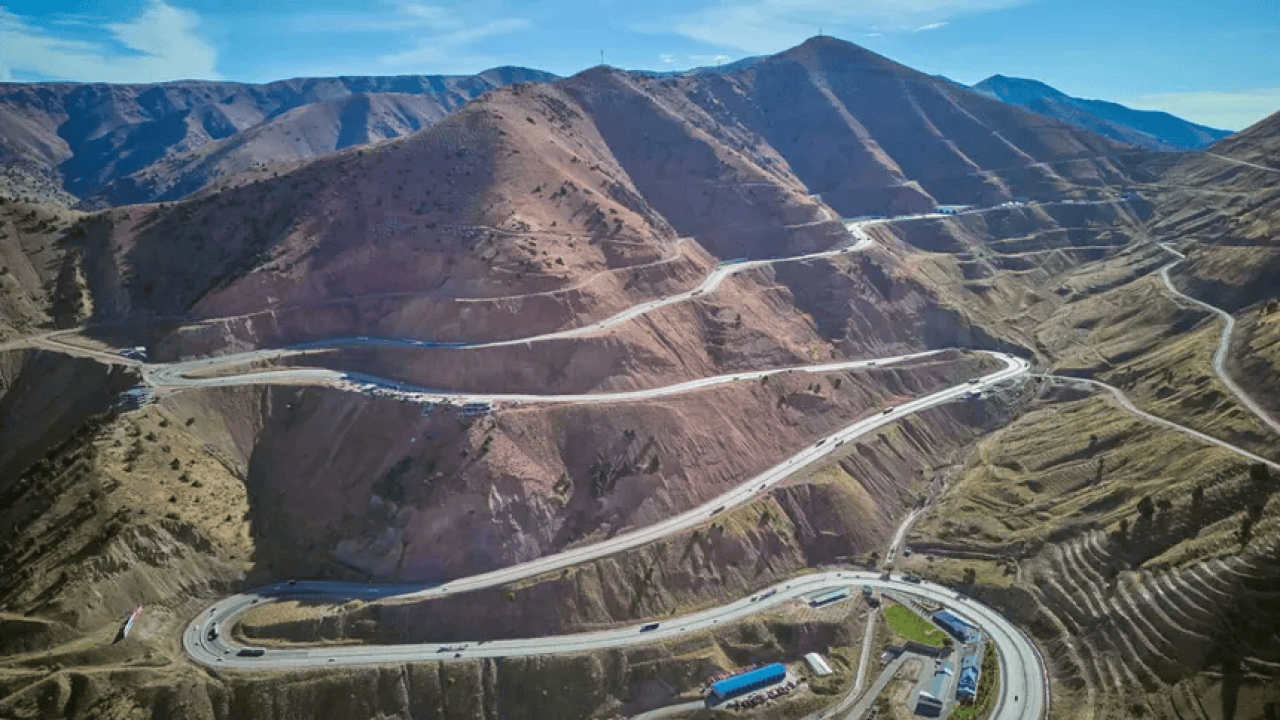
For decades, Central Asia's borders have been a source of conflict rather than cooperation. Drawn during the Soviet era with little regard for local communities, they left behind disputed territory, isolated enclaves, and competing claims that repeatedly erupted into violence after the Soviet Union collapsed in 1991.
Now, the region is trying something once considered almost impossible. Instead of treating borders as untouchable, several Central Asian governments are exchanging small pieces of land to settle disputes, improve infrastructure, and reduce the risk of future conflict.
The Fergana Valley Became Central Asia's Most Dangerous Border
The heart of many of these disputes lies in the Fergana Valley, where the borders of Kyrgyzstan, Uzbekistan, and Tajikistan intersect. During the 1920s, Soviet planners drew administrative boundaries that often ignored ethnic communities, local geography, and existing transport networks. The result was a patchwork of borders and more than thirty enclaves and exclaves that left villages, roads, and farmland divided between different republics.
After the Soviet Union collapsed, those administrative boundaries became international frontiers almost overnight. What had once been internal Soviet borders evolved into contested state boundaries, fueling disagreements over land ownership, water resources, roads, and border crossings.
The Fergana Valley became one of Central Asia's most volatile flashpoints. More than 150 border clashes were recorded over the years, culminating in deadly violence between Kyrgyzstan and Tajikistan in 2021 and 2022 that displaced thousands of civilians and highlighted how unresolved borders continued to threaten regional stability.
Central Asia Is Swapping Land Instead of Fighting Over It
Rather than allowing these disputes to persist indefinitely, Central Asian governments have begun pursuing negotiated land swaps to resolve long-standing disagreements. A landmark border treaty signed in 2025 between Kyrgyzstan, Tajikistan, and Uzbekistan reopened border crossings, restored transport links, and demonstrated that compromise could replace confrontation.
The latest step came in June 2026, when Kyrgyzstan and Uzbekistan completed another land exchange. Two villages with around 2,500 mostly ethnic Kyrgyz residents were transferred to Kyrgyz control, while equivalent territory was handed to Uzbekistan. The two countries also exchanged 236 hectares of land to enable construction of a new road that will dramatically shorten travel within Kyrgyzstan's Batken region.
These agreements are designed not only to settle territorial disputes but also to make borders function more effectively by reconnecting communities, improving transportation, and reducing the likelihood of future clashes.
More Than Border Agreements
The land swaps reflect a broader shift in Central Asia's political priorities. Rather than viewing borders solely as symbols of national sovereignty, governments are increasingly treating them as practical tools for improving trade, infrastructure, connectivity, and regional security.
The agreements also carry wider geopolitical significance. For decades, Moscow played a central role in managing disputes across the former Soviet Union. However, Russia's war in Ukraine has reduced its capacity to act as the region's primary security broker, encouraging Central Asian governments to take greater responsibility for resolving their own disagreements.
The growing acceptance of negotiated land swaps may also influence discussions elsewhere across the former Soviet space, where disputed borders continue to divide ethnic communities and fuel political tensions. While each conflict has its own history and cannot be directly compared, Central Asia is demonstrating that even borders once considered politically untouchable can be adjusted peacefully through negotiation.

Loading comments...