




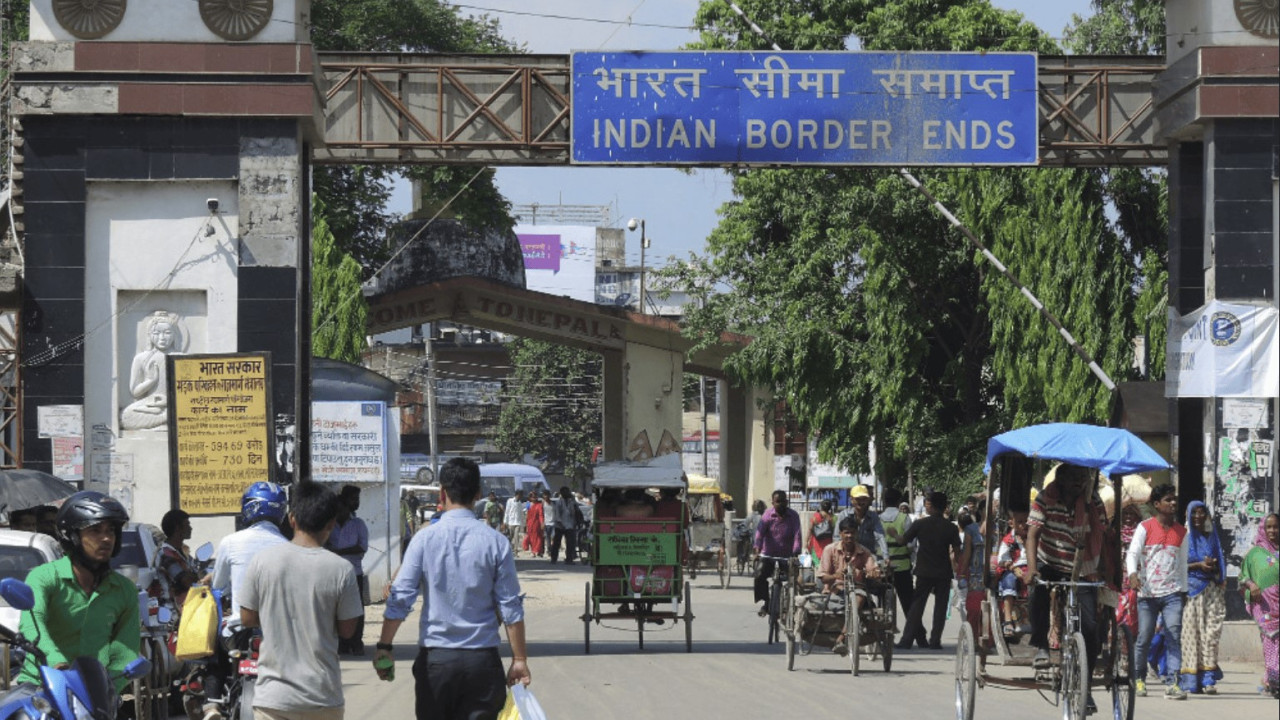
India and Nepal's long-standing border dispute gained new attention. Nepal’s Prime Minister Balendra Shah has moved to clarify his government’s position after comments sparked controversy. Speaking at a political event, Shah denied that Kathmandu had asked Britain to mediate in the issue, saying the remarks were misinterpreted and that Nepal remains committed to direct talks with New Delhi.
The clarification comes against the backdrop of renewed sensitivity over the border areas. The dispute has deep historical roots, tracing back to boundary arrangements made during the British colonial period in South Asia, particularly the 1816 Sugauli Treaty, which continues to shape competing interpretations of the border today.
The Nepal-India Border Dispute Explained
The dispute between Nepal and India centers on the Himalayan border areas of Kalapani, Lipulekh, and Limpiyadhura, which both countries claim as their own. Nepal argues that these territories lie east of the Kali River and therefore fall within its borders, while India maintains that they are part of its Uttarakhand state.
The disagreement is rooted in differing interpretations of historical agreements, especially those linked to the 1816 Sugauli Treaty period, which helped define the modern boundary after British rule in the region. Over time, shifting maps and competing readings of the Kali River’s source have added to the disagreement. Although the areas are sparsely populated, they hold strategic importance due to their location near the borders of India, Nepal, and China.
Both India and Nepal have consistently said they prefer to resolve the issue through bilateral diplomatic mechanisms rather than international mediation.
Clarifying Nepal’s Position on the Dispute
Speaking at the first general convention of the ruling Rastriya Swatantra Party in Chitwan on June 21, 2026, Shah sought to correct what he described as misinterpretations of his earlier comments. He said Nepal had never requested British mediation, but had only raised the possibility of referring to historical documents from the British colonial period if needed during discussions.
“We said that if evidence from the time of British rule [in India] is needed, we will bring it. We didn’t ask for their mediation,” Shah said, emphasizing that Nepal’s position remains focused on direct engagement with India.
The clarification followed political criticism after his earlier parliamentary remarks suggested that historical records and even external references could play a role in resolving the dispute. That triggered debate in Nepal and concern abroad, particularly given the sensitivity of foreign involvement in South Asian territorial issues.
Sensitivities in South Asian Border Politics
Shah’s reference to British-era records highlights how colonial history still influences modern border disputes in South Asia. Many boundaries in the region were drawn during British rule, and differing interpretations of those documents continue to fuel disagreements today.
In this context, both Nepal and India have repeatedly emphasized bilateral mechanisms over external arbitration. The latest clarification reinforces that approach, particularly as earlier comments sparked speculation about foreign involvement, including references to Britain and China.
For Nepal, balancing historical claims with current diplomatic realities remains a sensitive task. For India, maintaining bilateral control over border negotiations is central to its broader foreign policy approach in the region.
As tensions over Kalapani, Lipulekh, and Limpiyadhura persist, the episode underscores how deeply history, sovereignty, and diplomacy remain intertwined in South Asia’s unresolved border questions.

Loading comments...