




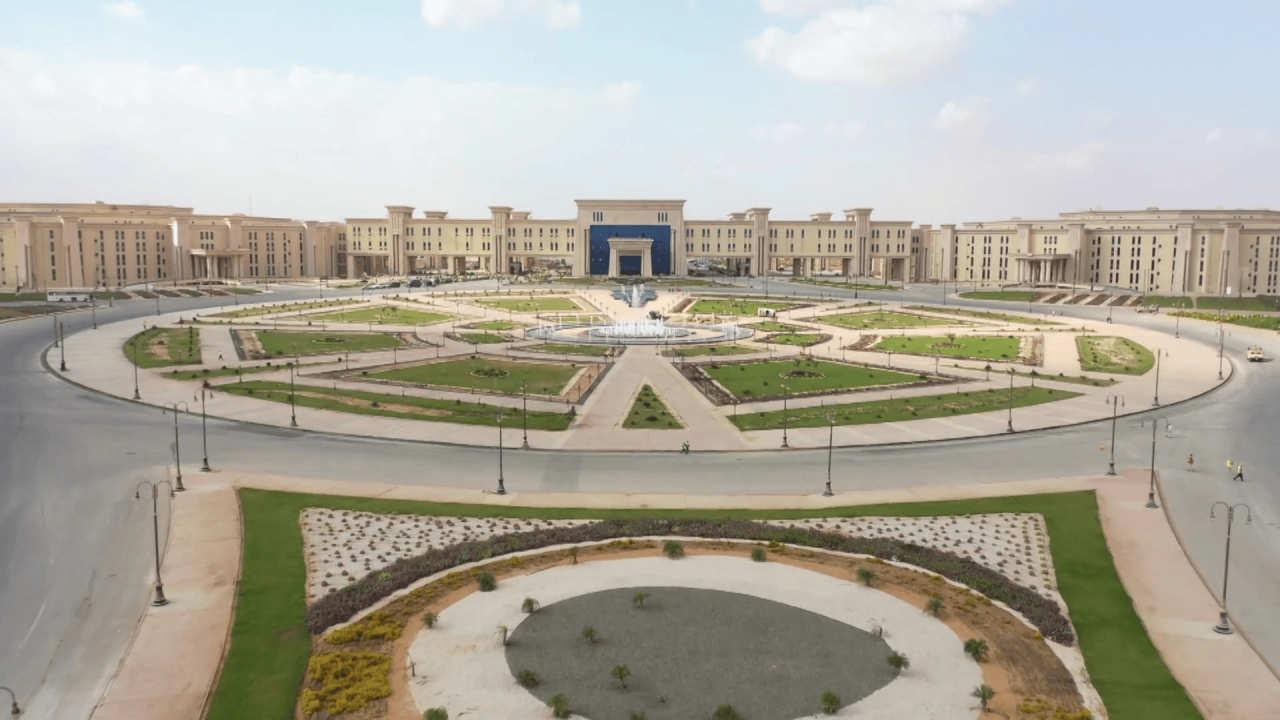
Egypt has unveiled The Octagon, a vast new military command headquarters in its New Administrative Capital east of Cairo, marking another milestone in the country's effort to reshape its political and security landscape.
Although its enormous size has drawn international attention, the project is about far more than architecture. Built during a period of growing instability across the Middle East, The Octagon reflects Egypt's effort to strengthen government resilience, protect critical infrastructure, and reinforce its position as a leading power overlooking one of the world's most strategically important maritime corridors.
Why Egypt Built The Octagon
The Octagon sits about 45 kilometers east of Cairo in Egypt's New Administrative Capital, a city designed to become the country's new political and administrative center. The broader development, estimated to cost around $60 billion, is one of the largest urban projects in the Middle East and has involved both Egyptian and Chinese companies.
The new capital lies at the heart of what President Abdel Fattah el-Sisi calls Egypt's "New Republic." Ministries, parliament, government agencies, and now the country's primary strategic command headquarters are gradually relocating from Cairo, a city that has long struggled with congestion, rapid population growth, and security concerns.
The move also reflects lessons from Egypt's recent history. During the Arab Spring and the years of political instability that followed, demonstrations repeatedly targeted key government institutions in Cairo. Relocating critical state functions reduces their vulnerability during future crises while helping ensure continuity of government.
In that sense, The Octagon is not simply a military headquarters. It is part of a broader effort to centralize decision-making, modernize state institutions, and project an image of stability after more than a decade of regional upheaval.
Red Sea Security Makes Egypt Indispensable
The headquarters also comes as competition for influence around the Red Sea continues to intensify.
The Red Sea carries roughly 10–12% of global trade each year through the Suez Canal, giving Egypt control over one of the world's most important maritime chokepoints linking Europe and Asia.
Recent attacks on commercial shipping have demonstrated how vulnerable that route can be. Disruptions have forced vessels to sail around Africa's Cape of Good Hope, adding weeks to shipping times while increasing transportation costs and pressure on global supply chains.
At the same time, the United States, China, Iran, Saudi Arabia, the United Arab Emirates, Turkey, and Russia have all expanded their military or economic presence around the Red Sea through investments in ports, naval facilities, logistics hubs, and infrastructure.
For Egypt, maintaining stability along this corridor is an economic necessity. Revenue from the Suez Canal remains one of the country's most important sources of foreign currency, making secure shipping routes central to Egypt's long-term prosperity.
Infrastructure Is Becoming a Tool of Geopolitics
The Octagon also illustrates how infrastructure itself has become an instrument of geopolitical competition.
Across the Middle East, governments are investing heavily in new capitals, ports, industrial zones, logistics networks, and strategic facilities to strengthen both economic competitiveness and political influence. Egypt's New Administrative Capital—supported by significant domestic and Chinese investment—is part of this broader regional trend.
The Octagon therefore represents more than an investment in military command and control. It signals Cairo's intention to remain a central player in managing regional crises, safeguarding one of the world's busiest trade corridors, and shaping the evolving balance of power around the Red Sea.
As geopolitical competition intensifies, projects like The Octagon demonstrate that influence is increasingly measured not only by military strength, but also by a country's ability to secure trade, protect critical infrastructure, and provide long-term regional stability.

Loading comments...