




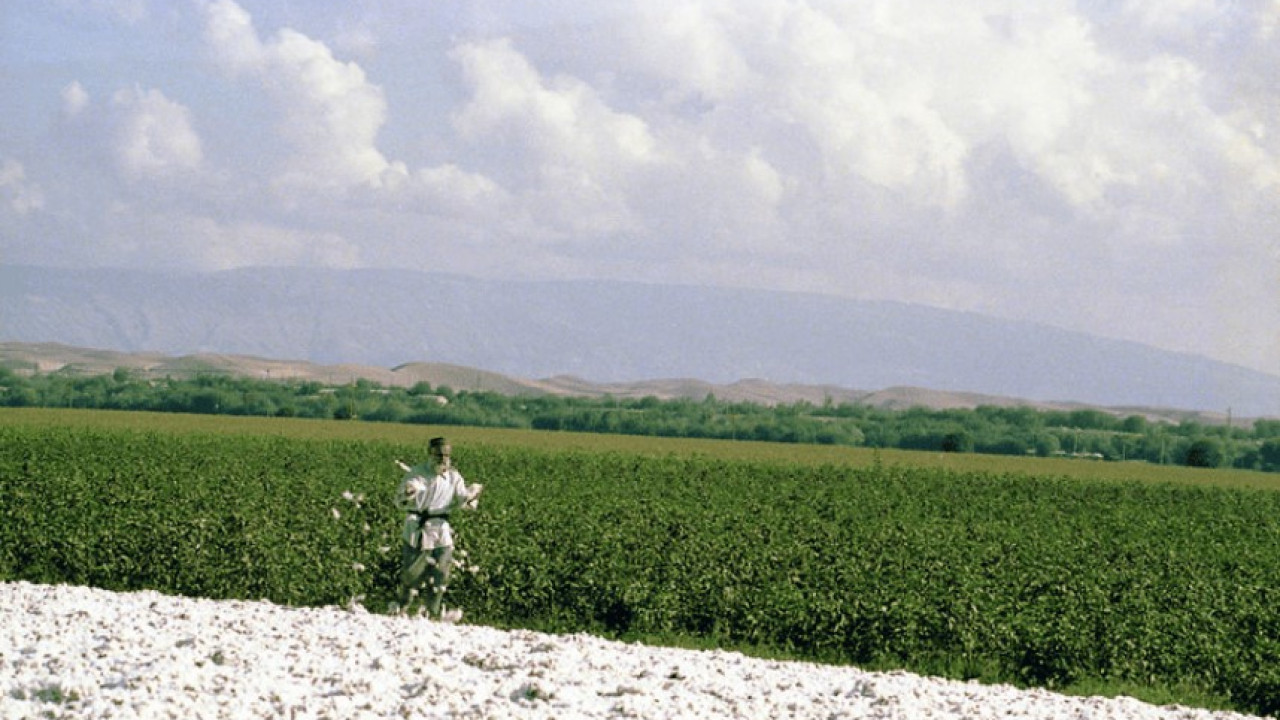
Central Asia’s water crisis is no longer only about shrinking supply. Agriculture remains one of the largest water users in Central Asia. Cotton, wheat, and rice production consume enormous volumes of water, with cotton alone accounting for a major share of agricultural demand. Today, agriculture consumes more than 70% of available freshwater resources. As rivers shrink and glaciers retreat, farming systems are under increasing strain.
Central Asia's current water challenges are partly rooted in Soviet-era agricultural policies that promoted water-intensive farming and left behind inefficient irrigation infrastructure that is still used today. Much of that water never reaches crops efficiently. Studies estimate that nearly half of irrigation water is lost to leaks, seepage, and evaporation before it reaches fields.
The key question Central Asia now faces is whether its agricultural economies can sustain current production levels in a future defined by water shortages and climate stress.
Expanding Pressure from Food Security and Population Growth
Agricultural water demand is not only a legacy issue. It is also rising due to demographic and economic pressures. Central Asia’s population is expected to grow from about 75 million to around 100 million by 2050, increasing demand for food production and rural livelihoods. To deal with this, governments across the region are being forced to prioritize food security as a core political objective, particularly for staple crops like wheat.
This creates a structural tension: expanding food production requires either more water or higher efficiency, yet water availability is declining. Climate change is already intensifying this imbalance by increasing the amount of water lost to evaporation, which increases as temperatures rise, as well as reducing reliable river flow during critical growing periods.
Recent research confirms that even when farmers shift toward less water-intensive crops, total agricultural water consumption continues to rise due to climate-related factors.
Inefficiency in Irrigation and the Hidden Cost of Water Use
The irrigation systems used to channel water from rivers to farmland remain highly inefficient in many parts of Central Asia. Aging infrastructure leads to significant water losses before the water even reaches fields, while uneven distribution systems create disparities between upstream and downstream users.
This inefficiency compounds the pressure created by climate change. As temperatures rise, crops require more water per hectare, increasing overall demand even without expanding agricultural land.
A recent basin-wide analysis of the Amu Darya, one of Central Asia's two main rivers and a vital source of water for agriculture in Uzbekistan, Turkmenistan, and other countries, found that crop water consumption has increased by around 10% over three decades. Climate change was responsible for most of the rise, while land-use changes offset only a small fraction of the increase.
All of this means that improving crop choice alone is not enough to counter rising water demand.
Intensification, Double Cropping, and Rising Consumption
As governments and farmers seek to boost food production, many fields are being used more intensively. In areas where crops depend on water supplied through canals and irrigation systems, farmers increasingly plant a second crop after the first harvest, increasing demand for water throughout the growing season.
While these systems improve productivity, they also increase water demand. In many cases, second-season crops are highly sensitive to heat and require additional irrigation during already dry periods. At the same time, several countries are growing more wheat to reduce their dependence on imported food. But in Central Asia's hot and dry climate, wheat often needs extra water, especially during droughts and periods of extreme heat.
The result is a system where both expansion and intensification of agriculture are contributing to rising water consumption, even in the absence of major increases in farmland area.
Agriculture at a Turning Point
Agriculture remains central to Central Asia’s economies and food security strategies, but it is also the largest driver of water consumption in an increasingly water-stressed region.
The combination of Soviet-era infrastructure, population growth, climate change, and inefficient irrigation systems has created a system under mounting pressure. While adaptation measures exist, they are currently not enough to fully offset rising demand.
The future of Central Asia’s agriculture will depend on whether governments can move beyond incremental adjustments toward systemic reform of water use, crop planning, and regional cooperation.
Loading comments...