




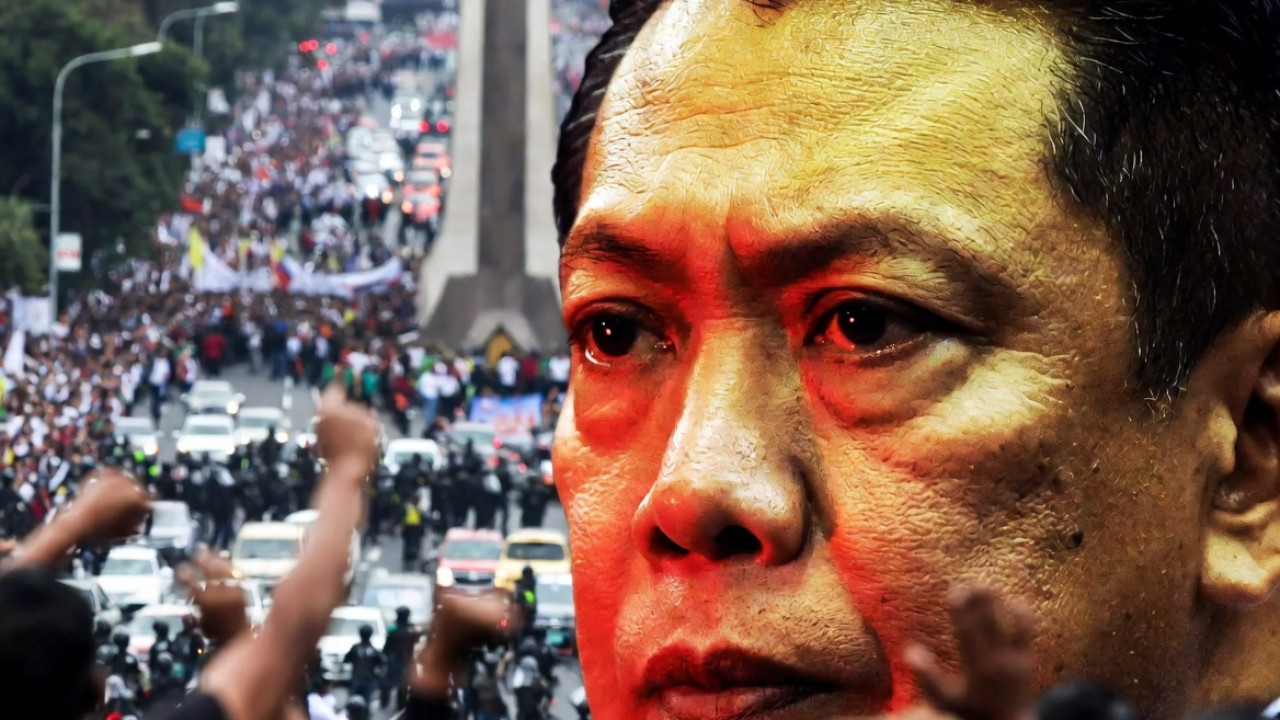
Thousands of members of the Iglesia ni Cristo (INC), one of the Philippines' most politically influential religious organizations, gathered at the People Power Monument in Quezon City on June 30 to protest corruption charges filed against Senator Rodante Marcoleta. The demonstration caused major traffic disruptions, several arrests, and clashes with police, but it also highlighted something larger than one legal case.
What began as a rally in support of a senator quickly became another flashpoint in the country's widening political divide, where corruption investigations, street protests, and judicial proceedings are increasingly viewed through the lens of partisan rivalry rather than legal accountability.
Why Marcoleta Is Facing Corruption Charges
The protest was triggered by a plunder complaint filed against Marcoleta over alleged violations of Philippine campaign finance rules during the 2025 midterm elections.
According to the Office of the Ombudsman, the independent constitutional body responsible for investigating public officials, Marcoleta declared zero campaign contributions in his legally required Statement of Contributions and Expenditures (SOCE), despite allegedly receiving more than ₱100 million (about US $1.84 million) in campaign funds.
Marcoleta has acknowledged receiving campaign donations but argued that he chose not to identify many of the contributors because they requested anonymity. The Ombudsman has rejected claims that the case is politically motivated, maintaining that its complaint is supported by documentary evidence.
The dispute ultimately centers on one of the basic principles of democratic accountability. Campaign finance disclosure laws are designed to reveal who funds political candidates, allowing voters to identify potential conflicts of interest and limiting hidden influence over elected officials.
From A Corruption Case to A Political Confrontation
Marcoleta's legal case quickly evolved into a broader political confrontation. The INC has long been regarded as one of the Philippines' most influential political organizations because of its ability to mobilize large numbers of supporters and endorse candidates during elections. Its decision to organize a mass demonstration immediately elevated the political stakes surrounding Marcoleta's case.
Vice President Sara Duterte publicly supported the rally, describing it as evidence of growing dissatisfaction with President Ferdinand Marcos Jr.'s administration. She argued that the investigation reflected the alleged use of state institutions against political opponents rather than a straightforward anti-corruption effort.
Duterte herself is preparing to face Senate impeachment proceedings later this year, while relations between the Marcos and Duterte political dynasties have steadily deteriorated since the collapse of their alliance. In this context, Marcoleta's legal troubles are part of a much wider struggle over political power ahead of future elections.
Protest, Policing, and Public Trust
Holding the demonstration at the People Power Monument added another layer of symbolism. The monument commemorates the 1986 People Power Revolution that ended the dictatorship of Ferdinand Marcos Sr., making it one of the country's most recognizable symbols of democratic protest. By gathering there, supporters framed their movement as a defense against what they described as political persecution.
Authorities defended police intervention by pointing to road blockades, traffic disruption, and alleged assaults on officers during the demonstration. Critics, however, questioned whether the response adequately protected the constitutional right to peaceful assembly.
Ultimately, the events are a reflection of how politically divided the Philippines has become. Political protests are increasingly becoming contests over institutional legitimacy as much as expressions of public opinion. Every confrontation between demonstrators and security forces is interpreted through competing narratives and political bias, with little regard for actual truth.
A Country Increasingly Divided by Politics
Regardless of whether Marcoleta is ultimately convicted or cleared, the controversy has already grown beyond the legal case itself. For supporters of Senator Marcoleta and the Duterte political camp, the charges are evidence that legal institutions are being used to target political opponents. For critics, they demonstrate that campaign finance laws should apply regardless of a politician's influence or alliances.
Those competing narratives reflect a broader shift in Philippine politics. Increasingly, major events are judged less on their facts than on which political camp they appear to benefit. Corruption investigations, impeachment proceedings, and even public protests are no longer viewed as institutional processes, but as extensions of the country's deepening political divide.
The June 30 protest illustrated that reality. What began as a demonstration in support of one senator has become another chapter in the growing rivalry between the Marcos and Duterte camps, where nearly every legal, political, and institutional dispute is interpreted through the lens of partisan loyalty.

Loading comments...