




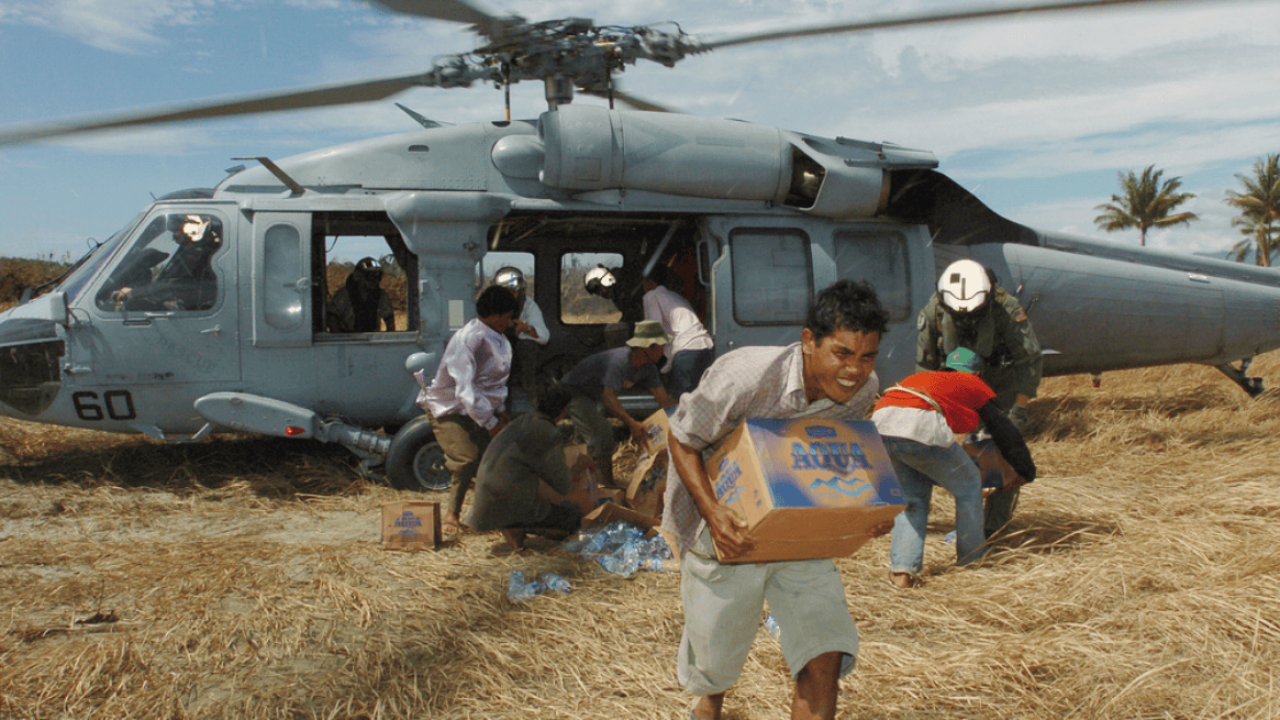
Governments traditionally prepare for threats that cross borders: invading armies, hostile navies, or military confrontation. But across Southeast Asia, some of the region's most serious security risks arrive without soldiers or missiles.
Climate change is disrupting food production and displacing communities. Cyberattacks increasingly threaten critical infrastructure. Food insecurity and weak governance create conditions that undermine long-term stability. These are not hypothetical future dangers—they are challenges governments are already confronting today.
A recent global survey by Monocle, which examined everything from nuclear submarines and cyber warfare to disaster resilience and peacebuilding, highlights that security is no longer defined only by military strength. Increasingly, resilience depends on whether governments can respond to risks that do not resemble traditional conflict.
Security No Longer Arrives in Uniform
Traditional security planning assumes there is an identifiable adversary. But many of today's most disruptive threats have no army to deter.
Climate change does not cross borders with troops. Cyberattacks can originate anywhere in the world. Food insecurity develops gradually through drought, flooding, disrupted supply chains, or rising prices.
Yet these risks increasingly affect national stability as profoundly as conventional military threats.
Across Southeast Asia, stronger storms, rising sea levels, and changing rainfall patterns are damaging infrastructure, displacing communities, and threatening agricultural production. Vietnam's Mekong Delta faces growing saltwater intrusion, while the Philippines repeatedly experiences some of the world's most destructive typhoons.
These are often described as environmental problems. Increasingly, they are becoming security problems.
Digital Economies Create Digital Vulnerabilities
The same transformation is occurring online. One of the strongest examples highlighted by Monocle was Estonia, whose cyber defences were fundamentally reshaped after the large-scale cyberattacks of 2007. The lesson was straightforward: the more digital a society becomes, the more important cyber resilience becomes.
Southeast Asia is now one of the world's fastest-growing digital regions. Governments, banks, healthcare systems, businesses, and citizens increasingly rely on interconnected digital infrastructure. That transformation has accelerated economic growth—but it has also expanded opportunities for cybercrime, espionage, ransomware, and attacks on critical infrastructure.
Unlike military conflict, cyberattacks often remain invisible until essential systems stop functioning. By then, the damage may already extend far beyond the digital world.
Security Begins Before Crisis
One of the most thought-provoking examples in Monocle's survey came from Filipino peacebuilder Irene Santiago, whose work in Mindanao focused less on responding to violence than on addressing the conditions that allow conflict to emerge in the first place.
Her approach reflects a broader understanding of security. Communities with stronger institutions, better education, greater economic opportunity, and more inclusive governance are often more resilient long before crises occur. Security, in other words, is not only about responding to threats, but also about reducing vulnerabilities before they become emergencies.
The same principle applies across Southeast Asia's emerging security challenges. Scientists have warned about worsening climate impacts for decades. Cybersecurity experts have repeatedly identified weaknesses in critical infrastructure. Development specialists have long argued that inequality and poor governance increase the risk of instability.
For much of Southeast Asia, the most consequential security threats may not be gathering beyond national borders. They may already be unfolding within them.

Loading comments...