




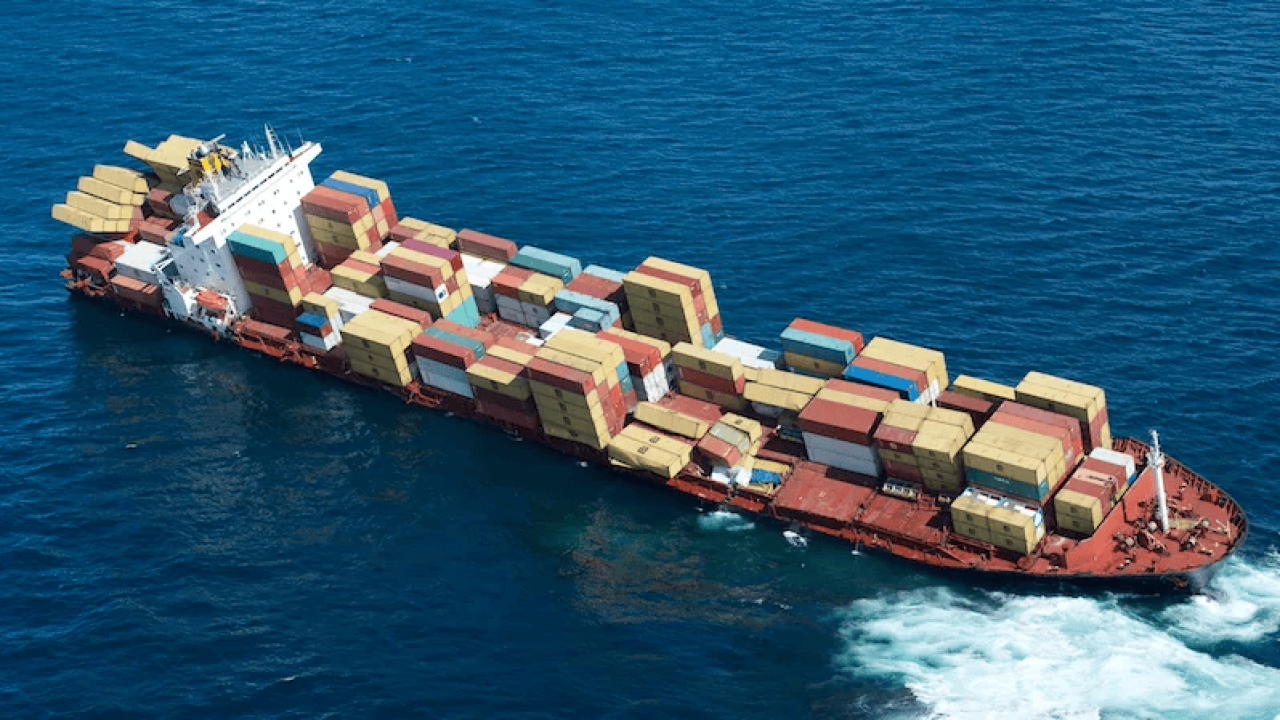
The India-Oman Comprehensive Economic Partnership Agreement (CEPA) entered into force on June 1, 2026, at a moment of growing instability in West Asia. As the US-Israel-Iran war disrupted shipping through the Strait of Hormuz, India suddenly found itself confronting the issue of how to secure trade routes in an increasingly uncertain world.
New Delhi has presented the CEPA deal as a strategic breakthrough and the answer to the trade route problem. But while Oman offers an alternative to one of the world's most dangerous maritime chokepoints, a larger question looms: Is India truly reducing its vulnerabilities or simply shifting its dependence elsewhere?
How the Strait of Hormuz Crisis Elevated Oman
Few waterways are as important to the global economy as the Strait of Hormuz. Around one-fifth of global oil consumption and roughly one-quarter of seaborne oil trade pass through the narrow corridor linking the Persian Gulf to international markets.
For India, the stakes are especially high. The country imports more than 88% of its crude oil and about 50% of its natural gas needs, with Qatar, the United Arab Emirates, and Oman accounting for a large share of these imports.
The recent crisis exposed the risks of that dependence. India's imports from major Gulf economies fell from around $15 billion in April 2025 to $9.8 billion in April 2026, while exports dropped from $4.4 billion to $2.7 billion.
Oman stood out as the exception. Indian imports from Oman surged by 246.4%, rising from roughly $430 million to nearly $1.5 billion over the same period, driven by higher purchases of crude oil and urea.
Geography explains much of this shift. Unlike many Gulf states, much of Oman's coastline lies outside the Strait of Hormuz. Major ports such as Salalah, Duqm, and Sohar remain accessible even when traffic through the strait is disrupted, allowing Oman to serve as an alternative trade and energy gateway.
Oman as a Regional Trade Gateway
The CEPA offers India significant economic benefits. Oman has granted duty-free access on 98.08% of tariff lines, covering 99.38% of Indian exports. In practice, this means that nearly all goods India sells to Oman can now enter the market without import duties, making Indian products more competitive and lowering costs for exporters. Sectors ranging from pharmaceuticals and engineering goods to textiles and agricultural products are expected to gain. By reducing trade barriers across a broad range of sectors, the agreement gives Indian exporters greater certainty in a region where political tensions increasingly shape the flow of goods and investment.
Yet Oman's domestic market has limits. With a population of around 5.68 million people and a GDP of about $110 billion, its ability to absorb large volumes of Indian exports remains relatively modest.
This is where Oman's geography becomes strategically valuable once again. The country shares land borders with Saudi Arabia, the United Arab Emirates, and Yemen. Goods unloaded at Salalah or Duqm can potentially be transported overland into neighboring markets, bypassing the Strait of Hormuz entirely.
In effect, Oman may matter less as a destination than as a gateway. Under its Vision 2040 development strategy, Muscat seeks to become a logistics and re-export hub linking the Middle East, East Africa, and the Indian Ocean. For India, this creates new routes into regional markets while strengthening its presence in the western Indian Ocean.
Diversification Does Not Eliminate Geopolitical Risk
The surge in trade with Oman raises an important question for India's long-term strategy: is New Delhi reducing its dependence on vulnerable trade routes, or replacing one dependency with another? Oman has emerged as a crucial partner during the Strait of Hormuz crisis, but relying too heavily on any single country carries its own risks, especially in a region marked by geopolitical uncertainty.
India appears aware of this challenge. Recent trade data show that imports have also increased from Brazil and Peru as New Delhi seeks alternative energy suppliers. Meanwhile, Singapore has become a major destination for Indian exports, while Tanzania is emerging as an increasingly important trade hub. These shifts suggest that India is attempting to spread risk across multiple regions rather than concentrating it in the Gulf alone.
Yet diversification is easier to talk about than to actually achieve. Oman remains geographically close to some of the Middle East's most volatile flashpoints, while suppliers farther afield can increase shipping times and costs. A supply chain that spans several continents may be more resilient, but it can also become more complex and expensive to manage.
Trade Resilience in an Age of Geopolitical Chokepoints
The main lesson of the Hormuz crisis for India is that resilience means ensuring that no single partner, route, or chokepoint can disrupt its flow of commerce. Whether India's strategy succeeds will depend on its ability to balance the benefits of trusted partners like Oman with a wider network of economic relationships that can withstand future shocks.
In this sense, the India-Oman CEPA represents more than a trade agreement. It reflects a changing world in which economic security is increasingly tied to geography, logistics, and geopolitics.
Loading comments...