




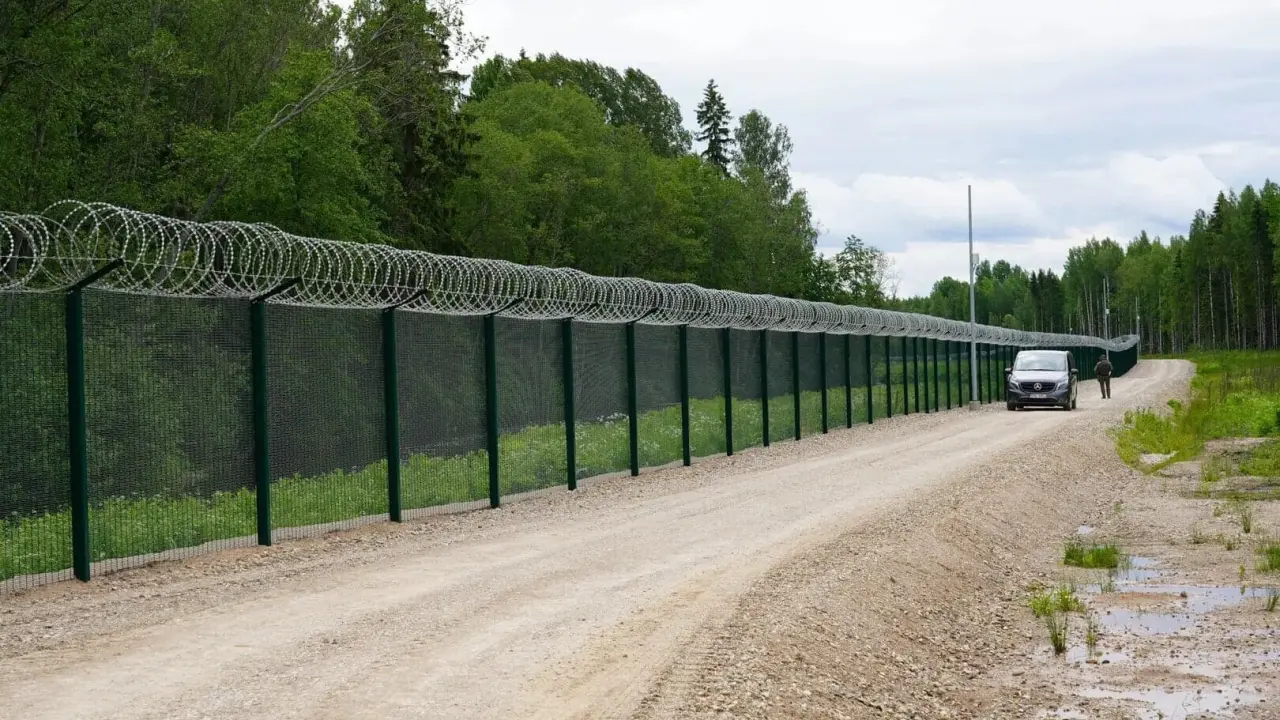
On December 1, 2026, Estonia will close its three remaining road border crossings with Russia, following an attempted arson attack against Threod Systems, an Estonian defense technology company. Estonian security authorities believe the attack was organized by Russia's military intelligence agency, the GRU.
The decision reflects growing concerns about sabotage operations targeting European defense industries and the security of NATO's eastern borders.
Suspected Russian Intelligence Operation Triggers Border Closure
The attempted attack took place on November 14 at Threod Systems' facilities in Viimsi, near Tallinn. According to Estonian authorities, the suspects attempted to break into the building, damage its windows, and use flammable liquids to start a fire and cause an explosion. The company's security team intervened before the plan could be carried out. No one was injured, and the incident did not disrupt production or deliveries.
Eight people, all residents of Latvia, were detained in connection to the operation. Estonia's Internal Security Service (KAPO) said its investigation linked the attempted attack to Russia's military intelligence agency, the GRU.
Threod Systems develops unmanned aircraft systems, including long-range reconnaissance and attack drones. Its work supports Estonia's defense capabilities and contributes to military assistance for Ukraine.
In response to the attack, Prime Minister Kristen Michal called for preparations to close the eastern border, describing the measure as a way to reduce security risks and respond to hostile activities.
On November 16, Kremlin spokesperson Dmitry Peskov rejected Estonia's accusations as baseless and criticized the planned border closure, comparing it to building a wall between the two countries.
The incident follows an earlier fire at Milrem Robotics, another Estonian defense company, in August 2026. Estonian authorities attributed that attack to Russian intelligence services, and three suspects were detained.
Border Restrictions Reflect Growing European Security Concerns
The closure will affect Estonia's three remaining road crossings with Russia: Narva, Luhamaa, and Koidula. From December 1, pedestrian and vehicle traffic will no longer be allowed through these checkpoints.
The Narva railway crossing is initially expected to remain open for freight transport on the Estonian side. This would allow certain goods, including industrial raw materials, to continue moving while businesses look for alternative suppliers. However, the continuation of rail freight will also depend on Russia's response.
The Estonian government has not yet confirmed how long the restrictions will remain in place or whether any exceptions will be allowed. Estonia had already introduced tighter border controls following Russia's full-scale invasion of Ukraine in 2022. The latest decision adds another security measure as authorities seek to limit possible intelligence activities and the circumvention of international sanctions.
Foreign Minister Margus Tsahkna said closing the crossings would reduce opportunities for hostile operations and help address risks linked to sanctions evasion. Estonia has also discussed the decision with neighboring countries, including Latvia, Lithuania, and Finland.
The move reflects broader concerns among European countries about hybrid threats. These activities can include sabotage, intelligence gathering, cyberattacks, and attempts to disrupt critical infrastructure without direct military confrontation.
Implications for Baltic Security and European Relations With Russia
Closing the road crossings will affect residents of border communities, cross-border businesses, and transportation links between Estonia and Russia. The restrictions may also reduce opportunities for ordinary travel and commercial exchanges, adding to the economic separation between the two countries.
Importantly, border closures alone cannot eliminate the risk of sabotage. Security cooperation, intelligence sharing, and stronger protection of defense facilities remain important parts of Estonia's response.
Estonia's experience highlights the need for closer cooperation among countries facing similar security threats along Europe's eastern borders. Protecting defense industries and critical infrastructure has become an increasingly important part of regional security planning.
As tensions with Russia continue, Estonia faces the challenge of strengthening national security while managing the economic and social effects of tighter border controls. The December 1 closure will mark another step in its efforts to limit potential threats from across its eastern border.


Loading comments...