




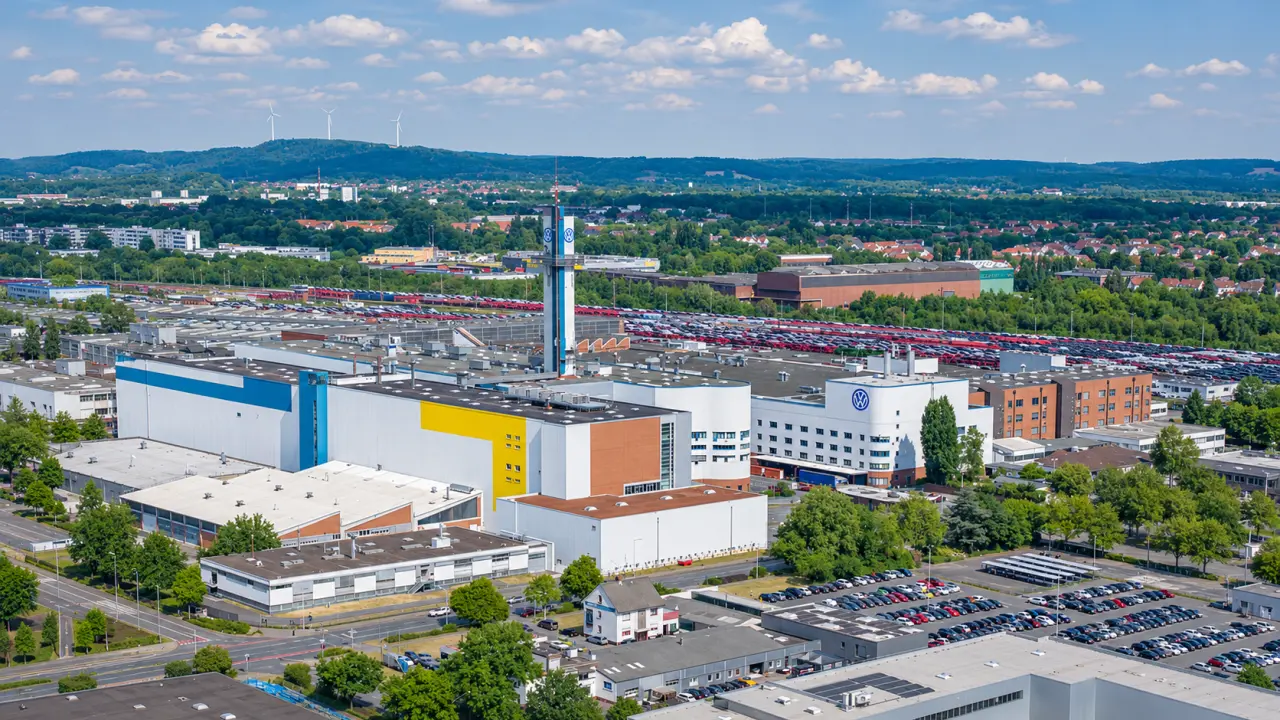
Volkswagen’s Osnabrück factory was supposed to become a symbol of Germany’s industrial challenges. Instead, it has become the center of a geopolitical debate involving Qatar, Israel, and the future of Europe’s defense industry.
The German automaker is considering converting the ageing factory from car production into a facility producing components for Israel’s Iron Dome missile defense system. However, the plan has reportedly faced resistance from one of Volkswagen’s largest shareholders: Qatar.
The dispute highlights how state-backed investors are no longer simply passive holders of corporate assets. Through major stakes in international companies, governments can influence decisions that affect defense industries, diplomatic relations, and strategic competition.
Qatar’s Volkswagen Stake Becomes a Geopolitical Factor
Volkswagen’s Osnabrück plant is scheduled to stop vehicle production in 2027, putting around 2,300 jobs at risk. To secure the future of the site, Volkswagen began exploring alternative uses for the factory, including possible defense-related production.
One proposal involved cooperation with Israeli defense company Rafael Advanced Defense Systems. According to reports, Rafael signed a memorandum of understanding with Volkswagen in April to explore producing components for Israel’s Iron Dome air defense system at the German facility.
The plan reflects a broader shift taking place across Europe, where traditional industrial facilities are increasingly being considered for strategic manufacturing as governments expand defense spending following Russia’s invasion of Ukraine and rising global security tensions.
However, the proposal reportedly stalled after opposition from Qatar Investment Authority (QIA), one of Volkswagen’s largest shareholders.
QIA is Qatar’s sovereign wealth fund, a government-owned investment institution created to manage national financial reserves and diversify the country’s economy. The fund holds around 17% of Volkswagen’s voting rights and has two seats on the company’s supervisory board, giving Doha significant influence over major corporate decisions.
The situation has created an unusual intersection between business and foreign policy. A decision about the future of a German factory is no longer only a question of jobs, investment, and industrial strategy. It has also become connected to Qatar’s regional political position and Israel’s security needs.
Israel is now reportedly considering India as an alternative location for the project.
A German Factory Becomes Part of the Israel Defense Debate
The Volkswagen dispute reflects a wider transformation in global industry. As geopolitical tensions increase, civilian manufacturing facilities are increasingly being considered for military and strategic production.
For Israel, expanding defense manufacturing capacity has become increasingly important as it faces security challenges from Iran and Iran-backed armed groups across the Middle East. Systems such as Iron Dome play a central role in protecting Israeli territory from missile and rocket attacks.
For Germany, however, defense cooperation with Israel carries political sensitivity. Berlin has historically maintained strong support for Israel’s security while also facing growing domestic and international debate over Israeli military operations and arms exports.
The Volkswagen case therefore represents a broader challenge facing governments and companies: how to balance commercial interests, industrial policy, and foreign policy priorities.
The trend extends beyond Germany. Across Europe, governments are encouraging industries that once focused primarily on civilian production to support defense supply chains. Factories producing vehicles, electronics, machinery, and advanced technology are increasingly viewed as potential strategic assets.
Sovereign Wealth Funds Are Becoming Geopolitical Players
Qatar’s influence over Volkswagen highlights a growing feature of modern geopolitics: governments can shape global industries without directly controlling them.
Through sovereign wealth funds, states have acquired major stakes in some of the world’s largest companies. These investments are often driven by commercial goals, but they can also create strategic influence in industries connected to energy, technology, infrastructure, and defense.
Qatar is not alone. State-backed investment funds from Kuwait, Saudi Arabia, and the United Arab Emirates have built significant positions in European companies, while Chinese state-linked investors have acquired stakes in strategic sectors ranging from automotive manufacturing to ports and logistics.
The Volkswagen case demonstrates how these investments can become politically significant when corporate decisions intersect with international conflicts.
As competition over technology, energy, and defense capabilities intensifies, ownership itself is becoming a source of geopolitical power. The future of global influence may not only be decided in government offices, but also inside corporate boardrooms.


Loading comments...