




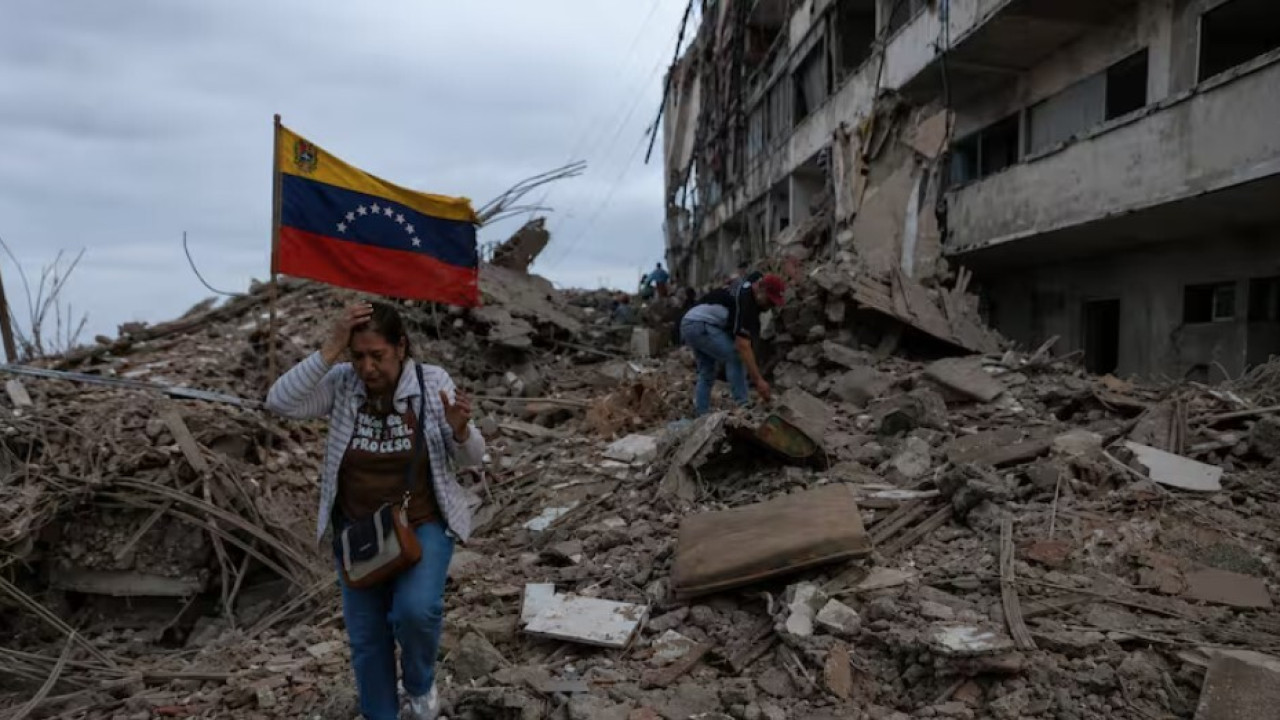
On June 24, two powerful earthquakes measuring 7.2 and 7.5 struck Venezuela´s northern coast less than a minute apart. The human toll is already immense, even as recovery efforts continue. Thousands are dead, many more are injured, and tens of thousands remain missing.
The damage would have tested any government. In Venezuela, it hit a country already weakened by years of economic collapse, dictatorship, corruption, broken infrastructure, mass emigration, and mass distrust of the state.
A Disaster Becomes a Power Test
In most countries, an earthquake of this scale would quickly become a test of competence. In Venezuela, it has become a test of power.
The government, led by acting President Delcy Rodríguez, has tried to keep tight control over the emergency response. For years, Venezuela’s dictatorship has treated any independent attempt by citizens to organize as a threat to be crushed or controlled. After the earthquakes, the current government has taken that same approach, trying to centralize recovery efforts rather than letting communities organize on their own.
The results have been deadly. Reports from the disaster zone have described delayed access, disorganized coordination, shortages of machinery, restrictions on information, and frustration among survivors who say help from the government arrived too slowly, or not at all. The military has been largely absent from the rescue effort, except where it has appeared to control vehicle movement. Police officers, meanwhile, have faced accusations of looting instead of protecting affected communities.
Oil Alone Cannot Pay for Reconstruction
The financial challenge facing Venezuela extends far beyond the immediate destruction. Early estimates already put the direct damage in the tens of billions of dollars, while some projections suggest the total cost of reconstruction could eventually approach or even exceed $100 billion—roughly equivalent to the country's entire annual economic output.
Ironically, that figure is close to the amount the United States has estimated international energy companies would need to invest over several years to revive Venezuela's collapsing oil industry. The government now faces two urgent priorities competing for the same limited resources: rebuilding homes, hospitals, and infrastructure, or rebuilding the oil sector that finances the economy.
The dilemma is made even harder by Venezuela's financial position. The country remains burdened by an estimated $240 billion in debt. That leaves Caracas with little access to international financing just as it faces one of the largest reconstruction efforts in its history.
There is one important piece of good news. The Paraguaná Refining Complex, one of the country's largest energy facilities, appears to have escaped major damage. Chevron has also confirmed that its Venezuelan operations continue to function, preserving roughly a quarter of the country's crude production. Keeping oil exports flowing will provide desperately needed revenue during the recovery.
However, even if production remains stable, the income generated by Venezuela's energy sector falls far short of what will be needed to rebuild cities, restore public services, and repair the country's damaged infrastructure. The earthquakes have exposed a reality that existed long before the disaster: Venezuela's economic recovery depends more than oil.
The Quakes Could Cement Venezuela's Political Crisis
There is a temptation to search for historical parallels. One of the clearest is Haiti. Its devastating 2010 earthquake struck a country already weakened by political instability and poverty. The disaster prompted enormous international pledges and humanitarian support, yet it failed to produce lasting political stability. Instead, Haiti's institutions continued to erode as violence and state collapse deepened.
The lesson is sobering: earthquakes rarely create political crises. They expose the ones that already exist—and often make them worse.
That is the risk confronting Venezuela today. If Rodríguez uses the emergency to consolidate power, if Washington continues prioritizing short-term stability over political legitimacy, and if the opposition remains sidelined from the recovery process, reconstruction could become another source of political division rather than national renewal.
Venezuela urgently needs funds to rebuild. But reconstruction ultimately depends on something even more important than money: public trust. Without institutions that citizens believe are capable of managing aid fairly and rebuilding transparently, billions of dollars alone will not restore the country.
The greatest danger may therefore lie beyond the collapsed buildings. Long after the rubble is cleared, the earthquake could leave Venezuela with an even deeper political crisis than the one it already faced.
Loading comments...