
The TAPI pipeline has been declared dead more times than most infrastructure projects ever begin. Yet nearly three decades after it was first proposed, Turkmenistan, Afghanistan, Pakistan, and India (TAPI) are once again trying to turn one of Asia’s most ambitious energy corridors into reality.
The project is designed to carry natural gas from Turkmenistan’s vast reserves into some of the world's fastest-growing energy markets. But TAPI is about more than fuel. It is a test of whether countries divided by conflict, political rivalry, and geography can build a shared economic future. If successful, it could reshape regional trade and reduce dependence on external powers. If it fails, it will become another reminder of how difficult regional integration remains in Asia.
Why the TAPI Pipeline Matters for South Asia
The TAPI pipeline is expected to stretch 1,814 kilometers across Central and South Asia. Around 774 kilometers would pass through Afghanistan, making it the project’s most consequential section.
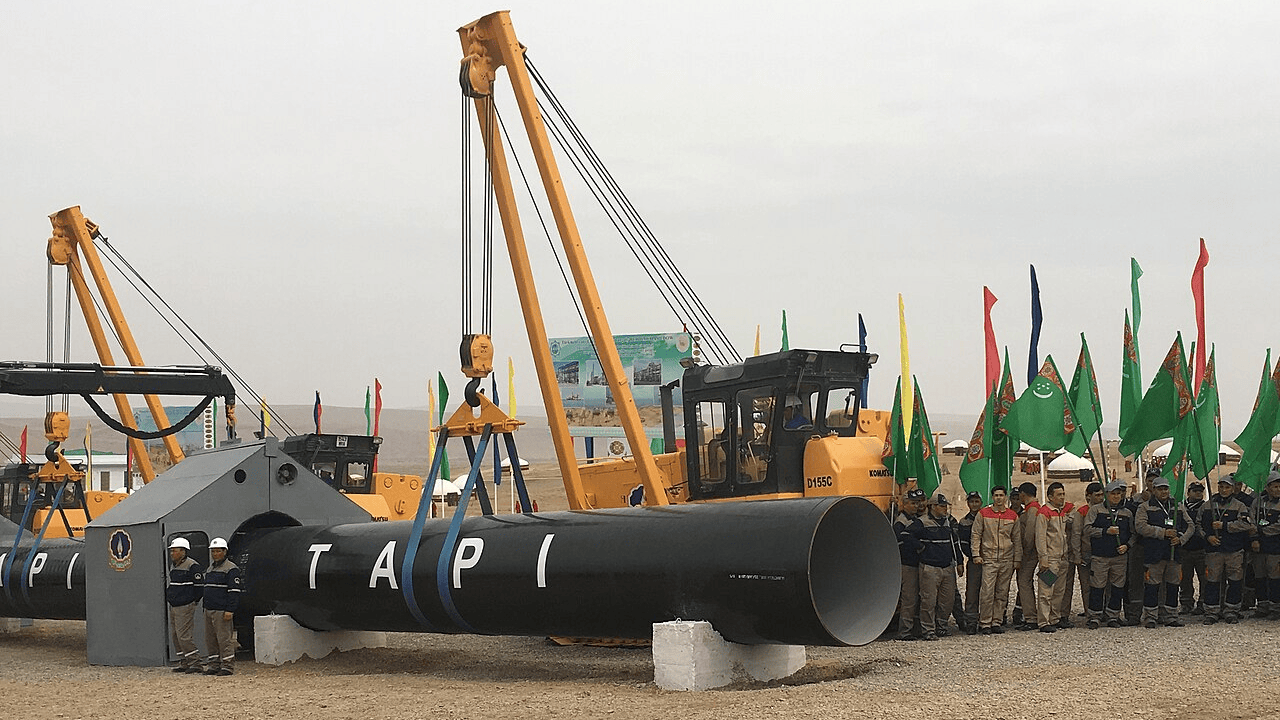
In January 2026, Turkmen and Afghan officials confirmed that construction is moving toward the western Afghan city of Herat. Worker camps and infrastructure are already in place along part of the route. Turkmenistan also said the Serhetabat-Herat section could be completed by the end of 2026.
The project could carry 33 billion cubic meters of gas every year. That matters because countries like Pakistan and India face rising energy demand, growing populations, and repeated electricity shortages.
Pakistan could earn up to $250 million annually in transit revenue, while Afghanistan could receive more than $1 billion through transit fees and related economic activity. For Afghanistan, that money could support roads, services, and local jobs in a country still struggling after decades of war.
Afghanistan Security Risks Still Threaten the Project
Despite new construction updates, major risks remain. Security inside Afghanistan continues to worry investors and regional governments.
The Taliban, an Islamist movement that returned to power in Afghanistan in 2021 after the withdrawal of US-led forces, has tightened control over much of the country, reducing some armed violence along the route. Even still, tensions near the Pakistan-Afghanistan border continue, driven by militant attacks, cross-border clashes, and disputes over armed groups operating in frontier areas. Regional instability could quickly disrupt the pipeline.
There are also concerns about India-Pakistan relations, which have been tense for decades because of border disputes, military clashes, and competition over Kashmir. Analysts warn that future political crises could turn the pipeline into a pressure tool. Gas supplies could be interrupted if relations between neighboring states collapse.
Progress itself also appears slow. Reports in October 2025 showed that about 14 kilometers of pipe had been installed in Afghanistan. By March 2026, reports suggested construction had reached 15.5 kilometers. Officials describe the work as moving rapidly, but critics say the pace remains limited for a project of this size.
Central Asia Energy Strategy Moves Beyond Russia
TAPI reflects a bigger geopolitical trend across Central Asia and South Asia. Countries are increasingly looking for alternative trade routes, energy supplies, and regional partnerships.
For Turkmenistan, the pipeline offers a chance to expand gas exports beyond traditional buyers. For Pakistan and India, it could create another source of energy outside Russian-linked markets and global shipping chokepoints.
Central Asian countries are also investing more in regional connectivity projects. Kazakhstan, Uzbekistan, and Azerbaijan are expanding transport and trade corridors that link Asia with Europe and the Middle East.
Today, energy security is becoming tied to regional cooperation. TAPI shows how countries once divided by conflict are still searching for shared economic interests.
The pipeline remains far from complete. But even limited progress shows that regional powers still see long-term value in energy independence and cross-border cooperation.


Loading comments...