




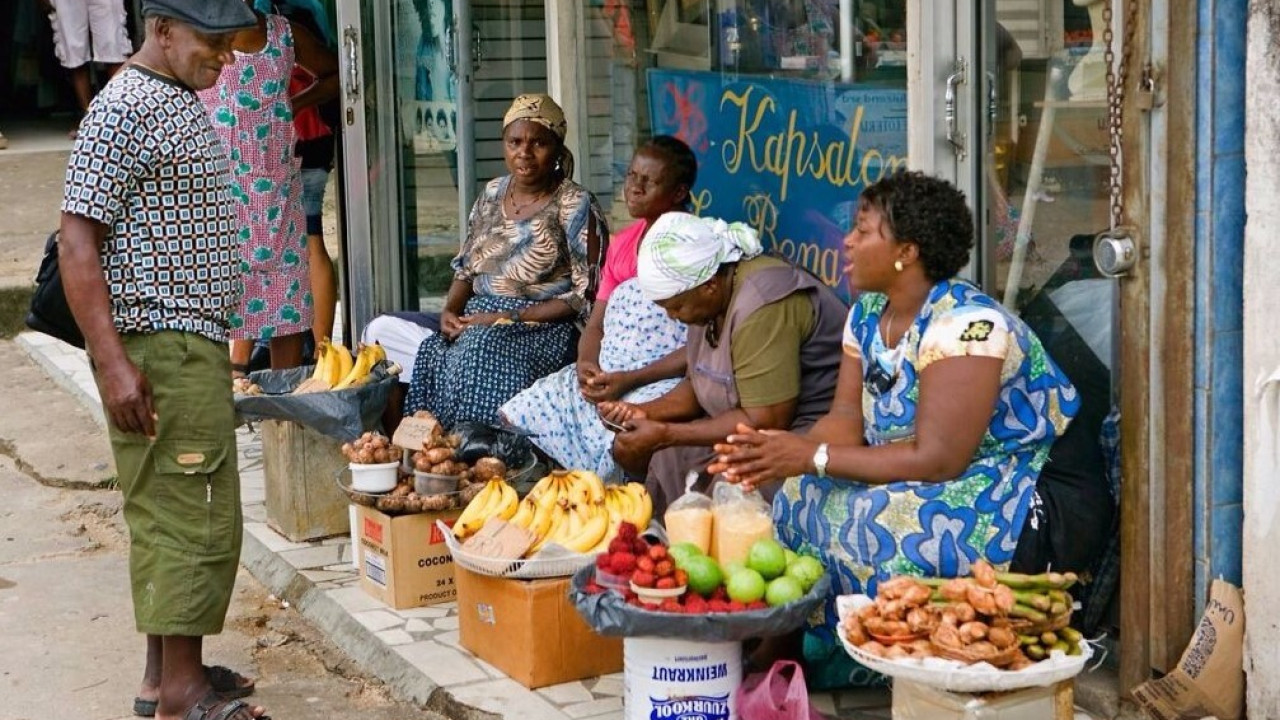
Suriname sits on the northern coast of South America, but its official language is Dutch. It is the only independent country in South America where Dutch is used in government, schools, courts, and official business.
At first glance, that may seem like an unusual colonial legacy. In reality, it reveals something much deeper. Suriname’s language reflects a history shaped by empire, migration, slavery, and independence. Today, that legacy still influences how the country governs itself, connects to the world, and navigates a future increasingly shaped by oil, environmental politics, and great-power competition.
As Suriname enters a new era of offshore energy development, understanding why Dutch remains so important helps explain how the country became one of the most unique states in the Americas.
How Colonial Rule Shaped Modern Suriname
Suriname was a Dutch colony for more than three centuries. After the 1667 Treaty of Breda, the Dutch retained Suriname while the English kept the territory that later became New York. The colony was built around plantation agriculture, producing sugar, coffee, cocoa, and cotton for European markets. Like many colonial economies in the Americas, this system relied heavily on enslaved African labor.
When slavery was abolished in 1863, plantation owners turned to indentured laborers from India, Java (modern Indonesia), and China. Over time, this created one of the most ethnically diverse societies in the Western Hemisphere.
Today, Suriname's population includes Hindustani, Maroon, Creole, Javanese, Indigenous, Chinese, and mixed-heritage communities, each contributing to the country's cultural identity.
Dutch became the language of government, law, education, and administration. At the same time, other languages remained important in daily life. Sranan Tongo emerged as a common language connecting different communities, while Hindi-derived Sarnami, Javanese, Maroon languages, and Indigenous languages preserved cultural traditions and local identities.
As a result, language in Suriname reflects both national unity and the lasting influence of colonial rule.
Independence Did Not End Dutch Influence
Suriname gained independence from the Netherlands in 1975, but the relationship between the two countries never fully disappeared. Large numbers of Surinamese migrated to the Netherlands before and after independence, creating strong family, economic, and cultural ties that continue today. The Netherlands remained an important destination for education, employment, and investment, while Dutch institutions continued to influence parts of Surinamese public life.
Political tensions complicated that relationship.
In 1980, military officer Desi Bouterse seized power in a coup. Two years later, the December Murders saw fifteen critics of the regime killed, becoming one of the darkest episodes in modern Surinamese history.
The killings damaged relations with the Netherlands and remained a source of political division for decades. Bouterse later returned to power through democratic elections and was eventually convicted over the murders. He died in 2024 before serving his prison sentence.
The death of former President Chan Santokhi in March 2026, following Bouterse's death two years earlier, symbolized the end of a political era dominated by figures linked to that turbulent period.
Yet the broader questions remain. Can Suriname strengthen democratic institutions, maintain political stability, and move beyond the divisions that shaped much of its post-independence history?
A South American Country With Caribbean Ties
Although Suriname is geographically part of South America, many of its political and diplomatic relationships are tied to the Caribbean. The country is a member of the Caribbean Community (CARICOM) and often works more closely with Caribbean states than with its larger South American neighbors.
Its location highlights an unusual mix of colonial histories. Along the Guiana coast, three different European legacies still sit side by side: Guyana is English-speaking and shaped by British institutions. French Guiana remains an overseas territory of France. Suriname remains Dutch-speaking and retains many Dutch legal and administrative traditions.
This unique position allows Suriname to bridge multiple regions and identities at the same time.
The country's international profile has also grown. Surinamese diplomat Albert Ramdin became the first Caribbean Secretary General of the Organization of American States (OAS), giving the country greater visibility in hemispheric affairs.
Historical migration patterns have also created lasting links with India and Indonesia, whose descendants form important parts of Suriname's population.
Oil Is Transforming Suriname’s Future
While Dutch helps explain Suriname’s past, oil may define its future. The offshore GranMorgu project, led by TotalEnergies and APA Corporation, is expected to begin production in 2028. The development includes an estimated $10.5 billion investment and a production vessel capable of producing around 220,000 barrels of oil per day.
The discovery has drawn comparisons with neighboring Guyana, whose economy has been transformed by offshore oil production over the past decade.
For Suriname, the opportunity is enormous. Oil revenues could accelerate economic growth, fund infrastructure projects, and increase the country's regional influence.
At the same time, the country faces difficult choices. Suriname is also one of the world's most heavily forested nations, with roughly 93% forest cover. Its forests play an important role in global carbon storage and biodiversity protection, and the government has pledged to preserve most of them.
Balancing energy development with environmental protection will become one of the defining challenges of the coming decade.
More Than a Language Story
Suriname's Dutch language is often treated as a curiosity. In reality, it reflects a much larger story about colonial history, migration, identity, and state-building.
Today, Suriname sits at the intersection of several worlds. It is rooted in South America, closely connected to the Caribbean, shaped by Europe, linked to Asia through migration, and increasingly important in global energy markets.
The country's future will be shaped less by the language it speaks than by how it manages the opportunities and pressures created by oil wealth, environmental stewardship, and growing geopolitical interest.

Loading comments...