




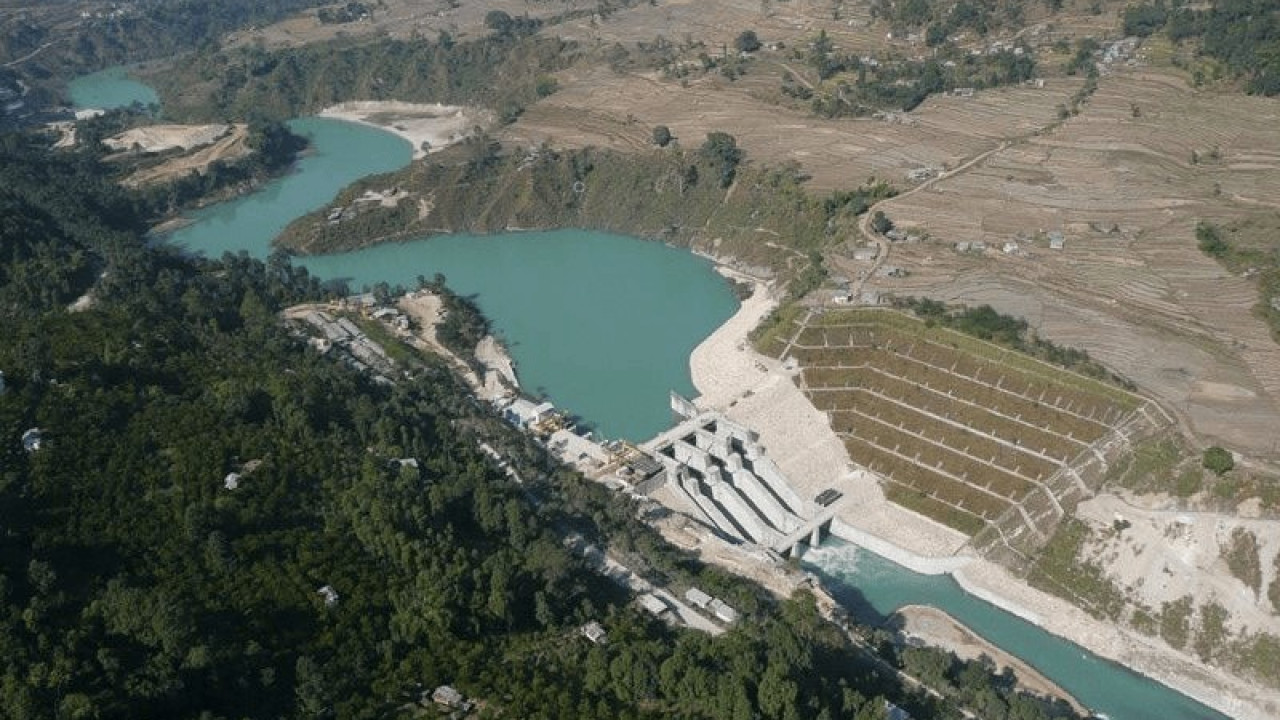
Nepal is moving ahead with an ambitious plan to become a major hydropower exporter, aiming to supply electricity across South Asia.
Hydropower is a way of producing electricity by using the movement of flowing or falling water to spin turbines that generate energy. Nepal's vast Himalayan rivers give the country some of the world's greatest potential for hydropower development.
But this vision is increasingly tied to a difficult geopolitical reality. India is not only Nepal’s largest potential buyer of electricity but also the only transit route for exports to Bangladesh, creating a structural dependency that raises questions about Nepal’s energy sovereignty.
Nepal’s Hydropower Expansion Strategy
Nepal’s hydropower ambition is not new. Early projects such as the Pharping Power Plant, commissioned in 1911, marked one of Asia’s earliest steps into hydroelectric generation. However, large-scale development remained limited for much of the 20th century, constrained by financing and state-led infrastructure models supported by foreign partners.
A shift began in the 1990s with economic liberalization, which opened the sector to private investors and independent power producers. By the 2000s, Nepal had adopted an export-oriented hydropower model, seeking to monetize its river systems as a long-term growth engine.
Today, Nepal envisions reaching 28.5 gigawatts of installed capacity by 2035, with 15 of those gigawatts earmarked for export. This amount would roughly be enough to power tens of millions of homes. Nepal’s plan is ambitious even by global hydropower standards.
India’s Central Role in Nepal’s Energy Trade Network
India sits at the center of Nepal’s hydropower future. Due to the region's geography, all of Nepal's electricity exports must pass through Indian territory, giving New Delhi significant influence over Nepal’s access to markets such as Bangladesh. India is also a major investor and buyer, shaping which projects move forward.
This has created what analysts describe as "hydro-hegemonic leverage." India has previously restricted electricity purchases from projects linked to Chinese firms, prompting several projects to shift from Chinese to Indian companies.
This type of leverage extends beyond energy too. Nepal’s rivers feed the Ganga basin, which supports hundreds of millions of people in India, giving New Delhi a strong interest in managing upstream water flows. As a result, Nepal’s hydropower sector has become part of a broader contest over water security, regional influence, and strategic control.
Regional Hydro-Politics and the Limits of Energy Sovereignty
Nepal’s hydropower push sits in a wider South Asian competition over Himalayan water, where India and China are expanding energy infrastructure to secure power and influence. This leaves Nepal, despite its vast potential, dependent on external players who control access to markets and transmission routes.
Examples from other countries highlight the risks of export-heavy hydropower development. Bhutan’s reliance on hydropower exports to India has generated steady revenue but also deep financial dependence on Indian financing and electricity markets. Laos borrowed heavily from foreign lenders to build dams, but the projects were expensive and took years to generate enough export revenue to repay the loans.
These cases illustrate how hydropower can generate income and infrastructure growth, but it can also lock smaller states into long-term dependency relationships when other countries' control their access to markets and the transmission routes.


Loading comments...