




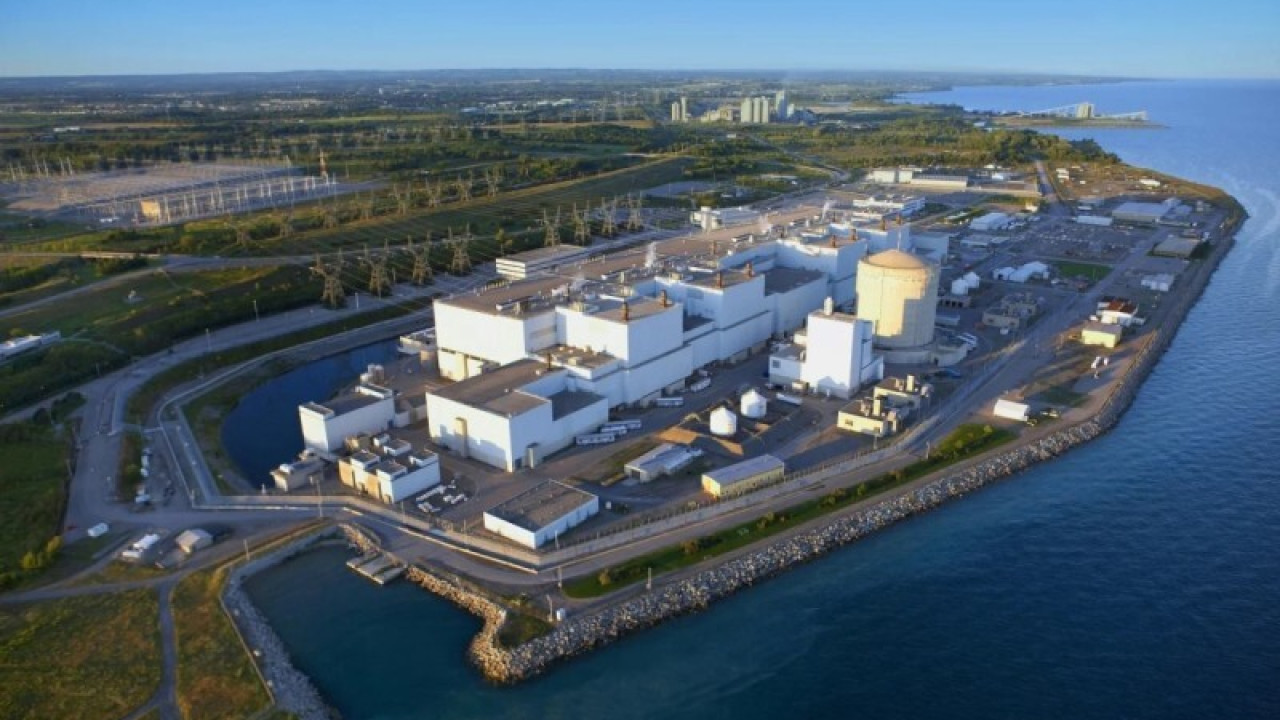
As Southeast Asia seeks cleaner and more reliable energy sources, Canada’s renewed push for nuclear power offers a valuable lesson. Following the release of its new Nuclear Energy Strategy, Ottawa’s nuclear gamble shows that the key questions are not only technical, but also political and economic.
Ottawa has announced plans to build up to 10 new large-scale reactors, with two expected to be under construction by 2035 and five more planned or in development by 2040. The government is also seeking to expedite approval for a high-level nuclear waste repository by designating it a project of national interest.
A Warning on Technological Dependence
One of the biggest problems is that Canada’s nuclear plan is not clearly based on Canadian technology. Canada’s original nuclear model was built around CANDU reactors, which use natural uranium. This allowed Canada to develop a domestic nuclear supply chain and avoid uranium enrichment, a process often associated with nuclear weapons proliferation.
Now, however, Canada appears to be moving toward foreign-designed reactors. The AP1000, manufactured by the US-based Westinghouse Electric Company, is reportedly being considered for several large-scale projects. Meanwhile, a small modular reactor designed by GE Vernova Hitachi, a US-Japanese joint venture, is already under construction.
This is the first important lesson for Southeast Asia. Nuclear power is not just an energy option. It also involves a choice about technological dependence.
Countries that import reactors are not just buying power plants. They are tying part of their energy future to foreign suppliers, foreign regulators, fuel supply chains, and financing models. This may be manageable for a wealthy country like Canada. It is a much riskier gamble for developing economies with tighter budgets and weaker regulatory capacity.
The High Cost of Nuclear Power
Nuclear projects are notorious for exceeding their budgets and schedules. Consider, as one example, the Philippines’ experience with its stalled nuclear plant. For now, Canada’s plan says very little about how much its nuclear expansion will cost or how it will be financed.
For reference, the two AP1000 reactors completed at the Vogtle nuclear plant in Georgia, United States, in 2024 cost around $36 billion. The project has been described as one of the most expensive power plants ever built.
For Southeast Asia, nuclear power may seem attractive because it promises stable, low-carbon electricity. But if projects require large public subsidies, long construction periods, and ongoing state guarantees, the political and economic burden can be significant.
A nuclear power plant does not become affordable simply because it is clean. If the final electricity price is too high, it can harm industrial competitiveness and force governments to absorb the costs.
The Uranium Fuel Question
Canada’s move toward foreign reactor designs raises another concern: enriched uranium. Traditional Canadian reactors use natural uranium. However, reactors such as the AP1000 require enriched uranium, which Canada does not currently produce. This could make Canada dependent on foreign fuel suppliers, most likely including the United States.
Ottawa’s response appears to be even more ambitious. It involves opening the door to uranium enrichment within Canada for both domestic use and potential export. This would mark a significant historical shift. Enrichment is never just a technical matter. It also raises questions about weapons proliferation, export controls, and geopolitical trust.
The Nuclear Waste Risk
A third major concern is that reactors produce nuclear waste that has to be disposed of somehow. To address this, Canada is seeking fast-track approval for a deep geological repository in Ontario. The project’s scope includes nuclear waste from reactors using enriched uranium, and already it is facing significant public opposition.
Under the fast-track provisions currently under discussion, key decisions for a project of national interest would effectively be deemed to have been made in favor of allowing the project to proceed. In practice, this could mean that even if federal regulators identify problems, political authorities would still be under pressure to approve the project.
The Hidden Costs of Nuclear Power
Challenging nuclear issues include waste storage, decommissioning, accident liability, and long-term monitoring that can span generations. A government may approve a nuclear power plant today, but the public could still be paying for its risks a century later.
This does not mean nuclear power has no role to play in a clean energy future. But Canada’s experience shows why governments must be cautious about treating nuclear power as a simple solution.
Canada’s nuclear challenge should not be dismissed as a distant debate because its lessons are universal. It offers a preview of the decisions many Southeast Asian countries may soon have to make. Nuclear energy may promise energy security, but if it depends on foreign technology, imported enriched fuel, public subsidies, and weaker regulation, the costs may outweigh the benefits.

Loading comments...