




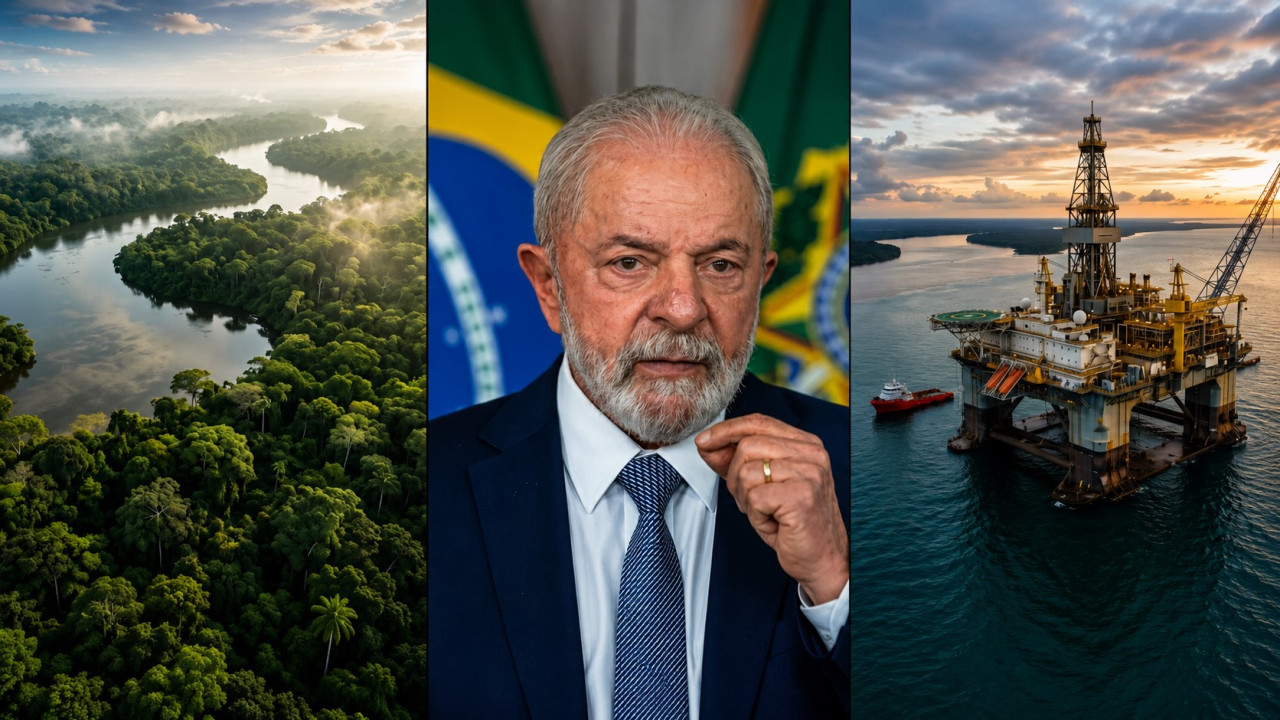
Brazil’s efforts to expand its oil industry are becoming increasingly tricky as economic, political, and environmental concerns converge. President Luiz Inácio Lula da Silva is now framing it as a battle over sovereignty, energy security, and who gets to control the future of the Amazon’s offshore wealth.
Speaking at Petrobras’ biggest refinery in São Paulo, Lula defended drilling in the Amazon River Mouth Basin, part of Brazil’s Equatorial Margin, insisting that the work must continue but that it can be done without harming the environment. He also emphasized that Brazil must occupy and explore the area before another country tries to do so.
“We’re going to occupy the area and explore for oil with the utmost responsibility,” Lula said, arguing that the revenue is necessary to help secure Brazil’s future.
Brazil Pushes Into a New Oil Frontier
The Equatorial Margin, in northern Brazil, is seen as one of the country’s most promising new oil frontiers. Petrobras, a Brazilian majority state-owned multinational corporation, received authorization last year from Ibama, Brazil’s environmental agency, to begin exploratory drilling in the region.
The decision has placed Lula at the center of a difficult political fight. His government presents itself as a defender of the Amazon, but it is also backing a Petrobras-led push into an environmentally sensitive region.
Lula rejected the idea that exploration means abandoning environmental responsibility. “No one cares more about the Amazon than we do,” he said, defending his government’s position that Brazil can protect the rainforest while still developing strategic offshore resources.
His sovereignty argument gave the speech a sharp edge. Lula invoked Donald Trump’s past claims and ambitions involving Canada, Greenland, and the Gulf of Mexico, then warned that Brazil could not leave the Equatorial Margin exposed.
“Who’s to say [Trump] won’t think the Equatorial Margin is his too?” Lula asked.
Petrobras Becomes the Shield
Lula also used the visit to defend Petrobras as a national asset that should remain under state control. He argued that Brazil would be more vulnerable to global shocks if the oil giant was privatized.
His point was that Petrobras gives the government a tool to manage crises, protect consumers, and keep fuel costs from being fully passed on to the public. Lula linked rising oil prices to the war in Iran and said Brazil is using extra revenue from oil exports to help subsidize diesel and gasoline domestically.
That framing turns Petrobras into more than an energy company. In Lula’s eyes, it is a national shield against foreign conflict, global price spikes, and domestic economic pain.
The president said Brazilians, truck drivers, and motorists should not be punished for a war they did not cause. He blamed Trump directly for the conflict in Iran, tying Brazil’s fuel policy to a wider attack on US politics.
Energy Security Is the Goal
For Lula and Petrobras, the main goal is ensuring Brazil's energy security. Petrobras currently supplies 75% of Brazil’s diesel and wants to raise that figure to 85%. Petrobras and Lula have committed to making the country self-sufficient in diesel by 2030.
That ambition explains why the Equatorial Margin now matters far beyond one drilling license. Brazil is trying to expand oil production, strengthen refining, build renewable fuel capacity, and reduce exposure to foreign shocks all at once.
This does come with political risk. Lula is asking voters, environmentalists, and investors to accept that Amazon-linked oil exploration can coexist with climate responsibility.
In Lula’s telling, the choice is not between oil and the Amazon. It is between Brazil controlling its own energy future or letting global turmoil, foreign powers, and private interests decide the price.
Loading comments...