




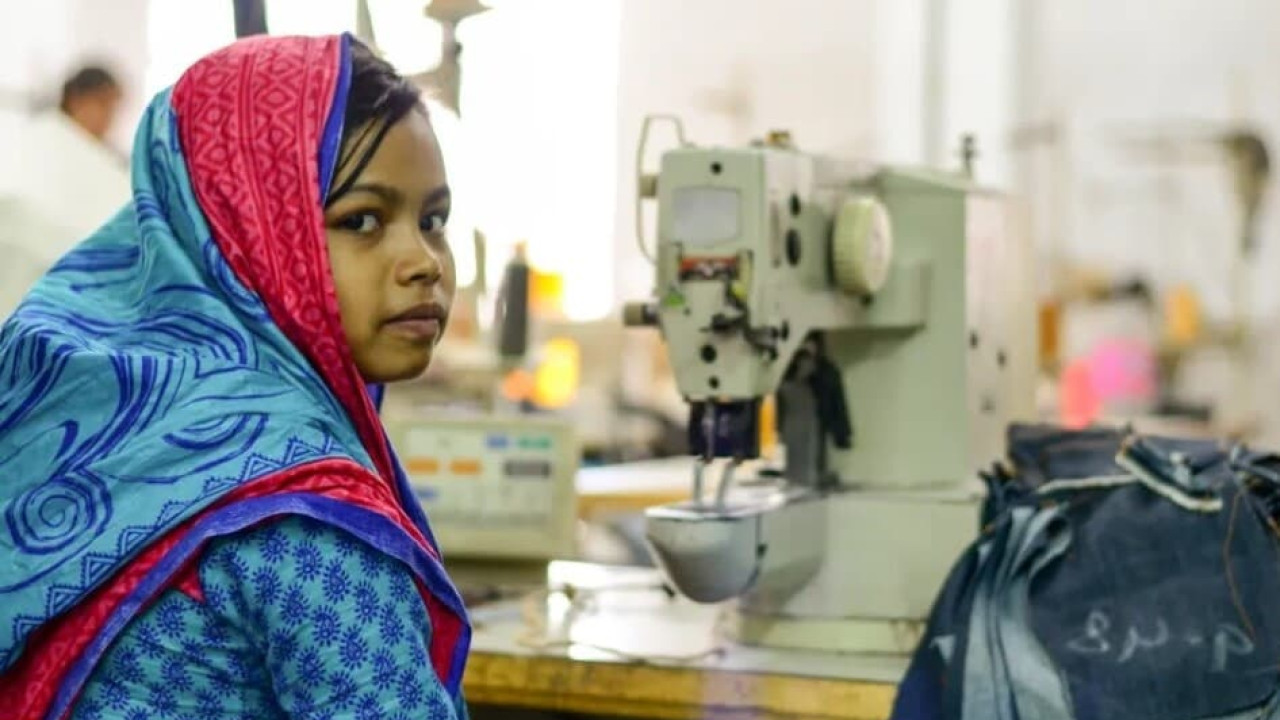
Around the world, 138 million children are trapped in child labor. In Bangladesh alone, the 2022 National Child Labor Survey counted 3.54 million working children between the ages of 5-17, including 1.07 million engaged in hazardous labor. Nearly half were not attending school.
Child-rights organizations estimate the real number could be twice as high because much of the work remains hidden in homes, family businesses, and informal workshops.
Where Cheap Fashion Begins
Research carried out between 2023 and 2024 found that one in five children surveyed worked in factories making clothes directly for foreign buyers. The other 80% were employed deeper in the supply chain, in subcontracted or mixed-contract factories where oversight was weaker and abuses were more common.
Outsourcing and weak oversight allow child exploitation to remain hidden behind cheap clothing sold in Western stores.
Stolen Childhoods
Bangladeshi law bans employment below age 14 and limits workers ages 14-17 to five hours a day. Yet 99% of the children surveyed exceeded that limit. Almost all of the children surveyed worked at least eight hours a day, while some reported shifts of 13-15 hours.
Poverty remains the main driver of child labor, but floods, river erosion, and crop losses deepen the crisis. When rural families lose their livelihoods, many are forced to move to cities and send their children to work.
Bangladesh’s child workers earn between US $54-$90 a month.
A 14-year-old worker identified as Fatima left school because her family could no longer afford it. She took a factory job to help pay for food and debts. Her employer did not verify her age or give her a contract.
Advocates say weak enforcement sustains problems like this. Employers can hire children cheaply, while families may depend on their income to survive.
How Leather Puts Children at Risk
As if long hours and poverty wages were not enough, many children in Bangladesh also work in conditions that put their health and lives at risk.
Children are estimated to make up around one-quarter of Bangladesh’s leather workforce. Some spend ten hours a day cutting, scraping, dyeing, and finishing hides that can later become shoes, sneakers, handbags, belts, wallets, and jackets sold in wealthier markets.
For about $35 a month, they may handle sharp blades and heavy tools while working without gloves, masks, and other basic protection.
Leather processing exposes children and adults to toxic substances linked to chemical burns, breathing problems, chronic skin disease, and other serious health risks. A World Health Organization report estimated that most tannery workers in Bangladesh die before reaching age 50.
Ending Child Labor Requires Everyone
In June, Bangladesh Labor Minister Ariful Haque Choudhury acknowledged that child labor persists and announced more pilot programs.
Ending child labor will require coordinated action from the government, international buyers, and consumers. Authorities should carry out unannounced inspections, enforce strict age checks, and maintain transparent supplier lists, while brands must monitor subcontracted and home-based sites and trace production beyond their first-tier factories.
Consumers also have a role to play by demanding supply-chain transparency instead of focusing only on low prices.
Without that pressure and oversight, children can remain hidden in export supply chains while cheap clothes and leather goods continue reaching stores abroad.

Loading comments...