




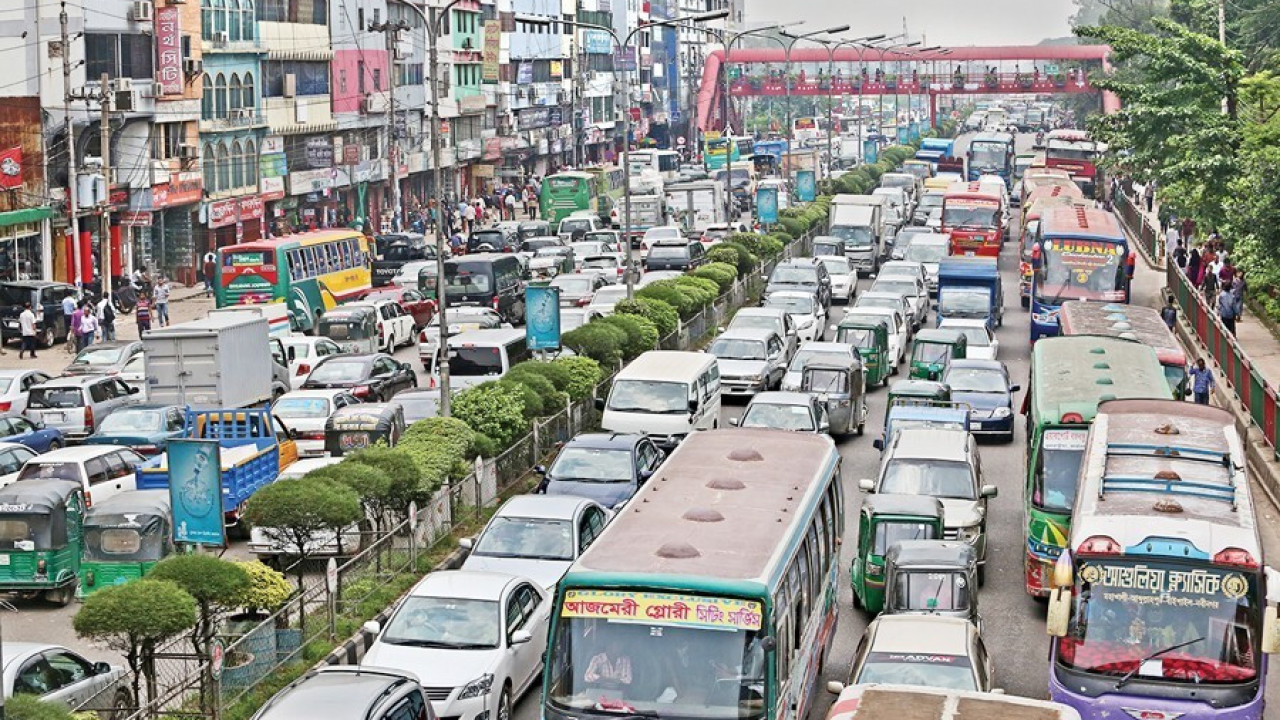
Bangladesh has launched a bold new artificial intelligence traffic system in Dhaka, a mega-city known for its endless traffic jams and packed roads. The move marks a major shift as AI technology enters public services in one of South Asia’s fastest-growing urban centers.
Dhaka’s roads have become a daily struggle for millions. With more than 22 million people living in the city, traffic congestion has damaged business activity, delayed emergency services, and exhausted commuters. According to a study by the World Bank and Bangladesh University of Engineering and Technology, average traffic speed in Dhaka dropped to just 4.8 kilometers per hour. In many areas, walking has become faster than driving.
Dhaka Traffic Crisis Pushes AI Into Public Services
In the past, police officers manually controlled many intersections by stretching ropes across roads before lights changed. Drivers often ignored signals, leading to heated confrontations and dangerous accidents.
Now, Bangladesh is trying a high-tech solution. In April 2026, Dhaka police connected traffic cameras to AI-powered software that can automatically detect traffic violations and monitor road movement in real time.
The new system is intended to reduce arguments between drivers and police officers while helping roads move more smoothly. It also shows how AI technology, once focused mainly on online marketplaces and private business, is now entering everyday public services.
AI Traffic Technology Faces Major Urban Challenges
Despite the excitement, the rollout has not been simple. Officials admit the system still struggles to identify blurred or damaged number plates. Heavy traffic, poor road conditions, and inconsistent driving behavior also create problems for AI monitoring systems.
Another challenge involves Dhaka’s massive fleet of pedal rickshaws. These colorful vehicles remain a key part of city life, but they are difficult to regulate through AI systems built mainly for motor vehicles.
All these challenges in mind, it's clear that technology alone cannot solve Dhaka’s congestion nightmare, but it can be part of the broader solution. Professor Hasib Mohammed Ahsan from Bangladesh University of Engineering and Technology said long-term success depends on consistent enforcement and stronger public cooperation.
Global AI Traffic Trends
Bangladesh’s move reflects a growing global trend. Countries such as China, South Korea, and Japan have heavily invested in AI-driven smart-city systems that monitor traffic, public transport, and urban behavior.
As AI expands into government services, concerns are also growing. Some analysts warn that increased automation could slowly reduce public-service jobs, especially lower-level traffic enforcement roles. Additionally, if foreign technology providers supply AI systems, questions about data access, surveillance, and cybersecurity may become more important in the future.
Still, many Asian nations are increasingly sharing technology and urban-management strategies as cities struggle with rising populations and overloaded infrastructure. Bangladesh’s AI traffic gamble could become a model for other developing nations facing similar urban pressure.


Loading comments...