




Angola, Namibia, and South Africa are increasingly treating the ocean as an economic asset rather than simply a natural resource.
Along their coastlines lies the Benguela Current Large Marine Ecosystem, one of the most productive marine regions on Earth. Stretching from South Africa to Angola, the current brings cold, nutrient-rich waters that support major fisheries, marine biodiversity, offshore energy development, and growing tourism industries.
As global competition for resources intensifies, these countries are working together to protect and profit from a marine ecosystem that is becoming increasingly valuable to their economic futures.
The effort reflects a broader global shift. Governments are no longer viewing oceans solely as environmental spaces. They are increasingly seen as strategic economic zones tied to food security, energy production, climate resilience, and long-term development.
Marine Wealth Is Becoming a Strategic Asset
The Benguela Current supports millions of livelihoods and some of Africa's most important fishing grounds. Yet the ecosystem faces growing pressure from illegal fishing, climate change, pollution, and expanding offshore industrial activity.
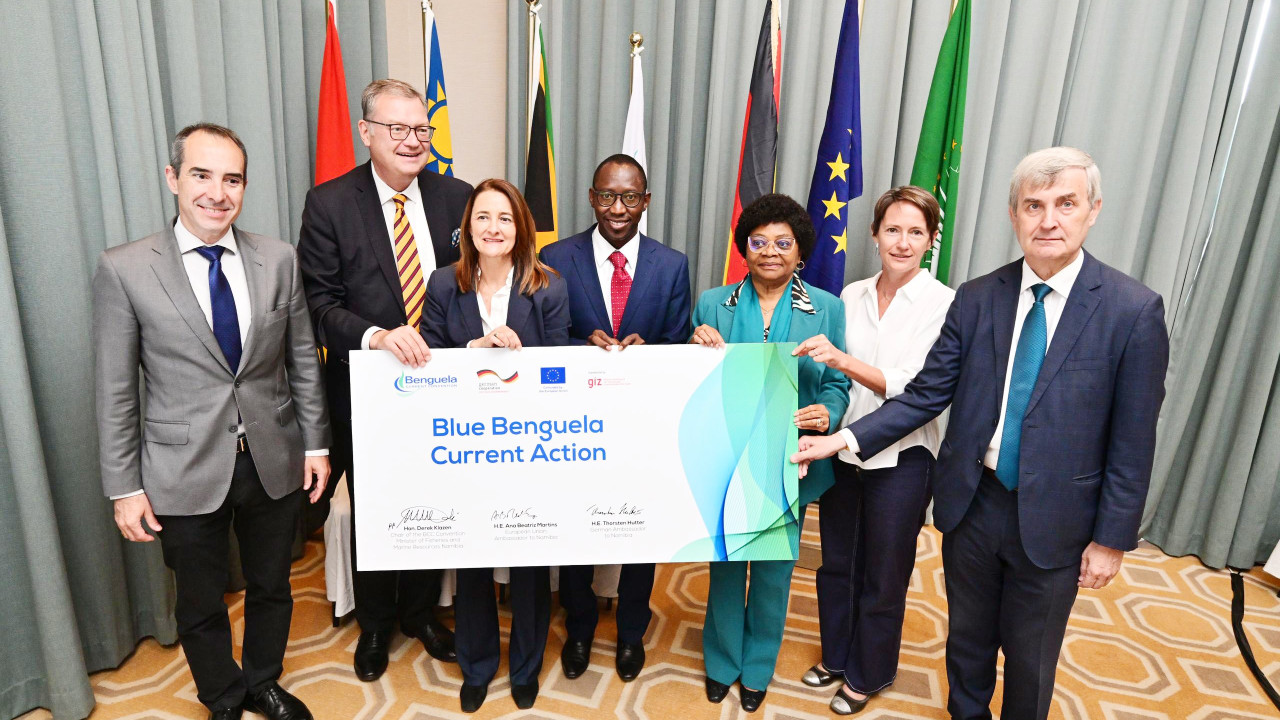
Rather than addressing these challenges independently, Angola, Namibia, and South Africa have increasingly adopted a coordinated approach. Their cooperation is attracting international attention and investment. The European Union and Germany recently launched the €12 million Blue Benguela Current Action program to strengthen ocean governance and support sustainable economic development across the region.
The initiative focuses on improving fisheries management, expanding marine conservation, supporting eco-tourism, and helping coastal communities develop new maritime businesses.
The program also reflects a growing recognition that environmental protection and economic growth are not necessarily competing goals. Healthy marine ecosystems support larger fish stocks, stronger tourism industries, and more resilient coastal economies.
Balancing Development and Conservation
One of the project's main goals is expanding Marine Protected Areas throughout the Benguela region. Under the program, approximately five million hectares of marine space will receive stronger conservation protections. Governments are also introducing Marine Spatial Planning across roughly 300,000 square kilometers of ocean.
Marine Spatial Planning helps governments manage competing activities such as shipping, offshore energy production, fishing, tourism, and environmental protection within the same waters.
The approach aims to reduce conflicts between industries while ensuring long-term sustainability.
The initiative also focuses on local economic development. Around 50 maritime small businesses are expected to receive support, with a particular emphasis on women-led enterprises. More than 400 people from coastal communities are projected to benefit directly through training, employment, and new economic opportunities.
At the regional level, policymakers and environmental experts from all three countries are participating in joint training programs focused on fisheries management, pollution monitoring, and marine protection. The broader objective is to build institutions capable of managing shared marine resources across national borders.
What Southeast Asia Can Learn
The Benguela model arrives at a time when Southeast Asia is increasingly focused on its own blue economy opportunities. Malaysia's Sabah state is preparing to host the inaugural Asia-Pacific Impact Investing for Sustainable Development Summit in 2026, highlighting growing regional interest in marine conservation, eco-tourism, biodiversity protection, and sustainable investment.
Like the Benguela countries, many ASEAN states face a similar challenge: how to generate economic growth from marine resources without degrading the ecosystems that support them.
The experience of Angola, Namibia, and South Africa offers one possible framework. Regional cooperation, shared resource management, and partnerships with international investors can help countries balance development with long-term sustainability.
As climate risks increase and competition for resources intensifies, oceans are becoming more strategically important than ever.
The Future of the Blue Economy
Blue economies are no longer defined only by fishing. They are increasingly linked to energy security, shipping, tourism, food systems, climate adaptation, and national development strategies.
For Angola, Namibia, and South Africa, protecting marine ecosystems is not simply an environmental goal. It is becoming a central part of economic planning.
Their experience suggests that the countries best positioned for future growth may not be those with the largest land resources, but those that learn how to manage and develop the wealth found offshore.



Loading comments...