




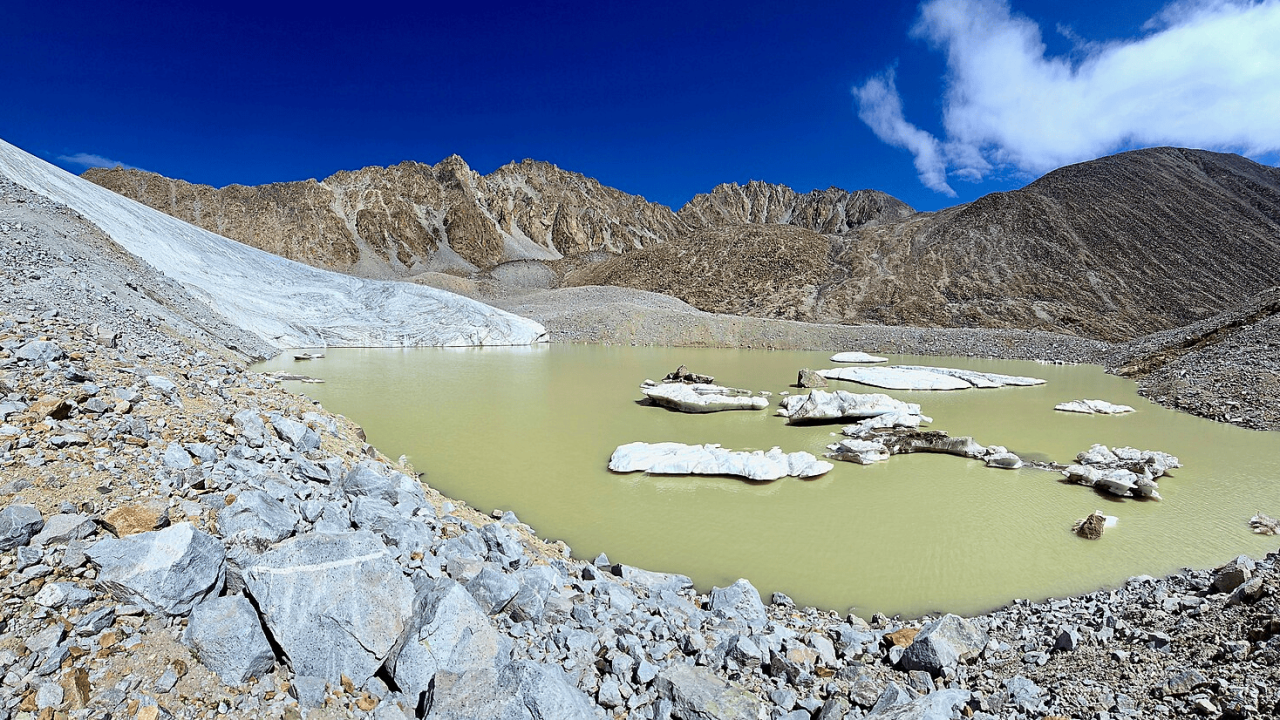
For decades, experts have warned that Central Asia could face conflicts over water in the future. The region depends heavily on two major rivers, the Amu Darya and Syr Darya, which support agriculture, energy production, and the livelihoods of millions of people. As climate change accelerates and water supplies become less predictable, concerns about regional stability are growing.
Yet despite recurring shortages and political tensions, Central Asia has so far avoided the so-called "water wars" that many observers predicted after the collapse of the Soviet Union.
Instead, governments have repeatedly chosen cooperation over confrontation. The question now is whether that approach can survive in future with less water and growing demand.
Water Tensions Already Affect Regional Politics
Water disputes are not merely technical disagreements about irrigation schedules. They increasingly intersect with trade, border management, energy security, and domestic politics. Relations between Kazakhstan and Kyrgyzstan provide a clear example of this.
As an upstream country, Kyrgyzstan controls important sources of water that flow into Kazakhstan. During periods of drought or political tension, water releases can become a sensitive diplomatic issue.
Research on Kazakhstan-Kyrgyzstan relations shows that disputes over water have occasionally coincided with border restrictions, political disagreements, and accusations of unfair treatment. During a 2017 diplomatic dispute between then-Kazakh President Nursultan Nazarbayev and Kyrgyz President Almazbek Atambayev, water supplies became part of the political rhetoric exchanged between both sides.
A similar pattern emerged during severe drought conditions in 2023, when water shortages threatened harvests and led to tensions over water deliveries.
Despite these disputes, both countries consistently returned to negotiations. Officials regularly emphasized "good neighborliness" and mutual dependence, highlighting a broader regional pattern.
The lesson here is that water may create tensions, but it can also encourage cooperation.
Recent droughts have demonstrated how vulnerable the region remains. Crop losses, emergency declarations, and local protests have become increasingly common during periods of water stress. As water becomes scarcer, governments may find it harder to maintain the delicate balance that has historically helped prevent disputes from escalating.
The Qosh Tepa Canal Changes the Equation
The most significant new challenge to Central Asia's water situation may come from Afghanistan. The Taliban government is currently constructing the Qosh Tepa Canal, a massive irrigation project designed to support agricultural development and improve food security in northern Afghanistan. Officials hope it will help increase grain production and reduce dependence on imports.
Stretching approximately 285 kilometers, the canal could eventually divert as much as 20% of the Amu Darya's flow, according to several estimates. For downstream countries such as Uzbekistan and Turkmenistan, this has raised serious concerns. Both countries already face water shortages and rely heavily on the Amu Darya for irrigation. Reduced river flows could affect their agricultural production, food security, and economic stability.
The project also exposes a major weakness in Central Asia's water governance system more broadly. Unlike the Central Asian republics, Afghanistan is not part of the Soviet-era water-sharing agreements that continue to shape regional water management. There is currently no comprehensive framework governing how Amu Darya water should be shared between Afghanistan and its northern neighbors.
As a result, one of Central Asia's most important rivers is increasingly influenced by a country operating outside the existing regional order.
A New Approach to Water Diplomacy
In response to the growing pressure on the region's water sources, some countries are beginning to explore new forms of cooperation that go beyond traditional water-sharing quotas. One example is the Kambarata-1 hydropower project in Kyrgyzstan, which will be jointly owned by Kyrgyzstan, Kazakhstan, and Uzbekistan. The planned hydropower dam in Kyrgyzstan will generate electricity while helping regulate water flows shared by countries across Central Asia
The project reflects a shift toward shared infrastructure and joint investment, creating economic incentives for countries to work together rather than compete over water resources.
A similar logic may eventually be needed to address Afghanistan's growing role in regional water management. Unlike the Central Asian states, Afghanistan is not part of the region's post-Soviet water-sharing institutions, leaving few formal mechanisms to coordinate water use along the Amu Darya. Rather than treating Kabul solely as an external challenge, some analysts argue that incorporating Afghanistan into technical dialogues, data-sharing arrangements, or future infrastructure partnerships could help reduce uncertainty and create incentives for cooperation.
Whether these new approaches will be enough remains uncertain. What is clear, however, is that water security is becoming increasingly connected to food production, energy generation, economic development, and regional stability across the region.
Loading comments...