




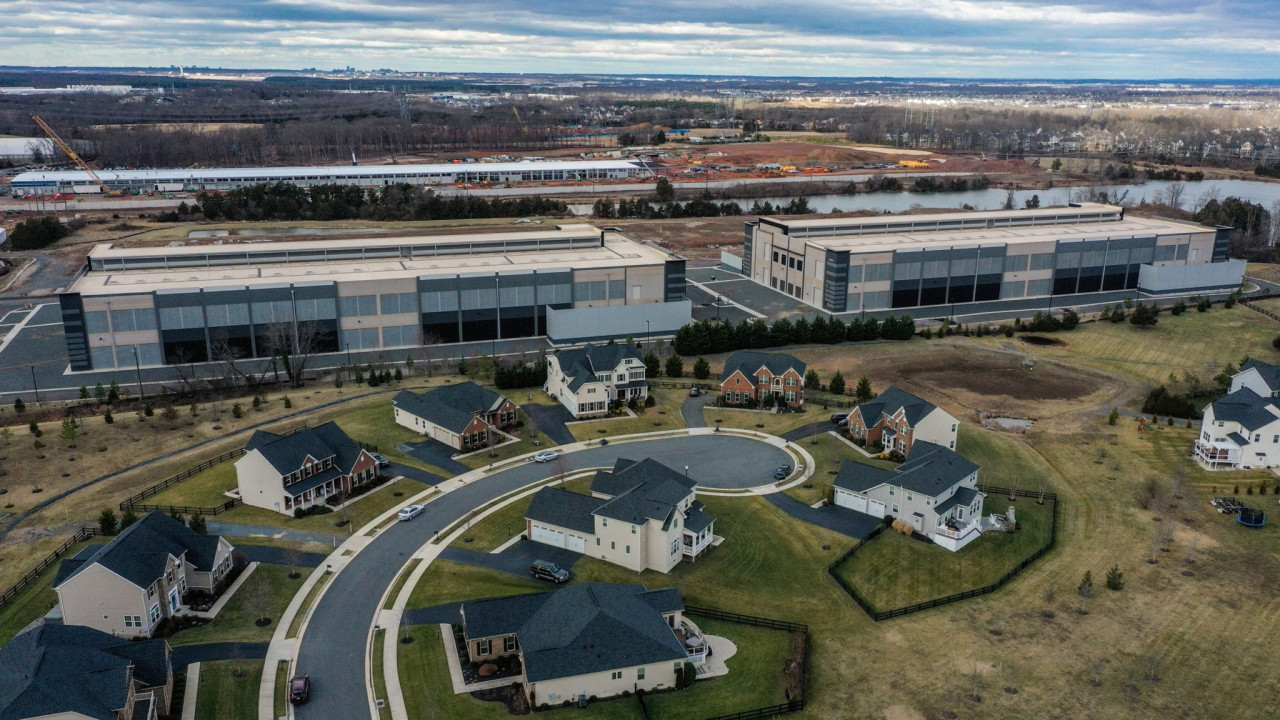
Artificial intelligence feels invisible and isn't something you can touch. But in reality, it lives inside huge buildings that consume massive amounts of electricity, water, and land.
For a government, a large AI data center can mean investment, jobs, and leadership in the AI race. But for many local communities, it can mean higher electricity and water bills, extreme noise pollution, more emissions, more land use, and lower property values.
As a result, communities across the world have started to push back. From Canada and the United States to the United Kingdom and Ireland, governments are competing to build AI infrastructure while local residents increasingly question whether the benefits outweigh the consequences.
A Canadian Community Pushes Back
The Canadian province of Alberta is a perfect example of this tension. The provincial government wants to attract up to $73 billion in AI data center investment by 2030. Alberta is an attractive place for such facilities because it offers cheap natural gas, lots of land, fast permits, and cold weather for much of the year, which helps keep electricity bills down for tech companies. In the best case scenario, AI could be a way to diversify the local economy away from just natural gas resources.
But for residents near Indus, a small community east of Calgary, one of these projects — called the Beacon AI Centers project — has created a lot of concern. According to one study, the project is estimated to occupy around four square kilometers, run on natural gas generators, and consume about half a million cubic meters of water per year. The same analysis estimates that the center would release 4.78 million tons of carbon dioxide every year.
Because of this, the project has gained a lot of negative attention. It's clear that local residents do not want an AI project in their community if the environmental and social costs are too high. In documents sent to the Canadian government, citizens and local groups raised concerns about water use, power generation, pressure on aquifers, noise, agricultural land, and lack of transparency.
Another concern residents have is that have one data center project could pave the way for many more. With each new data center in the province, the demand for water, electricity, and land would rise even more. As expert ecologist Brad Stelfox points out, these concerns are valid because the Alberta provincial government has not carried out a cumulative assessment. In other words, it has not fully studied the combined regional and provincial impacts of all these projects together.
Local Resistance Is A Global Trend
The same type of tension has appeared in Hamilton, Ontario. In June 2026, the city moved forward with a proposed moratorium on new data centers while it studies how to regulate them. Residents raised concerns about constant noise, water pollution, and the heat released by these facilities. Much of the pushback is linked to a lack of transparency from the AI industry and a lack of clear rules from regulators.
In the United States, there is also a growing trend of rejecting AI data centers. A May 2026 Gallup poll found that seven in ten Americans oppose the construction of an AI data center near where they live. Almost half said they were strongly opposed. The most common reasons for opposition were excessive use of resources, especially water and energy. Many people also mentioned extreme noise, lower quality of life, and possible increases in electricity rates.
The same debate is happening in the United Kingdom too. In Scotland, communities have questioned AI-related projects because of concerns over land use and if the centers really benefit local residents.
At the heart of this global pushback is a simple question: who benefits from AI data centers, and who pays for them? AI data centers promise national economic gains and profit for investors, but many of the environmental and social costs fall on the communities where they are built.
AI Isn't As Clean As It Seems
AI data centers may not resemble traditional heavy industry, but they still compete for many of the same resources. As they grow larger, they require enormous amounts of electricity, water, land, and transmission infrastructure. This is where the political challenge begins.
Governments cannot ignore the concerns of local residents, but they also cannot afford to fall behind in building the infrastructure that will underpin the AI economy. As artificial intelligence becomes a strategic capability, countries increasingly want that infrastructure within their own borders.
People are not necessarily rejecting AI itself, but they are questioning who should absorb the costs. As the global AI race accelerates, governments will face a growing challenge of attracting AI investment while also ensuring that the communities hosting these facilities are not harmed by them.

Loading comments...