




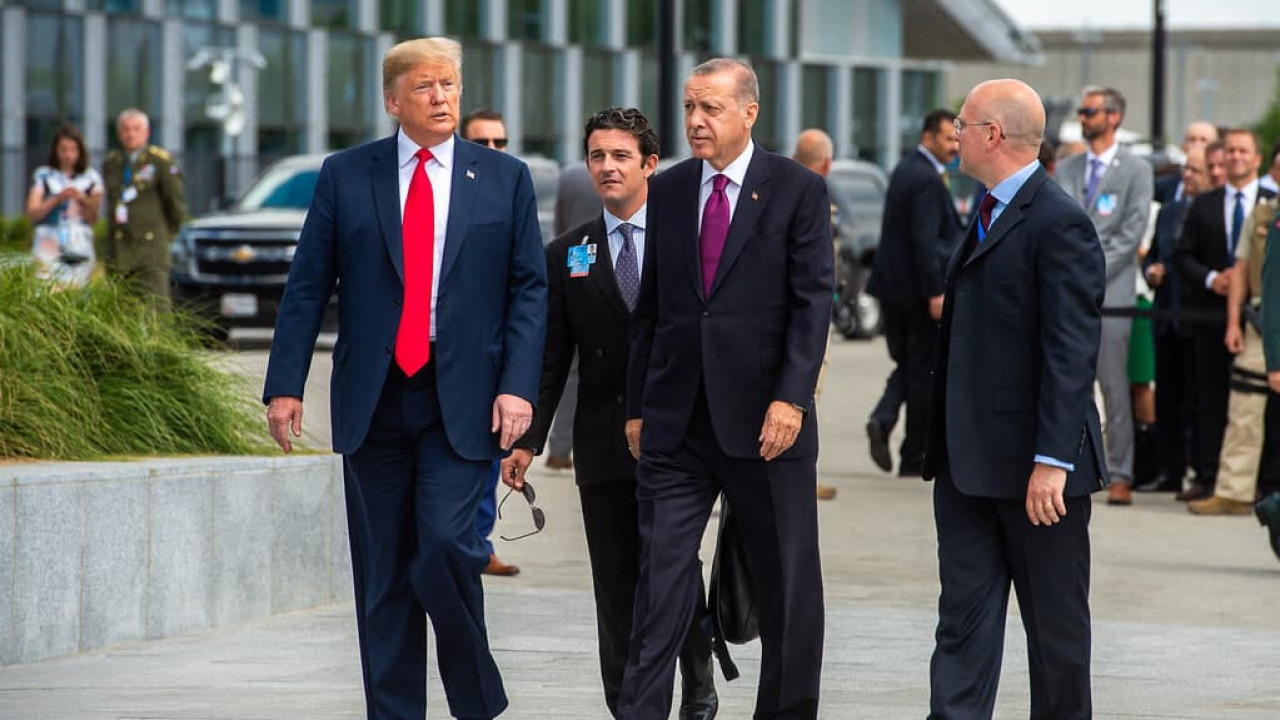
President Donald Trump's threat to target Spain economically during the NATO Summit in Ankara exposed an uncomfortable contradiction at the heart of US strategy toward Europe.
Washington is demanding that its allies spend more on collective defense while simultaneously threatening one of them with economic pressure. Because Spain is part of the European Union's common trade policy, however, any attempt to punish Madrid would quickly become a dispute with the entire EU. The episode highlights a broader strategic question: can the United States strengthen NATO while using trade as leverage against its own allies?
Trade Pressure Could Push Europe Closer Together
Trump framed the dispute as a problem with Spain, but the geopolitical reality is far more complicated. The European Union negotiates trade as a single economic bloc, meaning any US action against Spain would almost certainly trigger a coordinated response from Brussels rather than Madrid alone.
The situation also underscored the uncertainty surrounding Washington's approach. On July 9, 2026, Trump said he would no longer pursue economic measures against Spain after speaking with Spanish Prime Minister Pedro Sánchez, reversing his earlier threat. The rapid shift raised questions about whether the pressure was intended as a serious policy or simply as a negotiating tactic.
Regardless of the motivation, the episode demonstrates the limits of economic coercion within an integrated alliance. Pressure directed at one EU member can reinforce solidarity among the others, encouraging governments to coordinate their response rather than negotiate individually.
It also gives Europe another incentive to reduce its economic dependence on the United States. If Washington is increasingly willing to use trade as a political tool, European governments may accelerate efforts to diversify trade and investment toward Asia, Latin America, and other emerging markets.
You Can't Strengthen an Alliance by Threatening Its Members
Trump has repeatedly argued that NATO members should increase defense spending to 5% of GDP, and many allies have responded by committing to larger military budgets. Yet threatening one ally with economic retaliation sends a conflicting signal.
Military alliances depend on more than defense spending. They rely on political trust, intelligence sharing, long-term planning, and confidence that partners will remain reliable during moments of crisis. Governments are less willing to deepen military cooperation if they believe economic disagreements could suddenly become political weapons.
While economic pressure can sometimes produce short-term negotiating leverage, repeated use against allies risks weakening the relationships that NATO depends on. The alliance is strongest when members view one another as dependable partners, not as potential economic adversaries.
Western Divisions Create Opportunities for Rivals
China and Russia are likely to watch these disputes closely. Any tension between the United States and Europe creates opportunities for competitors seeking to weaken Western cohesion, even if NATO's military cooperation remains intact.
The bigger strategic question is whether Washington ultimately wants a Europe that is more dependent on the United States or one that is increasingly capable of acting independently. Pressuring allies such as Spain may generate short-term concessions, but it can also encourage the European Union, in the longer term, to strengthen its own economic resilience, diversify its partnerships, and pursue greater strategic autonomy.
The dispute therefore extends well beyond Spain. It illustrates the growing tension between Washington's desire for a stronger NATO and its willingness to use economic pressure against its own allies. In an era of intensifying competition with China and Russia, sustaining Western unity will depend not only on larger defense budgets, but also on preserving the political trust that makes alliances work.



Loading comments...