




On September 24, a senior military adviser to Iran’s supreme leader warned that renewed US attacks could expand the conflict from the Persian Gulf to the Red Sea, Bab el-Mandeb Strait, and potentially the Indian Ocean.
Major General Yahya Safavi, a former commander of the Islamic Revolutionary Guard Corps and an adviser to Supreme Leader Ayatollah Mojtaba Khamenei, said Iran and its allies could open another front if the United States resumed military operations.
“If the Americans start a new war, a new front centered on the Red Sea and the Bab el-Mandeb Strait may open before their eyes,” Safavi said.
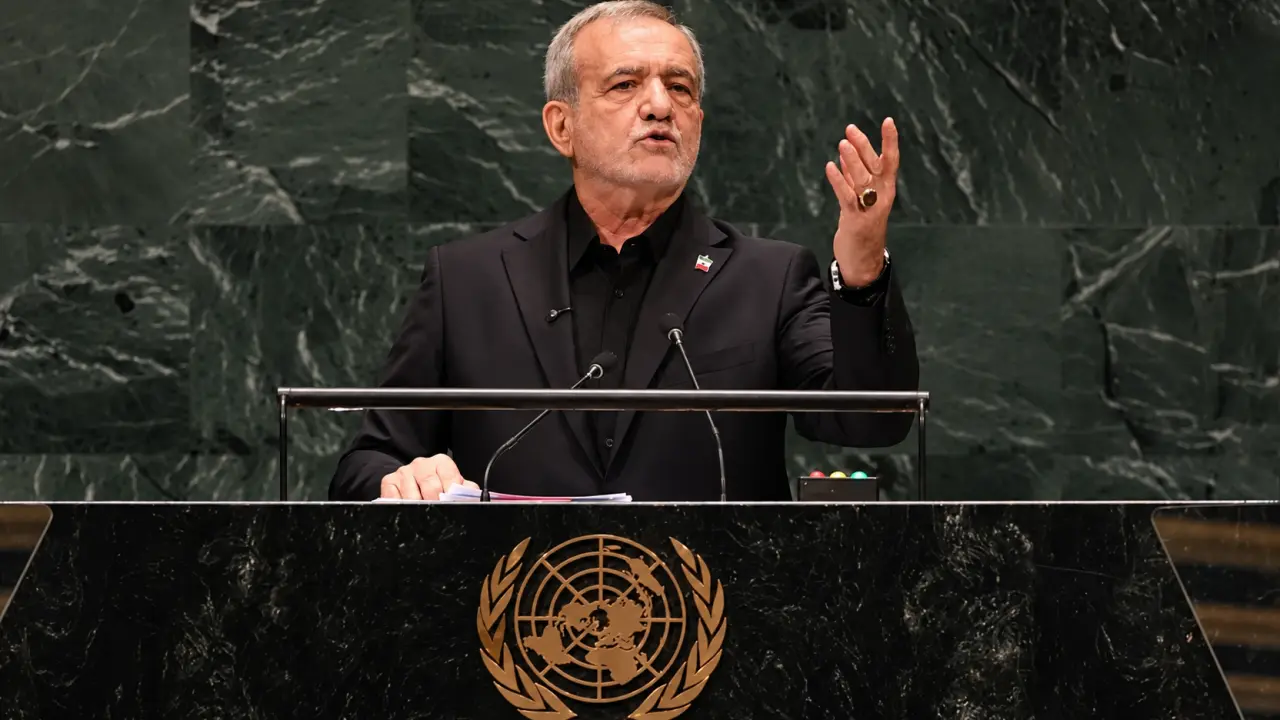
The warning came two days after President Donald Trump told the United Nations General Assembly that Washington faced a choice between helping Iran become a prosperous country or driving it “into hell with no chance of survival.”
Trump said he expected Tehran eventually to reach a deal with Washington but also raised the possibility of Iran’s “annihilation” if the confrontation continued.
Iran Links Hormuz and Bab el-Mandeb
Safavi explicitly connected the Strait of Hormuz, where the conflict has severely disrupted commercial shipping, with Bab el-Mandeb, the southern entrance to the Red Sea.
“I think that the connection between the Persian Gulf and the Red Sea, the Strait of Hormuz and the Bab el-Mandeb Strait, will change the battlefield,” he said.
Safavi claimed the Houthis have “full control” over Bab el-Mandeb and said Iran and the Yemeni group share common interests and face common threats.
“The war front could become broader,” he said, adding that it could extend “to the Indian Ocean or elsewhere.”
Bab el-Mandeb has become increasingly important for Saudi energy exports as disruption at Hormuz has restricted traffic through the Persian Gulf.
The Houthis have already attacked Saudi ships and infrastructure in the Red Sea and threatened to blockade Saudi Red Sea ports. The group says those attacks are retaliation for Saudi military operations supporting Yemen’s internationally recognized government.
Diplomacy Continues Despite Escalating Threats
The warning came as Washington and Tehran continued diplomatic contacts on the sidelines of the United Nations General Assembly.
Trump disclosed on September 22 that Iranian officials had held three hours of talks with US special envoy Steve Witkoff.
Two days later, Iranian Foreign Minister Abbas Araghchi said Tehran had proposed a seven-day plan to end hostilities, reopen the Strait of Hormuz, and begin comprehensive nuclear talks.
Under the proposal, hostilities would cease while Washington released at least $12 billion in frozen Iranian assets, waived sanctions on Iranian oil, and lifted its naval blockade. Iran would reopen Hormuz on the seventh day, with nuclear talks beginning immediately afterward.
The talks in New York have kept a diplomatic channel open, but Safavi’s warning underscores how another round of US attacks could widen the conflict beyond the Arab Gulf.
Loading comments...